
Whatever happened to Toronto’s seemingly extinct lesbian bars?
Published November 10, 2025 at 10:28 am
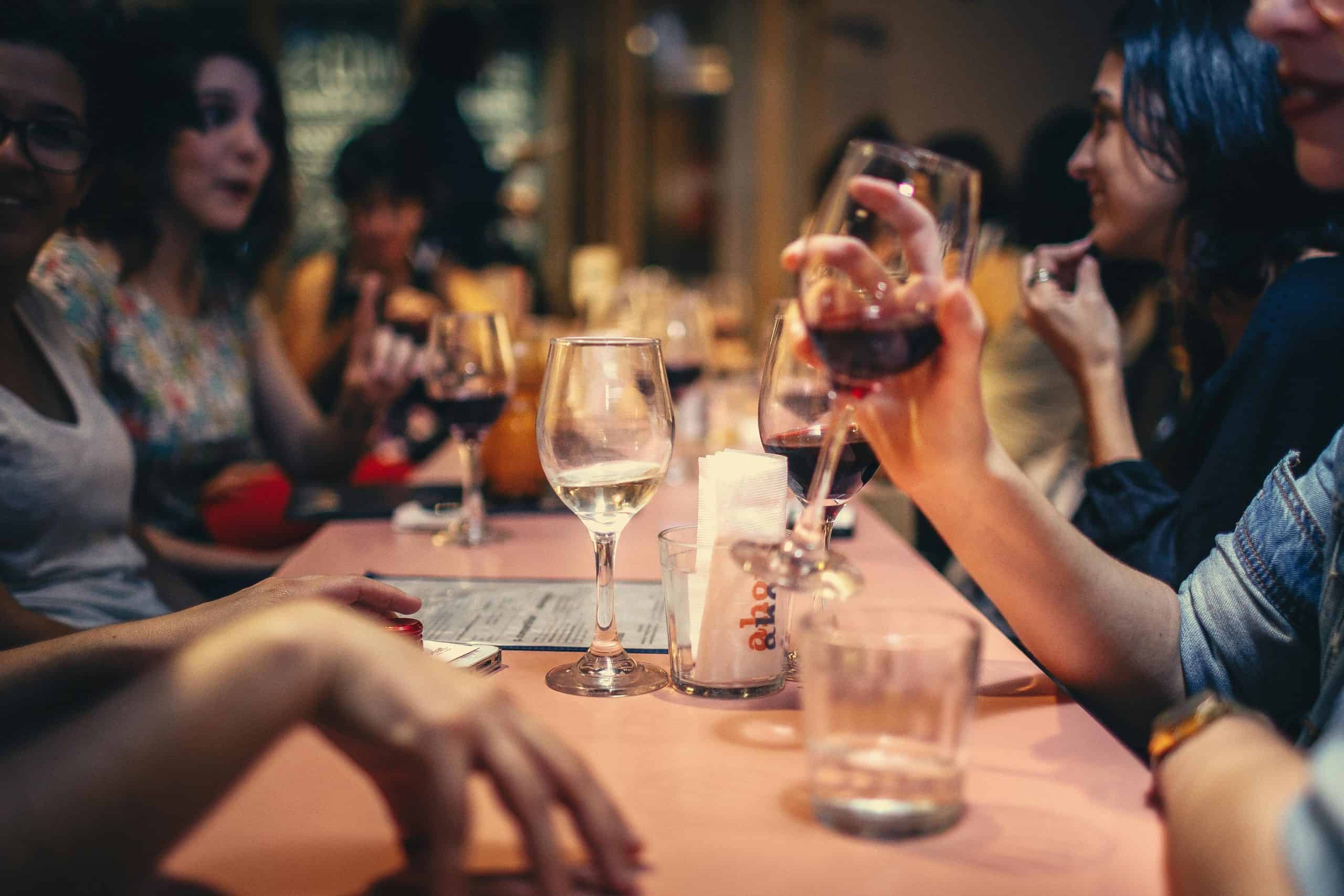
If you aren’t looking for a sapphic space in Toronto (or in Canada overall), you might not realize that, well, there aren’t many.
Or at least there aren’t spaces specifically designed for women seeking romantic connections with other women. While the dearth of lesbian spaces might not be shocking–and might even be expected–in places where discrimination against members of the LGBTQ community is more pronounced, the idea that a city as gay-friendly as Toronto doesn’t have a dedicated lesbian bar is astonishing.
But while the factors underlying the loss of sapphic spaces are varied, some experts say lesbian hotspots–as well as art and events–might be on the upswing.
“There was a heyday of lesbian spaces in the nineties, particularly and especially in theatre, like through Buddies in Bad Times, but there had always been lesbian bars around,” Emily Paterson, a playwright whose production, BUTCH/FEMME, just wrapped after a multi-night run at Toronto’s Theatre Passe Muraille, tells yourcitywithIN.com.
Paterson’s play isn’t about the modern lack of lesbian spaces, but rather, in part, the lure of the elusive safety of urban environments–and their discrete but lively queer spaces–in 1950s Ontario. In her play, the more traditionally feminine Jenny (Annabelle Gillis) is surprised by an unexpected visit from her former girlfriend, Alice (Tessa Kramer), a “butch” lesbian who left her for a new life in Toronto a year prior.
While the two-person play is more of a moving and quiet exploration of navigating a ‘love that dares not speak its name’ during an objectively more socially conservative era than a story about lost spaces in today’s Canada, Paterson’s script mentions exhilarating (and dangerous) nights at historic lesbian bars and clubs, including The Continental.
“That [bar] existed post World War II through to the 1970s when it closed down and then more popped up, and they always came and went,” Paterson says, adding that the scene changed in the 2010s when bars and clubs started serving a wider queer audience rather than lesbians specifically.
“More and more bars were becoming more for a general queer audience and a lot of it is rooted in the patriarchy and this need for men to feel represented,” Paterson says, adding that lesbian bars have struggled to thrive not just because of police raids that have traditionally targeted queer spaces, but also because of economic inequality between the sexes.
“Men become very uncomfortable when there is a space that’s not for them because they’re used to there always being space for them. We also see the managers of these bars turning to a general queer audience or to a male audience to make more money because women don’t have as much money. They’re not spending as much, so the bars aren’t making as much, and it’s all this very large systemic issue that’s not rooted in one particular event or moment. Still, it’s a larger issue that is purely related to the politics of space and power.”
Beth Washburn, a professor of sociology at Humber College, agrees that the current void in the LGBTQ scene is multi-factorial.
“The answer involves many different prongs, many different elements,” Washburn tells yourcitywithIN.com.
“There are sociological shifts, economic shifts, technological shifts, pornographic shifts. Lesbians were denigrated a bit in the queer movement, with people saying ‘lesbian is just a porn category,’ and there was a cultural shift. I think there’s a bit of a shift back to saying ‘lesbian and queer women can take up space.’”
While it’s difficult to pinpoint any one specific reason Toronto hasn’t had an “official” lesbian space since the closure of Lavender Menace (the east-end destination shuttered the doors of its Gerrard Street location in 2022), it’s impossible not to be confused by the gradual (and seemingly organic) disappearance of bars and clubs specifically for women interested in other women.
While surveys have shown a dip in support for LGBTQ+ visibility in Canada since 2021, support for the community overall remains high. According to a 2024 survey by Ipsos, 75 per cent of respondents believe same-sex couples should be allowed to marry or receive legal recognition of their unions, 70 per cent believe same-sex couples should be able to adopt children and 77 per cent believe gay, lesbian and bisexual people should be protected from discrimination in employment, housing and access to businesses.
The survey notes that support for marriage, adoption and protection from discrimination in Canada is higher than the average of 26 countries globally.
So why, despite the recent drop in support for LGBT+ visibility (such as LGBT+ characters on screen, in sports, and in public displays of affection, according to the survey), are lesbian bars disappearing at a rate not seen in spaces dedicated to men seeking men or queer people more generally?
Washburn says that while economic disparities between men and women almost certainly play a part in the imbalance (women might have less money not only to spend in bars, but to start and operate them), different life trajectories might also be a factor.
“Gay men might have more money and might be less likely to partner up and have a family,” she says.
Data collected by Statistics Canada lend credence to this theory. According to 2021 data, lesbian or gay women are twice as likely to be married as gay men. StatsCan says that while the numbers of gay men and lesbian women in common-law relationships are similar (31.6 per cent and 29.3 per cent, respectively), almost half of gay men between the ages of 25 and 64 are single (never married and not living with a partner) compared to 36.4 per cent of women in the same age group.
The data also indicate that older gay men, specifically those over 65, are more likely to be single, with gay men twice as likely to live alone as heterosexual men of the same age.
Washburn also says that lesbians with children might also be less likely to frequent bars and while StatsCan data suggests that only about 4.2 per cent of gay and lesbian people report raising young children, it does show that more lesbians are parenting children under the age of 12 (7.8 per cent versus 2.1 per cent).
“It’s cultural shifts in what people want, maybe the marriage shift. I can see this in my own demographic, where lesbians took the opportunity to get married and have children more so than my gay male friends,” she says, adding that lesbians may sometimes gravitate to different types of social environments, such as potlucks or community groups.
She also says lesbian spaces have evolved to be more inclusive of people with various gender identities.
“Lesbians in the queer community are more likely to worry about inclusivity. I have friends who are no longer lesbians and can take up space as trans or non-binary folks, so they might not want to be in a lesbian space. Those dynamics can make it tricky to have inclusive spaces. There have been cultural struggles around sex and gender,” she says.
Washburn says that over the years, she has also observed shifts in how lesbians are perceived.
“People do, naturally, exist on a range of spectrums, so we want people to feel safe in our community. I’ve had a short haircut for 30 years, I wear men’s clothing, I wear a shirt and tie. I’m a little old lesbian, and I’m proud of that. For a time, the youth weren’t proud of it,” she says, adding that lesbians have been denigrated as either a sexual fascination for straight men or ‘funny old women who can’t get men.’”
“Women who love women, the pride in that took a dip culturally,” she says.
Washburn says that while gay men can and do experience significant hardship in heteronormative societies, she hasn’t heard as much about gay men struggling to reconcile inclusivity with the need for gay male spaces.
“I don’t think issues around identity manifest in the same way for men,” she says.
That said, Washburn is seeing some change with the re-emergence of events and spaces catering to lesbian women, including the recent 2025 Lez Beach event at Hanlan’s Point Beach in Toronto.
That event, which also took place in 2024, kicked off Pride month this past summer.
“Last year, hundreds of lesbians, dykes, sapphics, and queer femmes took over Hanlan’s, turning it into a space that was fully, unapologetically ours. We swam, laughed, danced, and built community without interruption—no creeps, no compromises, just us,” the event description reads.
“I’m seeing a shift,” Washburn says.
“Lez Beach had non-binary and trans folks. We can create lesbian spaces and be inclusive.”
Paterson says that she’s been pleasantly surprised by how people outside of the queer community have responded to BUTCH/FEMME.
“A lot of people told me they felt very represented by it, and they felt seen by it,” she says.
“And I think it was also very eye-opening for a lot of people, especially people who maybe don’t think about lesbian stories or think about lesbian struggles. Part of what the play seeks to do is use the past as a lens to approach present issues. For a lot of people who aren’t thinking about these present issues or who think homophobia has been solved, it was very eye-opening to realize, oh no, this is still real life for a lot of people.”
Paterson says that when she set out to write the play, her initial goal was to explore butch and femme identities. As time went on, the story naturally evolved to address the importance of lesbian spaces — especially at a time when they are, for all intents and purposes, absent in a city known for its vibrant queer nightlife.
“It sort of started as, ‘I’m going to write a play about lesbian relationships and butch/femme identity, which is something that I already knew a lot about from the reading and research I’ve done in the past. As I was writing, I turned into [wanting to] explore the loss of queer space.”
Paterson says that as of right now, lesbians can find space and community at bars such as Crews and Tangos, but even that bar–known for its iconic drag shows–is more geared to the queer community than lesbians specifically.
“It’s one [bar] that’s not specifically for men, which is why lesbians go there,” Paterson says, adding that the future of the bar is uncertain due to development concerns.
“So even one of the most historic queer places and one of the only ones left that still accepts women [could be closed down].”
For Washburn, the fact that BUTCH/FEMME is out there is a positive sign that lesbians are sharing their stories and communicating their need for space.
“Taking away lesbian spaces disempowers women in general. Based entirely on anecdotal evidence, I think we’re seeing a slight cultural shift and women are getting more angry about their marginalization,” she says.
“I’m seeing Lez Beach and BUTCH/FEMME, and people want to let the L in the umbrella take up some space and get some time. I believe in lesbians, we don’t exclude our trans and non-binary siblings, but I do think we’re seeing a cultural shift. The world is so political, and people are questioning things. The fact that these events exist points to a cultural shift.”