
Toronto director’s TIFF debut is a harrowing tale on queer identity
Published September 13, 2026 at 1:07 pm
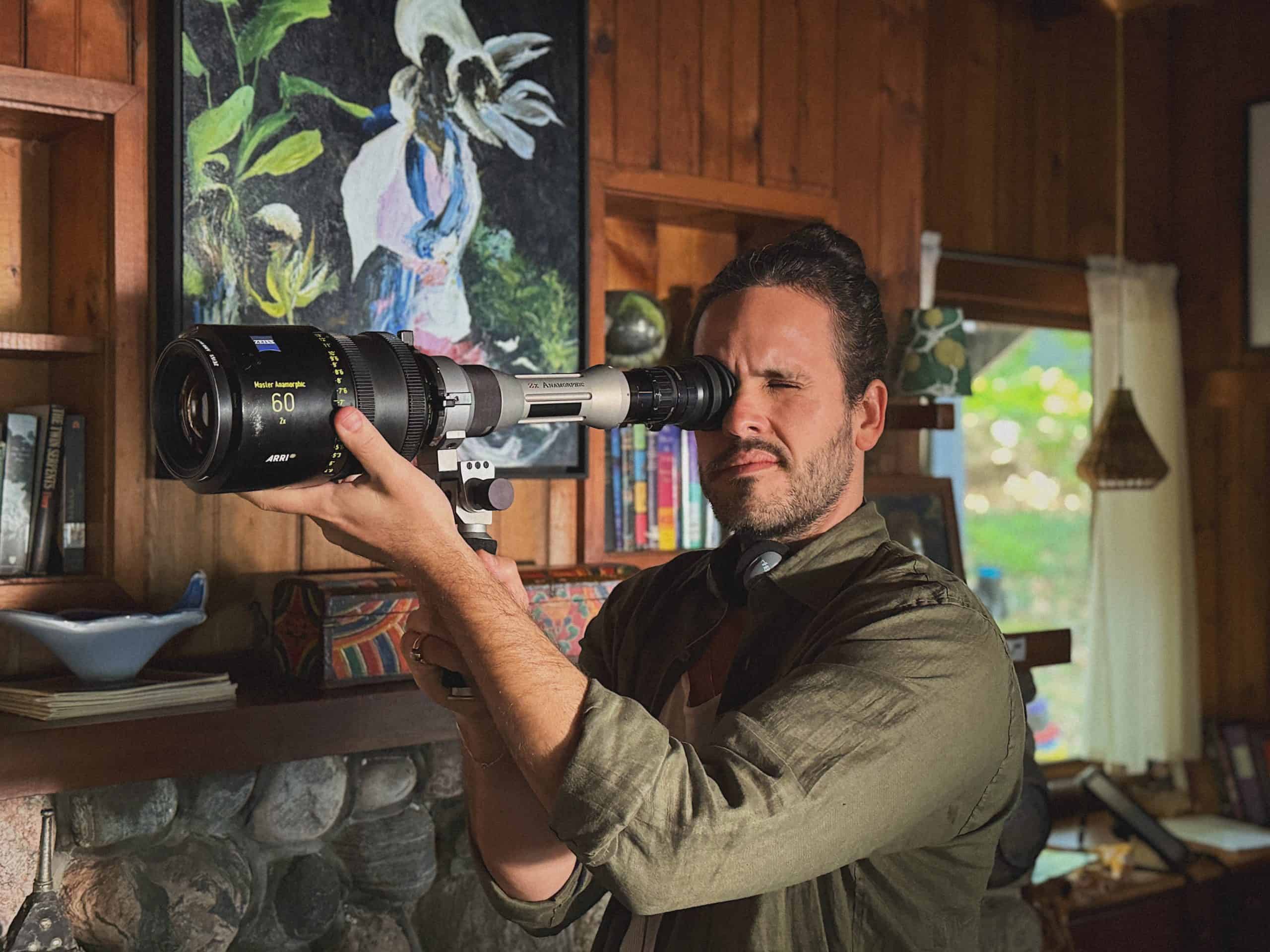
A Toronto director is making huge waves at this year’s Toronto International Film Festival.
Rodrigo Barriuso, a Cuban-Canadian filmmaker with roots in Toronto, is debuting his feature film, Neverman, at the Toronto International Film Festival (TIFF).
As part of an ongoing series spotlighting Canadian productions at TIFF, we had a chance to not only check out Barriuso’s newest feature, but also sit down with him to discuss the complexities of its story and how filming in and around Toronto seeped into the film’s character.
“There are a couple of moments that come through where you see Toronto, and those who know it well will see icons like the Elgin & Winter Garden Theatres, but because of the nuances specific to filming in Ontario, we took advantage of other places as well, such as Hamilton,” Barriuso told yourcitywithIN.
As for the plot of Neverman, Barriuso takes the audience through bleak aspects of Toronto’s past and the uncertainty of its future, as Lucia (Justin Vivian Bond), a transgender gay rights activist facing old age, is forced to contend with dementia, and how that will not only impact her memory but also the foundation of who she is.
“Ultimately, it is a film about dignity, and in essence, about a woman who refuses to disappear. She refuses for even one second to live without her dignity, as it is a problem that I don’t think anyone just accepts — it is about retaining your sense of self and the courage it takes to fight for it,” says Barriuso.
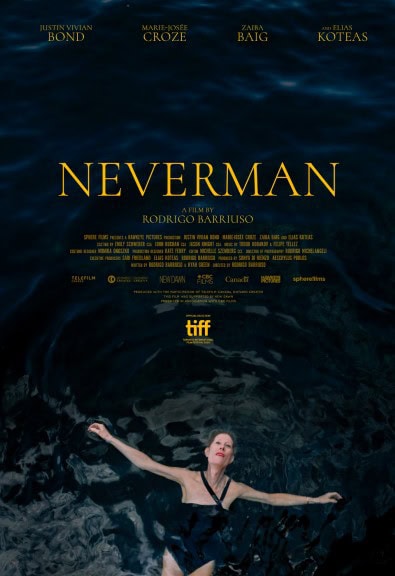
The key narrative catalyst in the film is Lucia’s relocation to a care home, where she is forced to contend with her own loss of self, other patients, and the dubious nature of the care staff.
As for the inspiration behind the film, Barriuso spent the last 10 years dutifully tracking issues within modern healthcare systems, specifically, the wave of LGBTQIA+ individuals who are entering retirement age and a framework that has not been fortified to meet their unique needs, especially in the realm of cognitive care.
“For the first time in human history, we are seeing the first-ever openly queer generation enter their senior years. We have never before seen a demographic cohort who fought the fight that gave the rights we have today enter the long-term care system,” says Barriuso.
Barriuso and co-writer Kyah Green use this current moment as a touchstone to shed light on the queer experience in the modern era, as well as the past, as Lucia navigates her new life, unsure who to trust.
What follows is a sprawling emotional epic about what it means to honour your past while fighting for your future, as Lucia bounces between her memories as a young activist in Toronto, maneuvering protests and the infamous Toronto Bathhouse Raids of 1981, while also maintaining her present-day individuality in an environment full of potential friends and numerous obstacles.
“I found it so insidious that people who fought their entire lives for rights now have to live in the same facilities as the people that they were fighting against,” says Barriuso. “So when writing this story, we focused on the current moment we are living in, which is the relentless attack on trans people by politicians and other forces, all of which seek to divide. So, we made a film about someone who refuses — a woman who, despite her circumstances, cannot simply go back into the closet.”
Beyond the core plot focusing on how unprepared the modern world is for a generation who fought for their agency — and won’t let anyone take it away from them — Barriuso also champions that this production was always meant to be stitched into a Canadian environment.
Especially in this case, Ontario, as beyond filming in Toronto and Hamilton, Barriuso made a core part of Lucia’s character be reflected in her cottage in the Muskokas, signifying her own peace she carved for herself, which she has to abandon at the start of the film.
“It was always a Canadian story: she lives in a cottage on the Canadian Shield, and references in the movie just how old and immovable those 4-billion-year-old rocks are,” says Barriuso. “That concept of permanence, in contrast to someone’s life slowly vanishing in front of their eyes, was something we could only have done here.”
While trying not to give too much away, Neverman is an immense triumph of the human spirit that reflects the steadfast nature of queer identity while operating as a cautionary tale for a potential future.
As for how he feels about its TIFF debut, elated doesn’t even cover it for Barriuso; as an immigrant from Cuba, the first taste of Canada he ever got was when the red carpets were rolled out here in Toronto.
“I moved here on Sept. 10, 2006. I remember on that very day, the day that TIFF launched that year, my mother gave my brother and me tickets to go see a premiere. I remember scrambling to change into something nice in the back of our car, and the first thing I ever saw of Toronto was TIFF, and the fact that 20 years later, to the day, our film is premiering and people are seeing it is incredible.”