
Tokyo-style alleyway taking shape in one of Toronto’s most highly anticipated new developments
Published August 24, 2026 at 12:18 pm
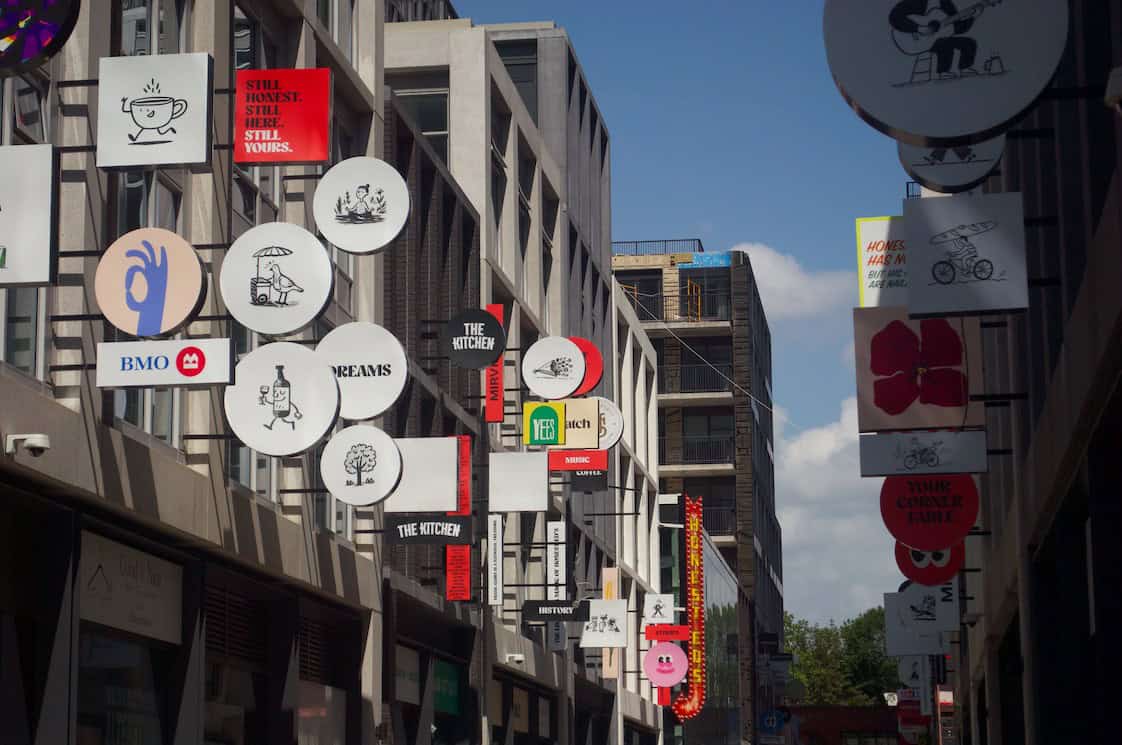
The Annex isn’t a Toronto neighbourhood that you would classify as ‘up-and-coming’ or a ‘hidden gem’ that’s slowly accumulating cachet through gentrification or attention from trend-seeking influencers–it’s already achieved its status as a top-tier district in a city that’s full of them.
For that reason, it makes sense that the neighbourhood, which brushes against the University of Toronto’s picturesque St. George campus, Yorkville, and the Royal Ontario Museum, is home to the developing Mirvish Village–an evolving community that boasts an alleyway shaping up to be the first of its kind in Toronto.
“Honest Ed’s Alley pays tribute to the site’s history, following the old service corridor that used to run in between the former Honest Ed’s buildings,” Luke Moran, senior vice-president of leasing and property management at Peterson, the Mirvish Village developer, told YourCityWithIN in an email.
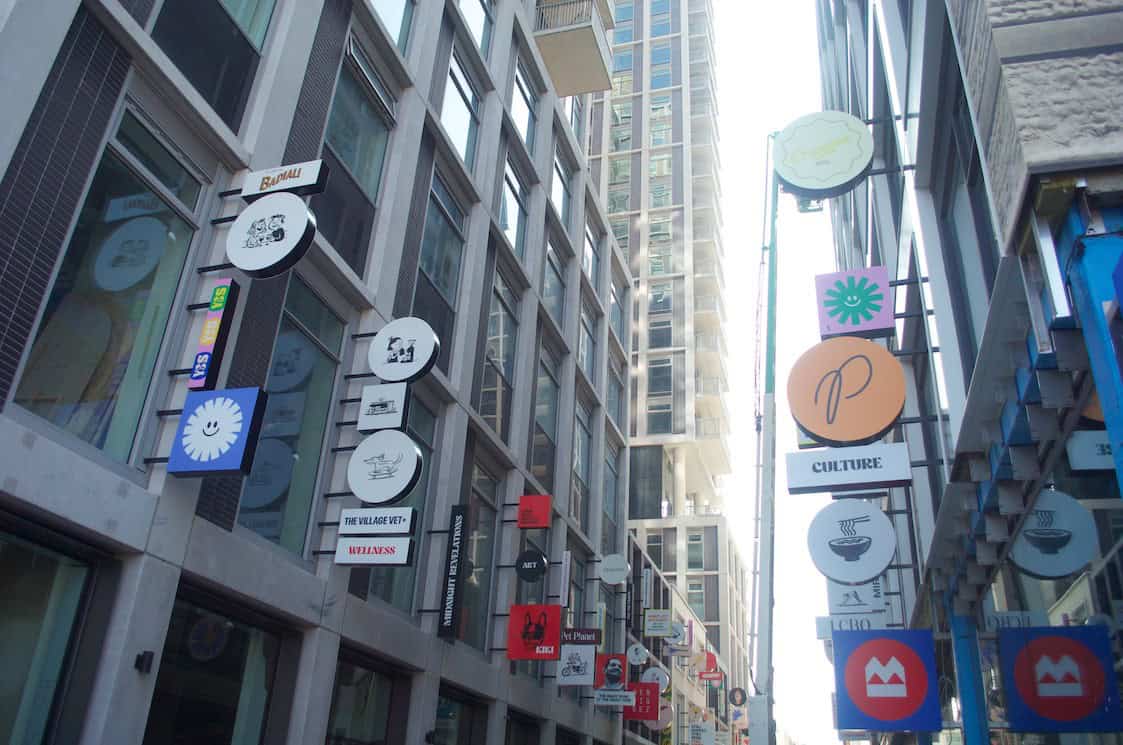
Honest Ed’s Alley
“The concept was to celebrate that passageway as a new public pedestrian pathway, honouring the site’s retail legacy and the vibrancy of the surrounding community.”
Mirvish Village, a new mixed-use development in the Bathurst and Bloor area, is set to boast 900 residential units across multiple buildings, 200,000 square feet of commercial space, a grocery store, and a range of unique shops and restaurants (some of which are already up and running). It’s also home to the aforementioned Honest Ed’s Alley, a Tokyo-style homage to the “entrepreneurial spirits” of iconic philanthropists and arts enthusiasts Ed and Anne Mirvish.
The alley, a slender enclave off Lennox Street, has a distinctly Japanese feel and aesthetic, creating a playful illusion of sky-high, stacked shops and eateries by installing neon signs one atop the other.
Mirvish Village, Moran says, loosely borrows from Japan’s vertical retail model, with second-floor commercial spaces integrated into several buildings and set within restored heritage homes.
While the alley won’t be home to floor upon floor of shops and restaurants like similar streets or alleys in Tokyo, Seoul or Ho Chi Minh City, it has 26 move-in-ready incubator and micro-retail spaces for entrepreneurs who might struggle to secure affordable tenancies in other parts of the city. The spaces are turnkey, with no major deposits required and no long-term lease baked into the contract.
As of now, 10 of the 26 units are leased.
In a city with low commercial vacancies and steadily rising rental rates, the model offers a small lifeline to independent businesses being priced out of Toronto’s densest neighbourhoods.
“I love Mirvish Village. I think the Honest Ed’s Alley concept is incredible,” Aaron Binder, a long-time business owner and representative of Better Way Alliance, a group advocating for commercial rent reform, tells YourCityWithIN.
Binder has long been a champion of smaller restaurants and retailers who are struggling to stay profitable in a city (and province) with a finite number of brick-and-mortar spaces and virtually no guardrails on commercial rent hikes. His organization’s latest report, he says, found that commercial rents in Toronto increased from about $19 per square foot to about $55 per square foot over a five-year period.
“That’s almost a tripling of rent prices for retail businesses. We do need more spaces like this.”
The 26 units in Honest Ed’s Alley are small, ranging from about 200 to 400 square feet. The smaller footprint translates to a lower overall rental rate, increasing the appeal to non-chain shops and restaurants that can take a chance on a smaller space without being pressured to lock in for years.
“These are spaces where artists can afford to operate in them, where you can try an idea as a new business owner and the rent isn’t going to crush you. It’s still expensive. It’s still Toronto rent, but because it’s 400 square feet, you can test out your concept, see if it works, and then either scale up or go online if your business can be brought online,” Binder says.
The alley is unique not just in Toronto, but also in the overall Mirvish Village development. The community already boasts a newly opened park, residential buildings, a sophisticated two-floor bookstore-and-bar hybrid (appropriately named Bookbar), and a second outpost of the profoundly successful Pizzeria Badiali, a local mainstay that has become famous for the hours-long lineups it continues to generate at its first Dovercourt Road location.
Peterson’s Moran says that while the Honest Ed’s Alley leasing model isn’t common in Toronto, it’s far from untested.
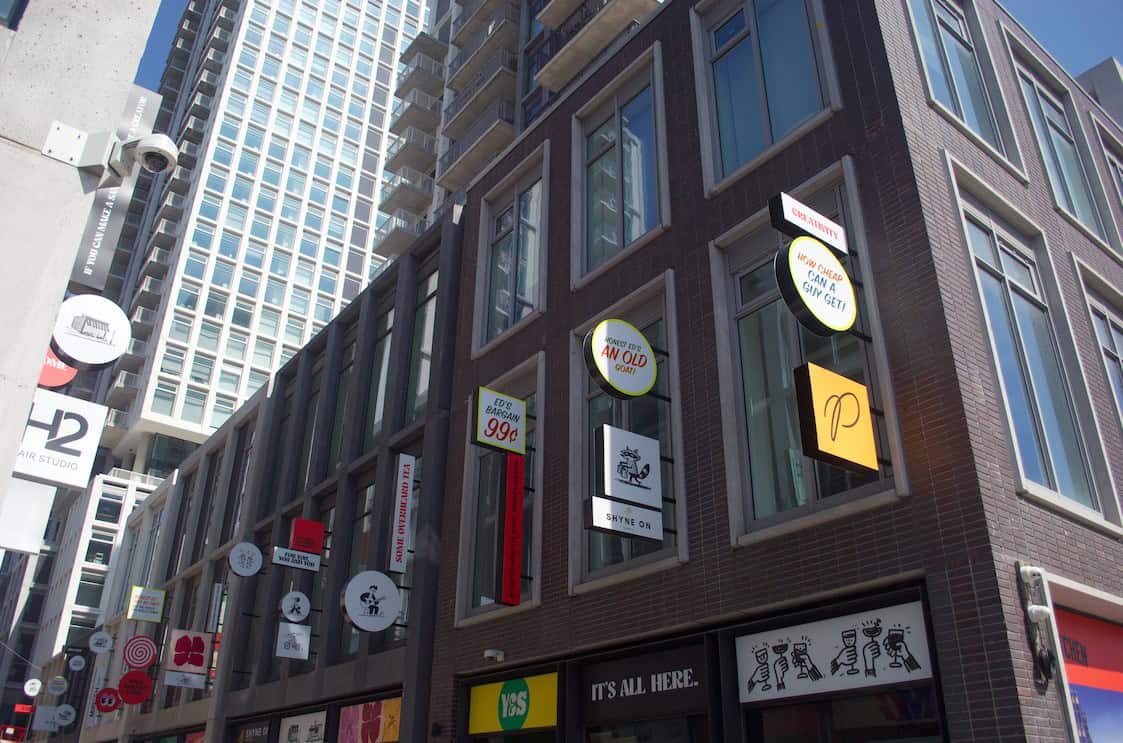
Honest Ed’s Alley
Like Binder, he says the concept is well known for its flexibility, which entices businesses with less funding to play with.
“Incubator and micro retail formats like this exist in various forms in cities all over the world. The spaces are designed to reduce barriers for small businesses through shorter lease commitments and more flexible financial requirements, giving entrepreneurs room to test a concept without the burden of a long-term lease,” Moran says, adding that it’s not a time-limited pilot initiative.
“We see this as a long-term complement to Mirvish Village’s broader tenant mix, and as a way to keep the retail landscape dynamic, support new local operators and continually refresh what residents and visitors experience in the alley.”
As for what businesses will call the alley home, future tenants include a cookie shop, a gift shop and a jewelry store (just to name a few). Taz Mulji, co-founder of future tenant Batch Cookies, says she sees the alley as a way to bring her business back to a brick-and-mortar setting after she was forced out of her first location during the pandemic.
“I live nearby, so anytime I was driving down Bathurst I’d see the signs for the Mirvish Village development. We’d also already been thinking about bringing Batch back, but we knew that opening a large format storefront wasn’t realistic for us,” Mulji told YourCityWithIn in an email.
“When I saw the signs for ‘micro retail,’ I got curious about what that meant and looked into it. It seemed like it could be a really good fit for what we were looking to do with Batch.”
Mulji says Batch reached out to listing agents to inquire about available units in late 2025. After that, she and her partner spent months figuring out how to resurrect their in-person shop in a small space.
“There really aren’t many opportunities like this for small food and retail businesses. Having a street-level space in a micro retail format is pretty unique, and we loved the idea of being part of a bigger development while still bringing something small and local to the neighbourhood,” she says.
Binder says the alley is unique in that it will bring a “cool community of business owners” to the area and, by extension, a unique mix of customers.
“The types of customers that are going to show up and that are showing up for these businesses, I think, are exactly who we want in Toronto,” Binder says.
“It’s locals. It’s going to be tourists because this very much looks like walking through certain parts of Tokyo, right? So we’re going to get a good amount of tourists here, which is going to really boost the economy in Toronto. We have one of the biggest tourism economies in North America.”
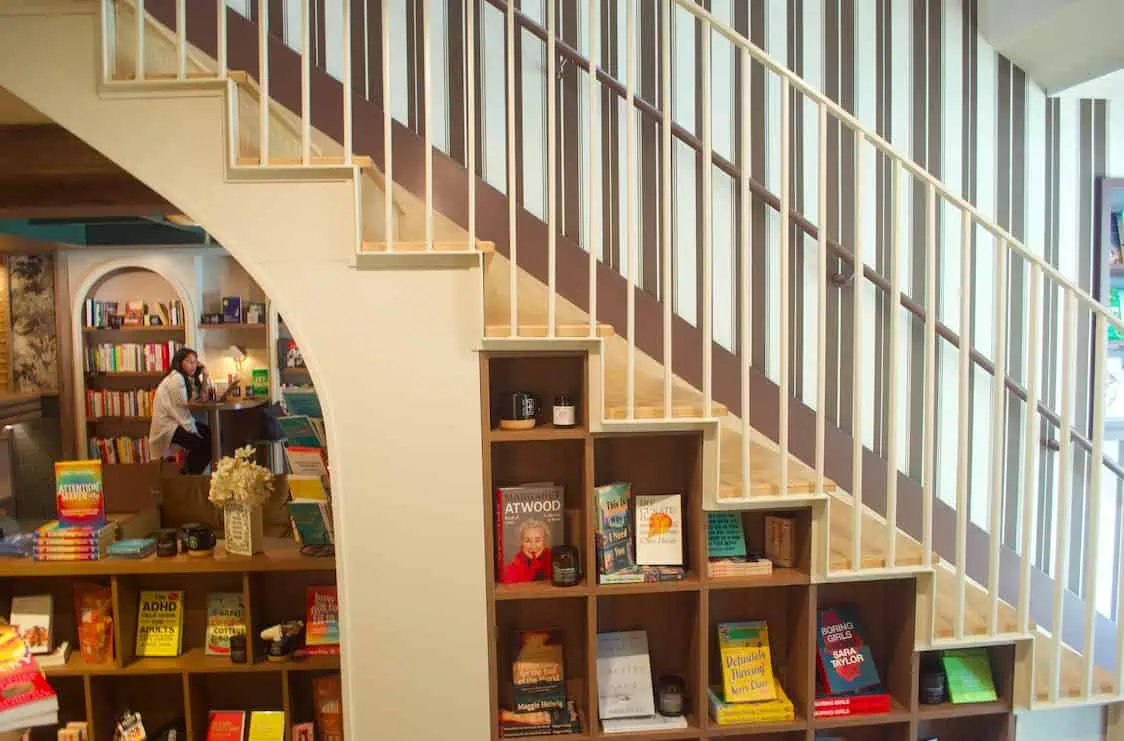
Book Bar, located on Markham Street in Mirvish Village
Binder says that in a city that welcomes about 30 million people a year, a successful retail model–should the alley succeed long-term–will likely set a positive precedent that could lead to more micro-retail in different areas.
“You slap down an Honest Ed’s Alley, I think that gets replicated across the city because it brings in that kind of vibrancy that we want to see downtown Toronto, but is priced out.”
Another pull for retailers is the resurrection of a part of the city’s history, as Honest Ed’s itself, just as iconic as its owners, became something of a victim of urban modernity in 2016, closing the doors of its garish (but lovable) discount shop after almost 70 years in business.
Mulji says she’s excited for Batch to be a part of the Mirvish story.
“The development also has so much history. I think a lot of people in the neighbourhood have been waiting to see this corner come back to life, so it’s really cool to be part of that,” she says.
“And we love the whole outdoor community aspect of Mirvish Village, the restored houses on Markham Street, and how everything comes together. The developers have also been really supportive and genuinely seem to want all the businesses to do well.”
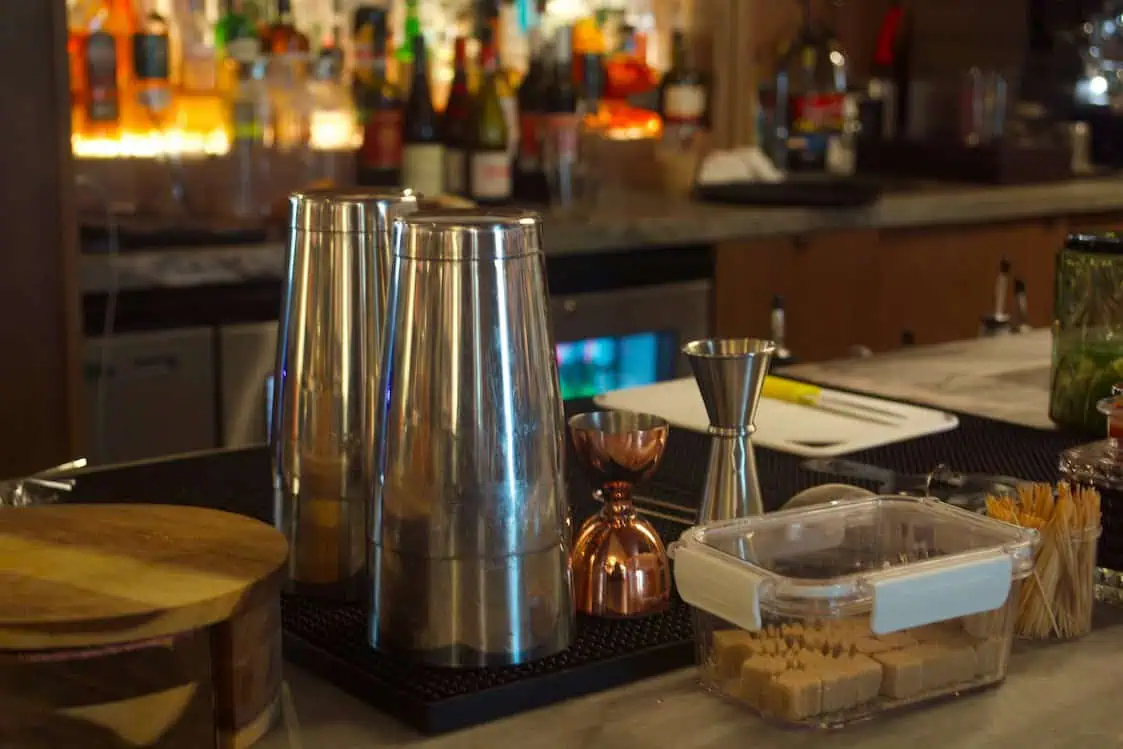
Book Bar
Moran senses optimism from those who live and play in the area.
“Feedback has been positive for this concept. We’ve definitely seen a lot of excitement about Honest Ed’s Alley, in particular with the refurbished Honest Ed’s sign going up, which has generated a lot of eyeballs on this part of the project,” he says.
“Retailer interest has also been strong, particularly among independent and emerging operators drawn to the low-barrier, flexible format.”
As for whether other developers will test-drive the concept, he says it’s too early to say yes–but also too early to rule it out.
“As for the replication elsewhere in the city, it’s still early days, but if Honest Ed’s Alley can deliver the kind of vibrancy and community connection we’re aiming for, alongside the flexible leasing terms for incubator businesses and entrepreneurs, we’d be glad to see similar concepts take root in other neighbourhoods.”