
Strange ghosts and top-notch cast draw over 1,000 viewers to Toronto theatre
Published February 24, 2026 at 5:09 pm
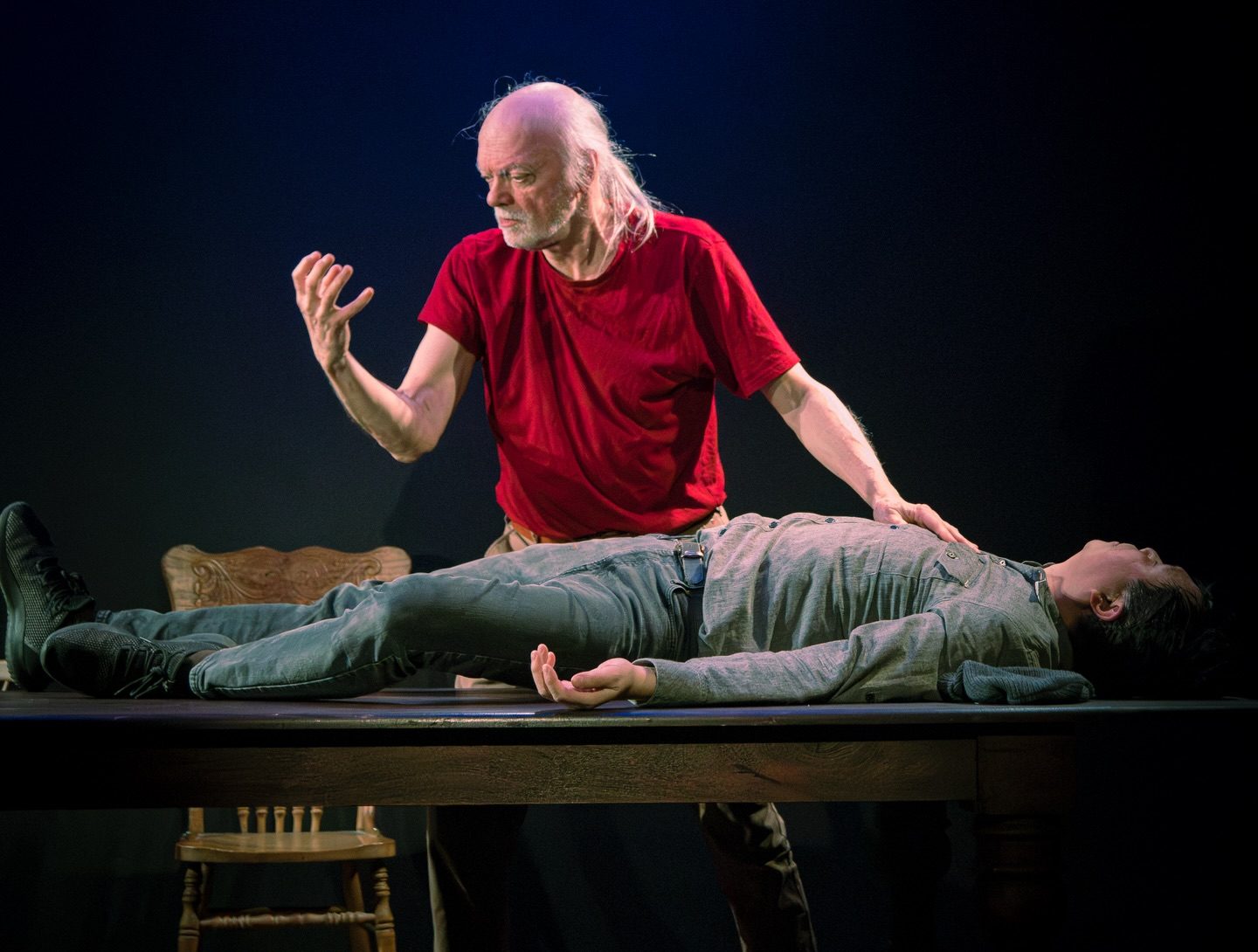
While there’s certainly nothing wrong with spellbinding special effects, the quiet success of the Canadian debut of a production that cobbles together disturbing, bizarre, touching and funny Chinese fables shows that you can lean into the quasi-supernatural with nothing more than table knocks and street clothes.
Earlier this month, Pu Songling: Strange Tales wrapped up its well-attended run at Crow’s Theatre in Toronto’s Leslieville neighbourhood. Produced by the Dora Award-winning Theatre Smith-Gilmour (Metamorphoses 2023), the English-language adaptation of a selection of Chinese writer Pu Songling’s (1640-1715) famed stories leans into the strangeness of the material early on, confronting audience members with wide eyes, shrill shrieks, and lolling tongues.
The show, which ran from Jan. 13 to Feb. 8, welcomed 1,325 viewers.
But despite the grisly underbelly of some of the centuries-old tales penned during the Qing dynasty, the cast–who were a key part of the adaptation process–manage to move effortlessly between dark, macabre storytelling and wildly inventive (not to mention funny) performances.
Starring John Ng (perhaps best known as Mr. Chin in Kim’s Convenience), Dean Gilmour (co-creator of Theatre Smith Gilmour), Diana Tso (The Cherry Orchard, The Komagata Maru Incident), Steven Hao (Killing Time: A Game Show Musical, Anne of Green Gables) and Madelaine Hodges (The Boys, The Two Noble Kinsmen) and directed by Michele Smith, Pu Songling makes near-ancient folklore about demons, shapeshifters, philanderers, otherworldly seductresses, sexual predators and reincarnated spirits timely and, most importantly, accessible to modern audiences.
“It’s very exciting because we’ve been working on this for two years. We had different workshops and played with different stories and this will be the final project, the final version,” Smith tells YourCityWithIN.com.
Smith says she came across Songling’s Strange Tales from a Chinese Studio a number of years ago in Paris and knew she had to bring it to a local audience.
“We are very faithful to the story, but there’s an element of how do you do things and how do you adapt to the stage and how do you make this work for the theatre,” she says.
“The stories we choose are stories that speak to us now. There are many beautiful stories and our thing is to make sure they speak to us now, so that was the guiding principle.”
The stories, selected from a collection of over 500 tales written between roughly 1670 and 1700, run the gamut from horrific to comical, depicting everything from unexpected encounters with shape-shifting foxes to darkly hilarious encounters with violently amorous spirits (a highlight from the play that’s anchored by an absolutely unforgettable, all-in, hogwild performance from Tso).
While the 11 stories selected by Smith were written hundreds of years ago, the underlying themes–justice, cruelty, control, ambition and temptation–are just as relevant today, and the vignettes touch on deeply dark and sensitive subjects that are, in many ways, almost as difficult to broach now.
“For instance, there is one story about a woman who is being raped by a spirit. That one is very contemporary, so it was chosen for that reason. Another one was chosen for being about the sense of revenge and people losing their families and looking for something–a lot is going on in the world, a lot of war. There is one that was chosen because it was about a man who [unknowingly] has sex with his child. These are subjects that are hard,” Smith says.
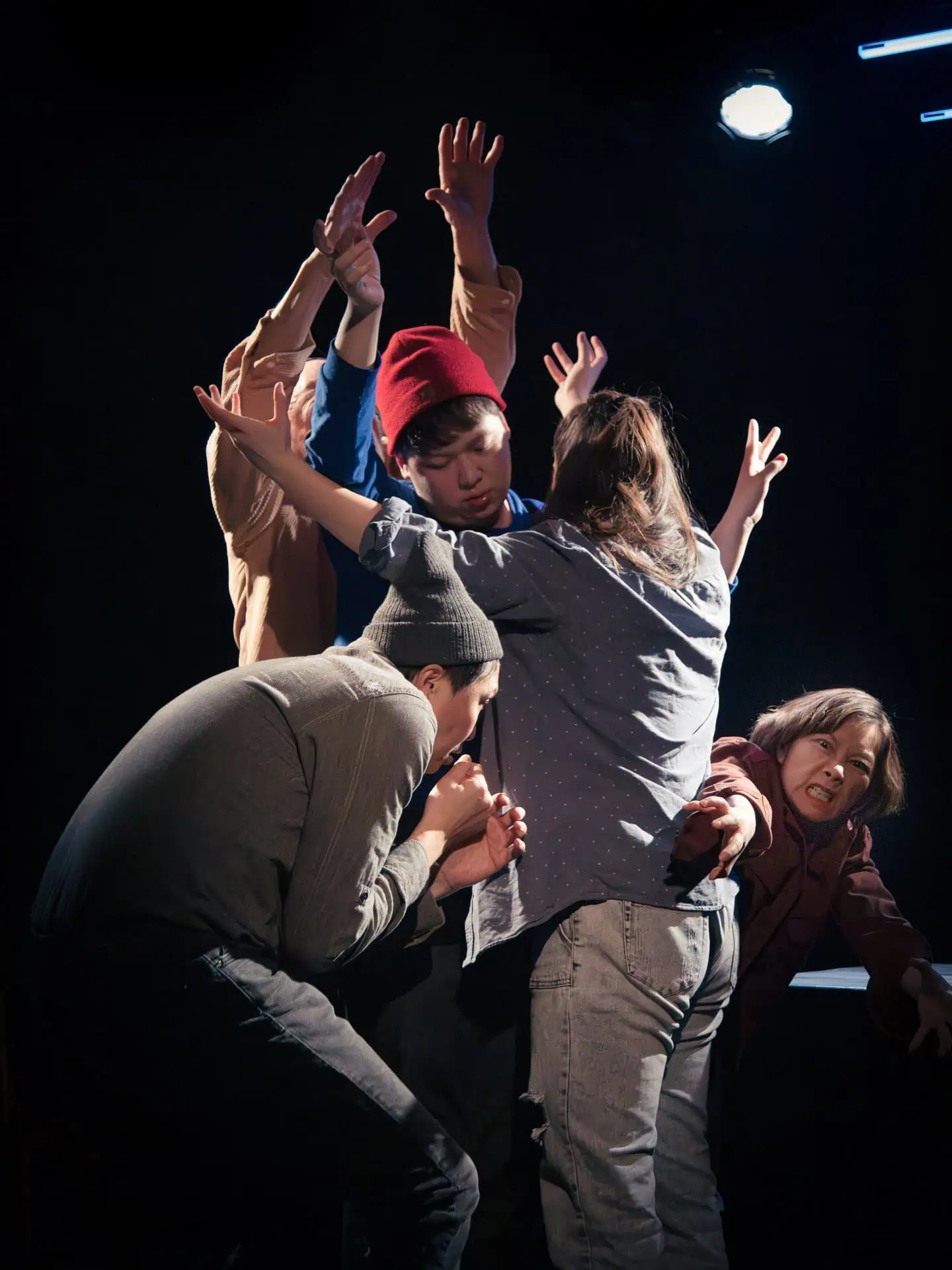
While hard subject matter can be difficult to depict on stage, Strange Tales offers moments of lightness and absurdity that shift the mood rapidly, offering a unique viewing experience that’s hard to describe.
Hodges, one of the stars of the play, says the adaptation process was interesting because they could always pivot back to the source material as they decided how to bring the works to life on stage.
“I’ve worked on physical theatre in the past, and I’ve also been a part of the creation process of new work in the past. But what made this show unique in terms of its process was the fact that we were working off of a source material,” she says, adding that they would consult both the translated and Chinese versions of the works and amend the original script as needed.
“Sometimes we would start working on a story, and we’d be kind of chipping away at it, and then several weeks into the process, we’d go, ‘okay, let’s go back to the source material. Let’s go back to Pu Songling’s original story.”
The play, which takes place on a somewhat spartan stage and uses little in the way of props or costumes, relies on movement and expression to pull audience members into the stories–something Hodges describes, fittingly and flatteringly, as ‘clown-adjacent.’
“I know Dean [Gilmour] and Mimi [Smith] don’t like that word when they refer to their own work, but [the play] does feel heightened and clown adjacent, as Dean and Mimi both trained at Jacques Lecoq in France and that, I think, influences the way that they work and the type of work that they make,” Hodges says.
“I think that this show falls under that kind of clown category, which is a lot of fun to do and also very tiring for the body. I have an ice pack on as we speak.”
As for what it was like to move from darker and more challenging scenes to sillier, more lighthearted ones, Hodges says the transitions weren’t as jarring as one might think.
“We do toggle between very differing tones. I’d say some are really, really funny moments, and then there are some darker themes in the play. It honestly doesn’t feel that much different because I think good comedy comes out of characters taking the situation they’re in very seriously, even if the circumstances are ridiculous,” she says.
“It doesn’t feel like a huge shift inside the main thing. I think what changes is the rhythm in the scenes. There’s an inherent rhythm to comedy and also drama…but it doesn’t feel like a huge leap to go from a serious story to a more lighthearted one.”
Now that the show has wrapped, Hodges says the feedback has been largely positive.
“It’s interesting. I think people are surprised by how much fun they have in a show with such dark themes. My fiancé writes short horror stories, so he was fascinated by these stories. Most of our audiences, including him, aren’t familiar with Pu Songling and his work, so it’s satisfying to be able to introduce him to this Canadian audience.”
For Smith, showing the play to theatre-goers after such a long development process has been uniquely satisfying.
“It’s really incredible showing this to people. It’s really hands-on work; that’s how we work and how we’ve been working for many years. The physicality, the spirituality. The movement can be very spiritual as well,” she says.
“The most important word is strange. It’s very strange, we have never done anything like it. It’s beautiful and scary.”
Photos from Theatre Smith-Gilmour’s official Facebook page