
Spooky stories and ghostly activity reported at Exhibition Place in Toronto
Published October 29, 2025 at 3:16 pm
While generally thought of as a place for fun and amusement, Exhibition Place is also known for some pretty spooky ghost stories.
From mid-August to Labour Day each year, the grounds are home to the Canadian National Exhibition. Throughout the year, events are held in its buildings.
Construction of the exhibition buildings started in 1905. But one of the oldest buildings on the site is the Stanley Barracks, which was built in the 1840s by the British military. With a history dating back that far, it’s not surprising that there are many stories associated with the place.
Exhibition Place records and archives supervisor, Fiona Crawford, put together some of the most interesting tales for YourCityWithIN. Most of the events listed below have had three to four different people witness them, often staff,
and especially the security staff, Crawford said.
Here are four Exhibition Place buildings with ghostly activity:
General Services Building
Located at 2 Manitoba Dr, this unassuming building is probably the most haunted building on the grounds.
Built in the early 1900s, it was originally a hydro-electric power station, and now houses the Exhibition Place operations division, security and the archives.
“Staff in this building have heard whistling and footsteps in the hallways, crashing noises with no evidence that anything fell, and the sounds of a cocktail party taking place behind closed doors, complete with music and clinking glasses, but no one is there,” the archivist notes read.
The General Services Building was the scene of a “chilling murder” in 1912. In early April of that year, junk dealer Joseph Rosenthal was found dead in the hydroelectric yard. The only witness to the crime was a man by the name of “Dunkelman” who had accompanied Rosenthal to the site to buy scrap wire. Dunkelman was also attacked alongside Rosenthal. He barely survived the ordeal and managed to crawl up Strachan Avenue to find help.
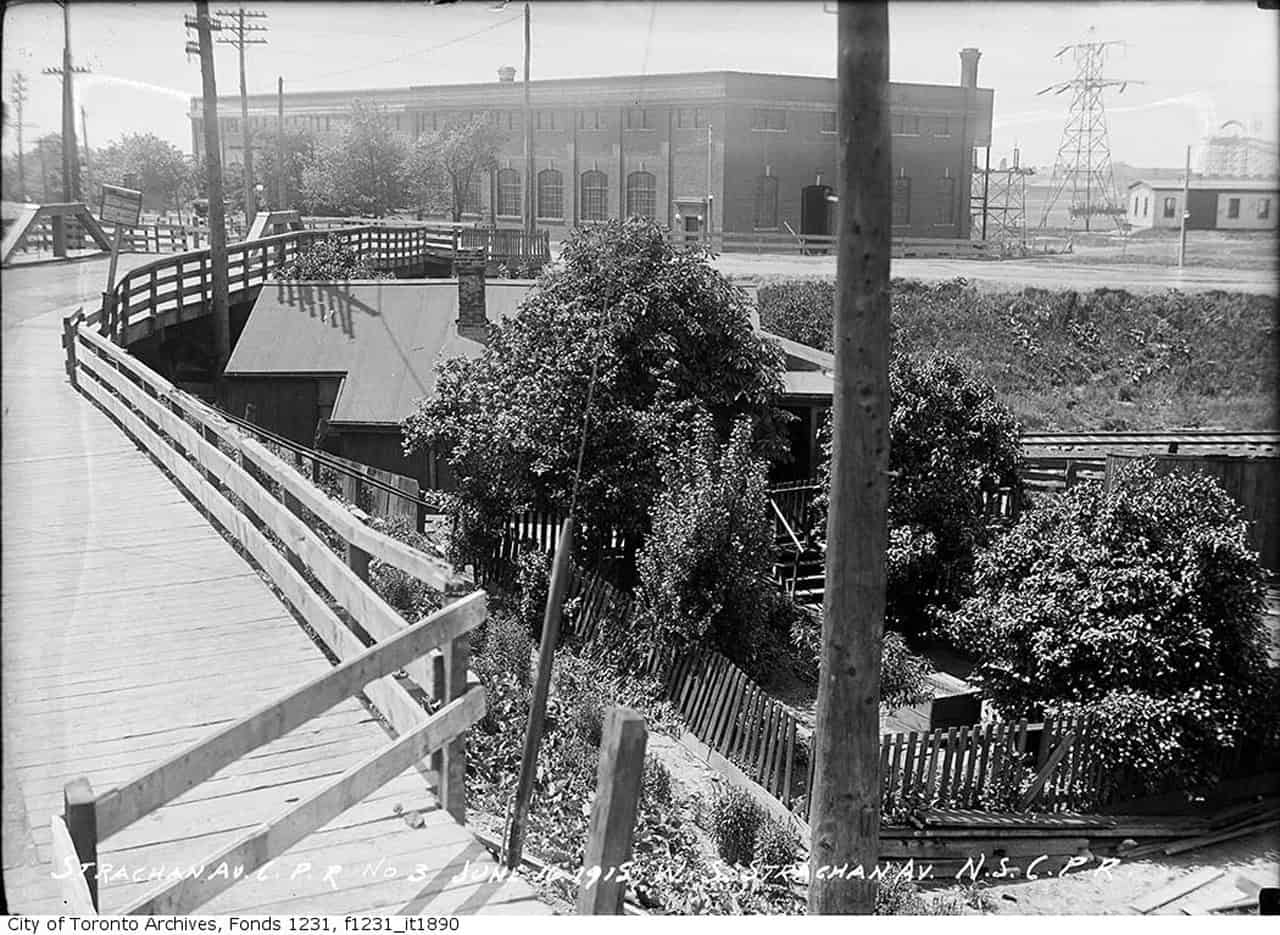
The hydro-electric power station, now the General Services Building, seen in 1915. (Photo: City of Toronto Archives)
A hydro employee named Charles Gibson lured the two men to the site for a scrap metal deal. The deal reportedly went sour and Gibson attacked the two men, leaving both for dead. Gibson was found hiding from police in the building and later charged with murder and sentenced to hang.
In a second tragic incident, hydro employee Michael Sullivan suffered a horrible death in the basement on Oct. 9, 1924. The night before, there had been a big fire that burned half of the building. It plunged the entire city into darkness. One of the first things that had to be done was to make a temporary connection to restore power to the city. While clearing debris in the basement, Sullivan touched a live feeder with his knee and at the same time, his head came in contact with an iron strap, and the connection killed him instantly.
Stanley Barracks
The Stanley Barracks was built in 1841 by the Royal Engineers of the British Army to replace Fort York. It originally consisted of six buildings, but only one remains today – the Officers’ Quarters, which is now a part of the Hotel X Toronto complex.
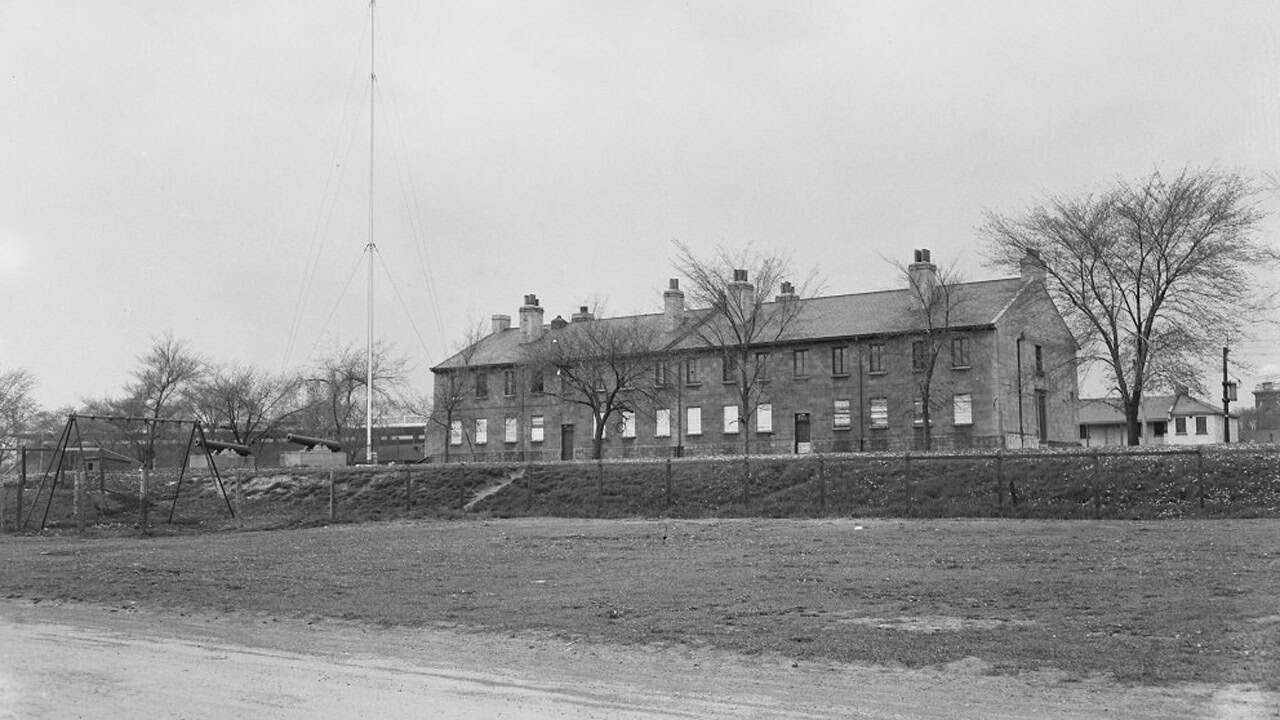
The Stanley Barracks.
In the past, staff have heard knocking on doors, run to answer, but find no one there. Items that staff were working with would be out of place or gone. Doors that were locked on the first security patrol suddenly became unlocked and opened later in the night, when no other personal had been in the building. Sensors often went off indicating a water leak in the basement or problems elsewhere in the building and yet nothing is ever found.
Horse Palace
The Horse Palace, built in 1931, is largely empty throughout the year, used by the Toronto Police Mounted Unit and a riding academy year-round. The second floor’s stalls are only occupied during the CNE and the Royal Agricultural Winter Fair.
Staff at the riding academy have reported hearing phantom horses walking above their heads on the second floor, and several cleaning and security staff have seen a ghostly officer riding his horse, who vanishes when they take a second look.
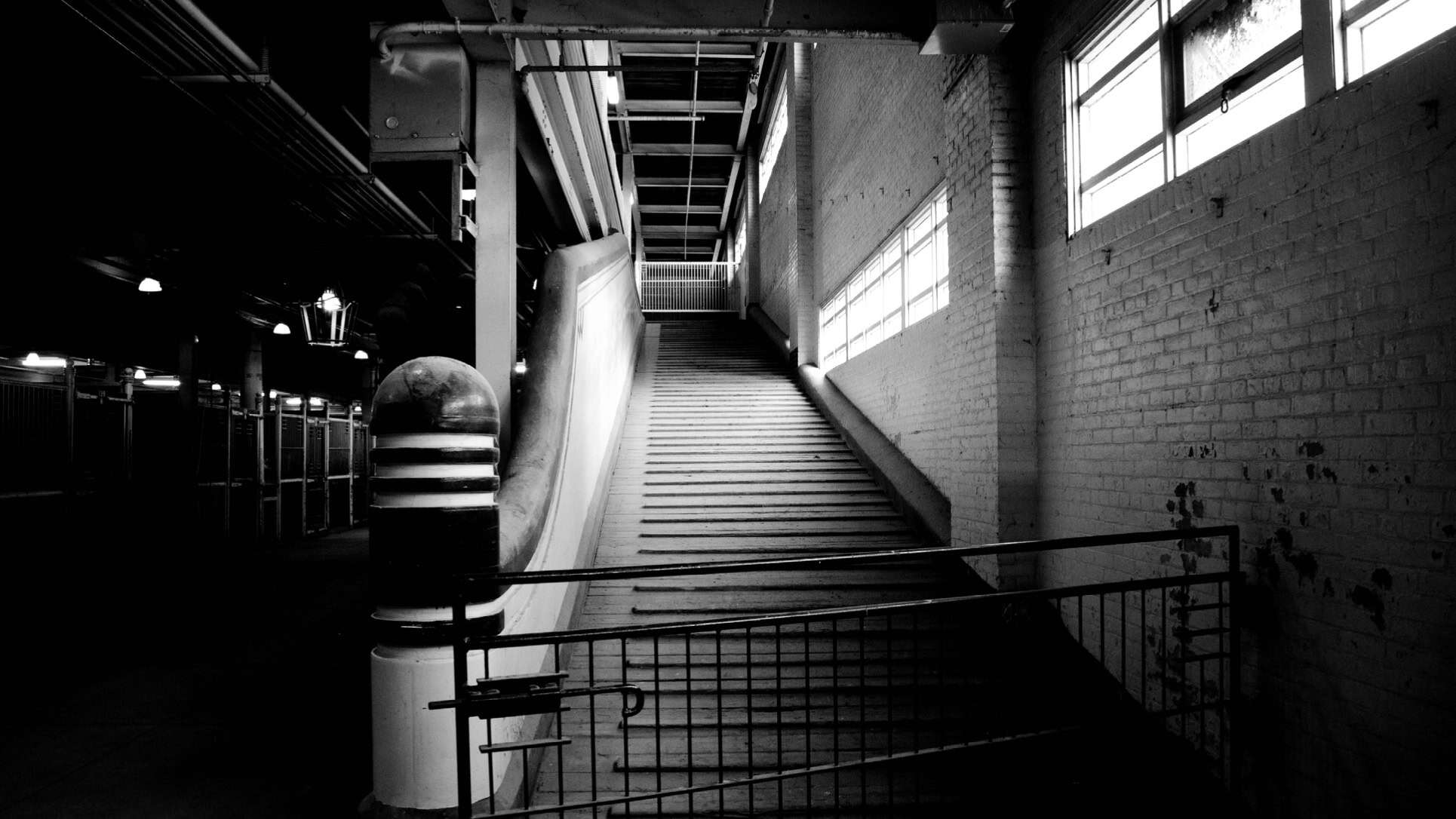
An interior shot of the Horse Palace. (Photo: Greg Korek)
During the Second World War, the Exhibition grounds was a military camp from 1940-1946. The Horse Palace was used as barracks for soldiers waiting to go for training and then overseas. For many of them, this was their last memory of Toronto. Over 12,000 men went through the barracks, and quite a few never came back.
Horticulture Building
Many security officers have mentioned that this building seems to be the worst in terms of “things that go bump in the night.”
One night, an alarm sounded at the Horticulture Building, indicating a flood in the basement. The security officer on duty responded to the alarm and arrived at the empty and locked building. He went into the basement and found the source of the problem in a locked room. After unlocking and entering the room, he noticed that a water valve had been twisted open, allowing water to pour freely into the room.
The police and fire departments arrived moments later as the alarm was monitored by both departments. Indeed, only the fire department was in possession of the equipment needed to close the valve. All those involved in the incident found it impossible to understand how the valve was opened in the first place. Perplexed, both the fire and police departments left the scene once the situation was under control.
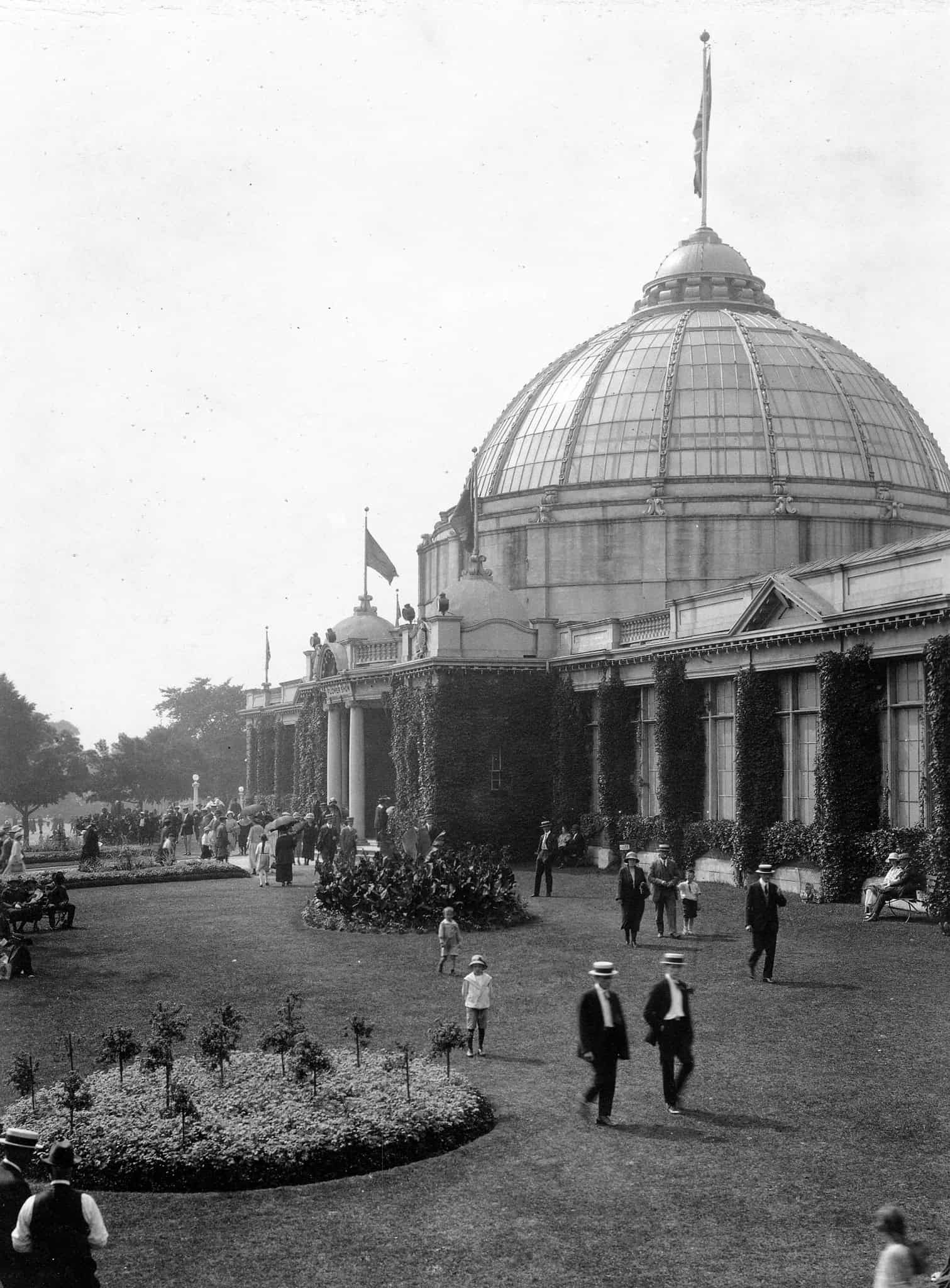
The Horticulture Building seen around 1927.
Left alone, the security officer began locking the building and turning off the lights. As he headed towards the exit, he heard the sound of someone trying to open the door from the other side, but the brute force being used unnerved the
officer. Running toward the noise, he kicked the crash bar, forcing the door open, only to find no one on the other side, even though he had a clear view in all directions.
Shaken and pale, he returned to the security office only to learn this incident occurred on the anniversary of the 1949 Noronic disaster.

Passengers escape the fire on the SS Noronic on Sept. 17, 1949.
On Sept. 17, 1949, at 2:30 a.m., while the S.S. Noronic (a passenger ship) was docked in Toronto, a fire broke out in a linen closet. Within 15 minutes, the entire upper portion of the ship was ablaze. The rapid fire resulted in the death of 119 passengers.
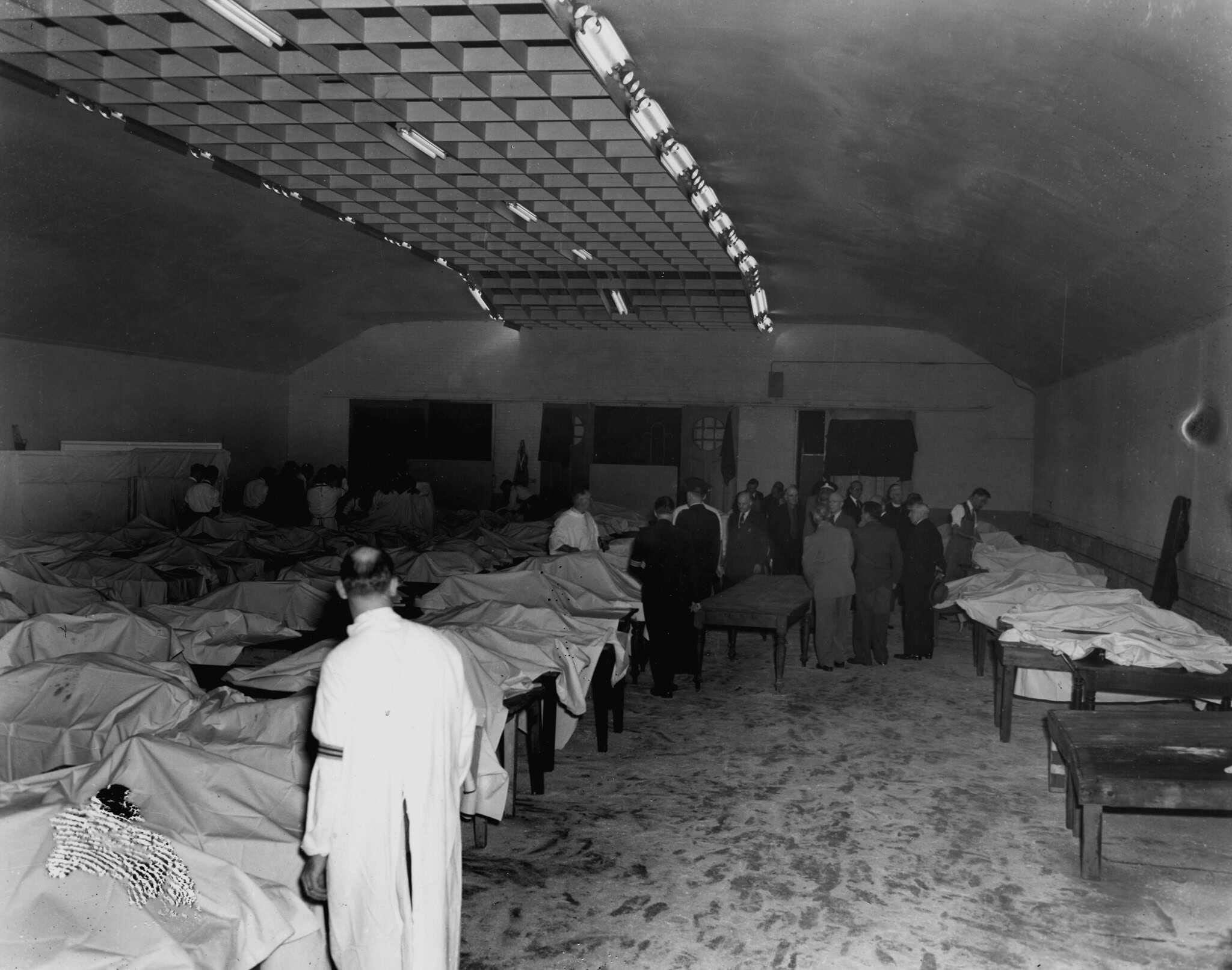
On Sept. 18, the Horticulture Building was turned into a temporary morgue for the burned victims. The victims were laid out on tables throughout the building. Doctors and nurses worked with police investigators to identify the bodies so the next of kin could claim them. Many were badly burned and could only be identified through personal items (such as jewellery) or by dental records and fingerprints.
Learn more about Exhibition Place here.