
Shops and cafes can now open in some residential areas in Toronto, but will they?
Published December 5, 2025 at 1:42 pm
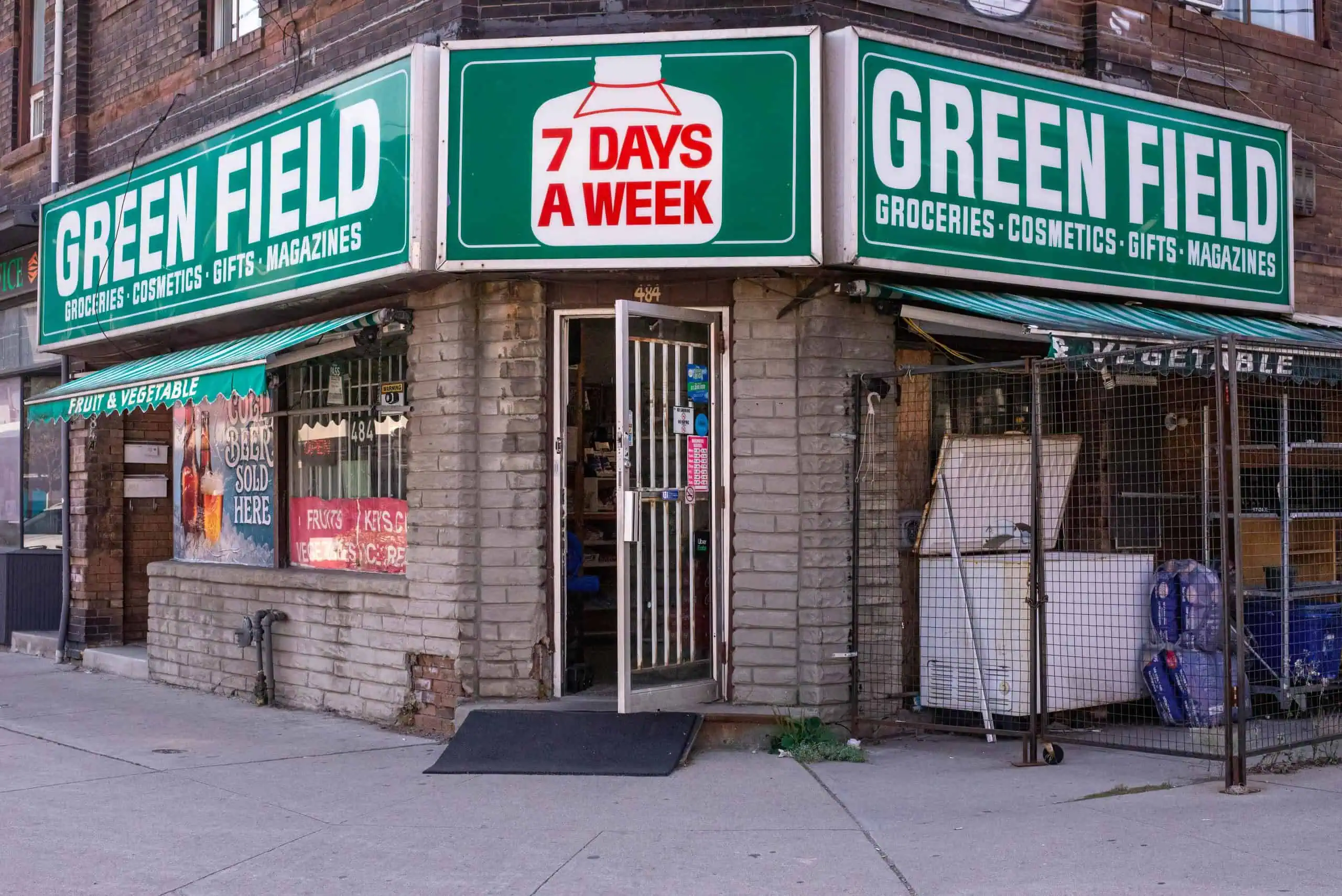
A dynasty business is cautiously celebrating a Toronto that welcomes more residential storefronts.
Last month, the City of Toronto gave the green light for several amendments that allow neighbourhoods to welcome new residential businesses, such as convenience stores and cafes.
Toronto, while not without its hidden gems, has often been viewed as a step behind its contemporaries, like Montreal or New York, as those cities have countless bodegas, bars and coffee shops entrenched in neighbourhoods, often for decades.
Toronto Mayor Olivia Chow has stated that small businesses are the “backbone” of Toronto and hopes to see more of them boost the local economy through this new policy.
On paper, as of last month, the City of Toronto has allowed businesses spanning up to 1,200 square feet to open in neighbourhood interiors. Retail spaces and cafes need to match a certain criteria and be within a certain proximity of parks and schools, or opt for real estate on corner lots for accessibility.
Wards where these types of shops can open include Beaches-East York, Davenport, Parkdale-High Park, University-Rosedale, Spadina-Fort York, Toronto Centre, Toronto-St. Paul’s and Toronto-Danforth.
Recent online discourse, however, has shown a tug-of-war in perspectives, with some crying scandal at the prospect of a mom-and-pop shop across their street, citing litter and neighbourhood disarray as a result.
The first domino of this discourse fell in October, when a formal complaint was submitted to the minutes of a Planning and Housing Committee meeting on behalf of a west-end homeowner. The resident, from the Trinity-Bellwoods area, said the renowned pizzeria Badiali on Dovercourt Road posed a “huge issue” for the serenity of local residents.
Response from Torontians was swift, with many — but not all — citing the complainant as a NIMBY (Not In My Backyard), a stereotype often reserved for tight-laced suburban dwellers.
Due to this perceived prudishness, some heavy hitters in Toronto’s residential business world have stepped in to clear the air and share plans for a hopeful future for small-time proprietors.
“These places, they give the neighbourhood some character, some vibrancy, just you know, the type of things we all want to live in this city or right?” Evan Georgiades, owner of the Monarch Tavern, told yourcitywithIN.com.
To those not familiar with west-end topography, the Monarch is a corner bar that has stood on Baldwin Street for decades.
Baldwin, a hidden stretch of Toronto’s Little Italy, has bolstered other cherished locations for just as long, including San Francisco Sandwiches and Bitondo’s Pizzeria.
Georgiades has been running the show at the Monarch for 15 years, including its top-floor bar, main-floor venue space, and, recently, helping oversee its newest installation, Bindi’s Burgers, in the upstairs kitchen.
With a decade and change foothold and playing triple-duty with three spaces, when news broke that other first-time shopkeepers and hospitality players would have a shot at making something special, Georgiades put the word out to bring like-minded people together to help as much as possible.
“We actually had a meeting at the Monarch to discuss how this would play out. There were several people from the city planning side, and a few people who were running or planning on running businesses, and we discussed things — primarily the inordinate number of hoops one has to jump through to start a small residential business,” says Georgiades.
Highlighted issues included the case-by-case nature of obtaining city approval and whether the new policy would sway officials to cut red tape. Additionally, earning the trust of residential neighbours was a key focus, with Georgiades citing a long fight with the city to secure the Monarch patio space, which only resolved once neighbours around the Monarch vouched for them.
Georgiades hopes that new businesses trying to get as much mileage out of their space as possible don’t face the same hurdles.
“You are just stuck spending an inordinate amount of time trying to make something simple happen, and often, it’s only because you are trying to create something where people can go out and find each other.”
Even with the reins loosened on residential real estate, given his experience, Georgiades still thinks there will be a lot to maneuver through. Beyond that, given the current state of the GTA economy and the cost-of-living crisis, these locations will have to stand on more than just their charm.
As a result, for those running the few residential businesses already in Toronto, 2026 will be a waiting game to see who pulls the trigger on setting up shop, and more importantly, where.
“The first neighbourhood that I want to see thrive is ours. I feel that there has been too much to discourage businesses down here, as a lot of them have gone away; there are only a few of them (including us) who remain,” says Georgiades.
Georgiades encourages anyone opening a shop in Toronto to “arm themselves” with knowledge of the space they are inhabiting, the people who live there, and what makes that particular neighbourhood special in the eyes of those who share a sidewalk.
Concerning whatever reality next year will bring, when it comes to attitudes condemning the prospect of residential storefronts, Georgiades, more or less, is gently urging people to be patient and look at what community spaces do for the people living in them.
“Consider, really, what you are getting in return for the often only odd disturbance. Our city, the culture of our city, would really benefit from people, well, de-clutching their pearls a little bit, and reminding themselves why they wanted to move to, or choose to, keep living in this town in the first place.”