
Pickles are taking Ontario restaurant menus by storm, but is the trend here to stay?
Published July 10, 2025 at 4:41 pm
Pickles–and pickling–have always been here, but it was only recently that I raised an eyebrow (and chuckled) at the inclusion of not one, but two (possibly even three) pickle-anchored dishes on the menu of a new (and trendy!) snack bar in Toronto’s east end.
While dill pickles are fine, I’m unconvinced that a brine-soaked cucumber, best known for sitting humbly on a fried chicken sandwich or Cubano, should be the star of any show. Pickle-flavoured chips? Sure. A dill pickle dip? Absolutely. An enormous heaping of tiny gherkins around an otherwise delightful serving of tartare? Inventive, but overwhelming. Slices of pickles on a breakfast sandwich? I prefer tomatoes.
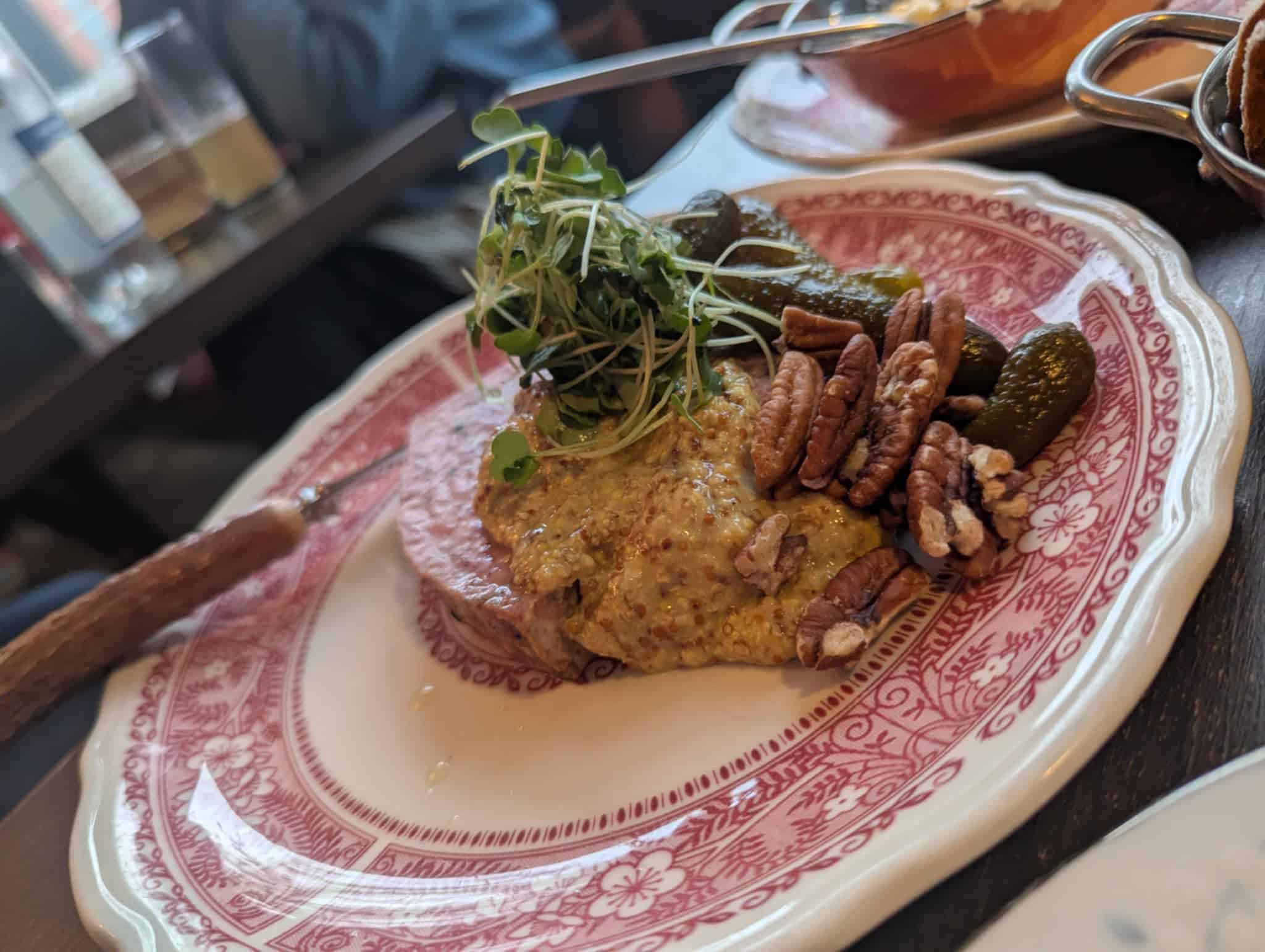
Gherkins around a (delightful) tartar
But as hard as it was for me to admit, it’s not about me right now, it’s about pickles–and when it comes to making the tart veggie the main event, the people have spoken.
“Pickles are not a trend,” Adin Wener, the cofounder of the Toronto-based Henderson Brewing Company, tells YourCityWithIN.com.
Wener would know, as Henderson runs the relatively new (but reliably busy) Picklefest Food and Drink Festival in Toronto.
“We throw Canada’s largest pickle festival, which is going into year three in Toronto this year and we’re taking it to Calgary in 2026,” he says, adding that the festival celebrates all things fermented and includes a home pickling competition that has drawn entries from all over the GTA.
While Wener can admit that pickle drinks, desserts and libations might fall into the trendy-for-now category (more on that later), he says that pickles are a staple because they, much like other pickled foods, have always been here–often out of necessity.
“One thing we’ve noticed is that it really is a generational thing–especially if you come from Eastern Europe,” Wener says.
“People pickled out of necessity; they had to ferment food and store it. Pickles are having a moment, but they’ve always been there.”
Wener is right.
In 2014, I invited a friend over to my new-to-me condo and she suggested celebrating the housewarming in a decidedly Eastern European manner: by marking the occasion with a shot of vodka chased by pickles. I’d never heard of the tradition, but I was intrigued and wish, to this day, we’d made it happen.
When I shared this anecdote with Wener, he said that for many people, pickles and pickling are an important part of someone’s heritage and history.
“One thing we love about Picklefest, and we’ve drawn about 8,500 people over two days, is a lot of multi-generational families come,” he says.
“Pickles have been around for hundreds of years and everyone has a connection or knows someone who has a connection to pickling in their family’s background and that’s more than the ‘trendy here today, gone tomorrow,’” he says.
“My wife’s grandfather made pickles in his bathtub.”
While pickles might be the star of the show right now, they aren’t typically top of mind when people think of historically important or significant foods. That said, pickling itself was revolutionary.
Pickling — stewing vegetables in acidic vinegar or brine — doesn’t just make foods taste better; it keeps them edible for longer.
According to wildbrine.com, preserving foods through drying, curing, fermenting, or pickling allowed earlier societies to transition from nomadic lifestyles (chasing food) to settling in one area and building permanent communities. Pickled foods could also be eaten in the event that people had to move from place to place, as they were easier to transport and didn’t spoil.
That said, the pickle-infused dishes that are hitting shelves and restaurant tables right now might not sell in a year or two, but they’re still making people smile in the interim.
“We watch the trends and pickles are having a major moment–a moment or a trend, it’s one of the two. They’re in every savoury snack and on every charcuterie board and they’re having a moment in the cocktail scene as well,” Sandra Smith, brand manager at Arterra Wines Canada, tells YourCityWithIN.com.
“We saw the opportunity to be a part of that and bring great flavour combinations to our consumers.”
Arterra, like many businesses in the food and beverage industry, noticed that pickles are everywhere right now. They’ve made their way into slushies and onto pizzas and since it’s important to strike while the iron is hot, the wine company decided to capitalize on the trend by introducing a recipe for a “cheeky, briny, all Canadian twist on a sparkling cocktail that’s guaranteed to turn heads and taste buds.”
The pickle spritz recipe the company promoted earlier this year features pickle juice (preferably Sunshine Farms Organic Dill Pickles), chilled sparkling wine (preferably Sandbanks Sparkling Secco), simple or agave syrup and a fresh dill pickle spear for garnish.
Smith says the cocktail checks a lot of boxes: it’s on-trend, it’s tasty and it showcases the company’s Canadian brands.
“Sandbanks is a well-known winery here in Ontario,” she says, referring to the popular Prince Edward County winery that’s been serving vino aficionados since 2003.
“We had some of our in-house mixologists come up with recipes using pickle juice and ingredients in consumers’ fridges right now. Pickles are trending and in everyone’s fridge, so we want to make sure these cocktails are delicious but also easy.”
While it’s normal for food providers to offer wild dishes to get people eating and talking (think almost every buzzed-about concoction to debut at the CNE every summer), Smith says the current pickle craze might be a product of people simply becoming more adventurous and the flavour actually giving dishes and drinks an extra something special.
“We’ve done some internal tastings and it’s well-loved and it’s surprising to a lot of people. We say ‘just try it’ and people say it’s amazing. It’s delighted a lot of our taste buds,” she says.
“The bigger trend is that consumers are looking for something different and unique. It used to be rye and ginger, but today’s consumers are much more adventurous. They try new and different flavour combinations. I think there’s such a variety in pickle flavours that it’s a trend we’ll see being for quite a while.”
Arterra is not the only beverage company going all-in on pickles.
Earlier this year, the Toronto-based Burdock Brewery announced that its viral, top-selling Lit Pickle hard seltzer would be returning–with some slight changes–to LCBO shelves.
In a news release, the brewery said the drink is not a gimmick.
“It’s a carefully crafted vodka-based seltzer with a balance of acidity, salt, garlic, and crisp cucumber flavour, creating a uniquely refreshing and savoury drinking experience,” the company wrote.
“Inspired by pickle martinis enjoyed at the South-Western Bathhouse and Tea Room in Mississauga, Lit Pickle was developed through months of trial and experimentation, with the team testing different brines and ratios to land on the perfect recipe. The result? An ultimate pickle seltzer that stands on its own as a bold and refreshing beverage.”
The brewery also pointed out that, while the drink is popular because people like the taste of it, it’s coming at a time when everyone has pickles on their mind, adding that 2025 has seen everything from the emergence of “the millennial-favoured pickleback shots to pop star Dua Lipa’s viral Diet Coke mixed with pickle brine cocktail.”
Burdock and Wener both mentioned, funnily enough, the rise of pickleball–which has nothing to do with food or beer, but puts the word “pickle” in the minds of diners and those looking to partake in a new sport.
While Wener suspects the social media-driven pickle trend–the pickle popcorn, pickle pizza and pickle doughnuts, to name a few envelope-pushing dishes–might be short-lived as people grow tired of seeing pickles in influencers’ videos, he says certain things make pickles an eternal fixture in everyone’s diet (and consciousness).
“Pickles are also affordable. Some people will pay $18 for a jar of pickles, but some jars are just $8. They’re affordable and versatile,” he notes, adding that they’re also super consumable without being overfilling, unlike other food festival staples such as macaroni and cheese or noodles.
He also says that ultimately, pickles make people happy and that was the impetus in creating the festival.
“For my 40th birthday, my wife and I went to New York and we stumbled into a pickle festival and it was vendors with pickles on sticks. I said, ‘look at how happy everyone is! I have to bring this to Toronto.”
While COVID delayed the plans, he was able to introduce the festival in 2023 and it immediately charmed the community.
“It’s a human connection that people have. The pickle doesn’t take itself seriously. It makes people smile and that’s why I did it. It’s really taken off,” he says.
Wener says the popularity and growth of the festival speaks for itself, adding that he encourages anyone interested in the festival–slated to take place at Henderson on Sept. 20 and 21–to buy tickets sooner rather than later, as they sell fast and last year, 3,000 people without pre-purchased tickets came by to check out the event.
“Is pickle pizza here to stay? I hope so. We don’t know where social media is going and it’s all being driven by that. The trends will come and go, but pickles will always be here.”