
One of Canada’s grittiest neighbourhoods at heart of bold new film
Published September 15, 2026 at 3:11 pm
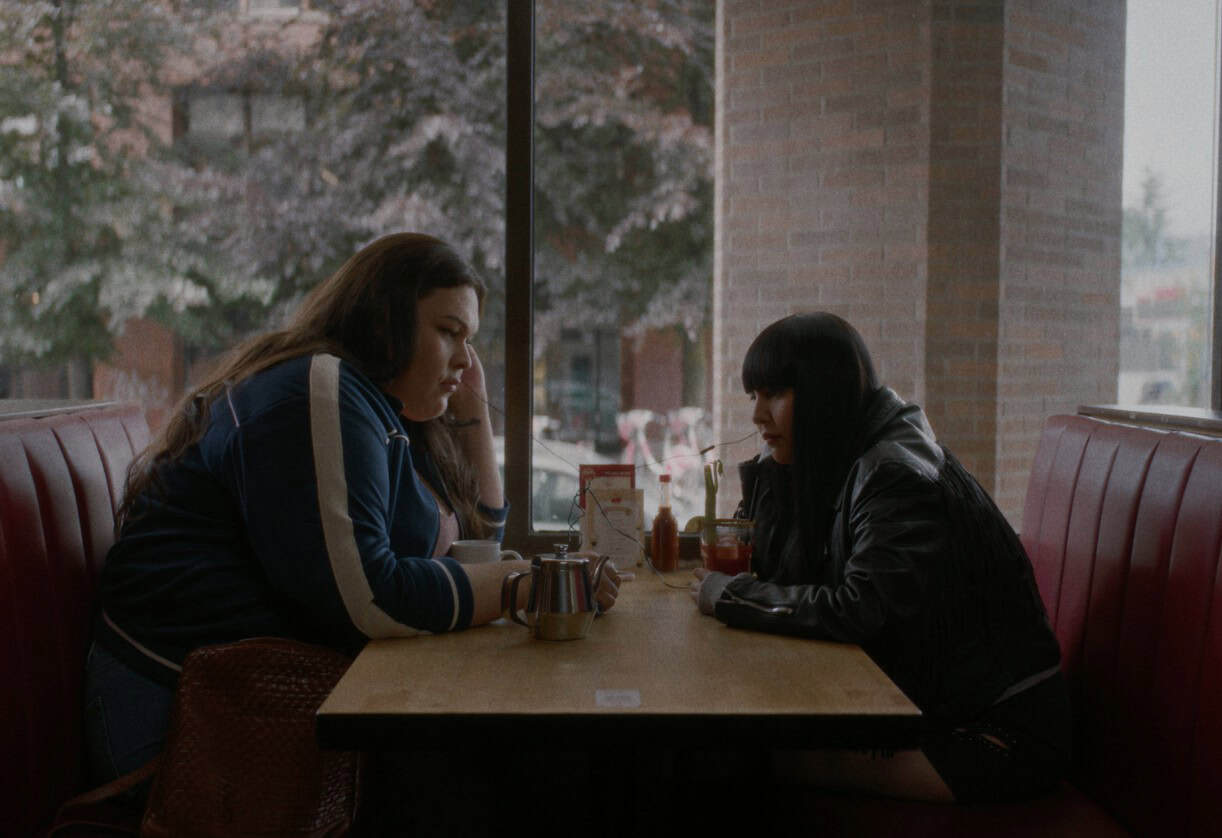
Any feature film is challenging to make, but painting a tender, sensitive and honest portrait of the lives of three queer Indigenous sex workers struggling with grief, displacement and poverty in one of Canada’s most economically challenged neighbourhoods is a tall order for anyone–especially a filmmaker tackling his first feature.
That, however, was a challenge director Justin Ducharme chose to tackle head-on in Seventeen, his first feature film, which just premiered to audiences at the Toronto International Film Festival.
“I think the initial inspiration sort of came from a desire to tell a story about the urban, queer Indigenous experience, and at the heart of that, chosen family and friendships and how important that can be to the way one navigates these systems,” Ducharme tells YourCityWithIN.
“The heart of the film was always about friendship and, sort of, contemporary representation for queer and trans Indigenous people.”
Ducharme brings significant lived experience to the project. Born and raised in the Métis community of St. Ambroise on Treaty 1 Territory in Manitoba, Ducharme has channelled some of his time as a young, queer sex worker through the characters who anchor the drama.
“Being someone with lived experience as a sex worker myself, I sort of try to blend that into a lot of my work,” he says.

“So looking at it from that lens, I think I really wanted to tell a story that sort of showed these three characters navigating through these systems and these relationships being at the core of how they get through a single day.”
The film, which takes place over 17 hours in Vancouver’s Downtown Eastside, centers on the lives of December (Aalayna), Tamara (Nizhonniya Austin) and Aidan (Taio Gélinas). December, a sort of mother hen in her community, helps troubled U.S. citizen Tamara recover her stolen passport before she faces deportation, while Aidan hustles to get enough money together to rent an apartment.
Ducharme, a graduate of the Vancouver Film School, says he relied on sex work and community support to navigate the challenges of living in one of Canada’s most expensive cities.
“My experiences with sex work were mainly through a survival lens. It was a way to afford to exist and go to film school and pay to live in a city like Vancouver,” he says.
The film doesn’t shy away from the challenging nature of the subject matter, but it’s tender at its core, anchored by the fraught but deep friendship between December and Tamara.
“The female friendship is sort of the focus of the film,” Ducharme says when asked how challenging it is to tell a story about some of the city’s–and the country’s–most vulnerable residents without being maudlin or overwrought.
“There were challenges in sort of balancing that act, but, over time, while shooting and through editing, everyone became really endeared to the friendship that sort of exists at the heart of the film,” he says, adding that some people involved in the film were intimately familiar with Vancouver sex workers and the local queer and trans community.
“There are so many challenges that go into making a film, regardless of the subject matter or the story. I think with this one, I had to lean on what I know, and on the support of the community I had in telling this story. I feel very privileged to have all those voices come together and reinforce what I was trying to do.”
While Seventeen is Ducharme’s first feature film, it’s far from his first foray into writing and directing. Telling YourCityWithIN that he’s primarily been a writer, Ducharme’s resume is indeed varied, having contributed to Canadian Art, ROOM magazine, PRISM international, and FILMMAKER magazine.
Before releasing Seventeen, he wrote and directed the short films Him/Her (2016), Positions (2018), and The Dancer (2019), as well as the TV miniseries KIN (2023).
“I’ve always been really interested in storytelling and I moved to Vancouver initially to go to film school. I’ve always kind of been pursuing this relentlessly since I moved away from home,” he says.
Saying that there was a time when he couldn’t imagine being a successful writer and filmmaker, Ducharme says relentlessness has been at the heart of his journey–and was what allowed him to produce his first full-length film.
“There are so many challenges. Getting anything financed, that side of it is obviously a mountain to climb,” he says.
“You kind of have to have sort of relentless perseverance to get that together.”
Ducharme says it was a significant adjustment to go from making smaller-scale projects that were more “quiet and organic” to working on a film with more people and more moving parts.
“There are times when I worry that I maybe got lost in the sauce a bit, but I also know that that’s kind of part of what happens when a large group of people sort of come together to make something,” he says.
“ I made this with really specific sort of intentions, and there were a lot of different ways I could have done this, and I’m really grateful that I had a group of people who sort of understood that I wanted to be the least extractive with the neighbourhoods that we were shooting in and the people that we were engaging with,” he says.
Since Ducharme is an alumnus of the TIFF Filmmaker Lab, he’s not exactly unfamiliar with the festival and its year-round programming. That said, having his debut feature premiere at one of the world’s biggest film festivals marks a new era in his career.
“I know that I made [Seventeen] for a really intended audience, so the fact that it’s getting showcased like this means a lot to me and to all the voices that came together to do this,” he says.
“I feel grateful that a lot of even my family here in and around Canada will be able to access it on that platform and engage with the work in a whole different way. I have a lot of gratitude. This is a story that I think means a lot to me and a lot to the people that have helped create it, and getting to share it on a level like this is just absolutely unbelievable.”