
Largest park in a generation has opened on Toronto’s waterfront
Published July 21, 2025 at 4:49 pm
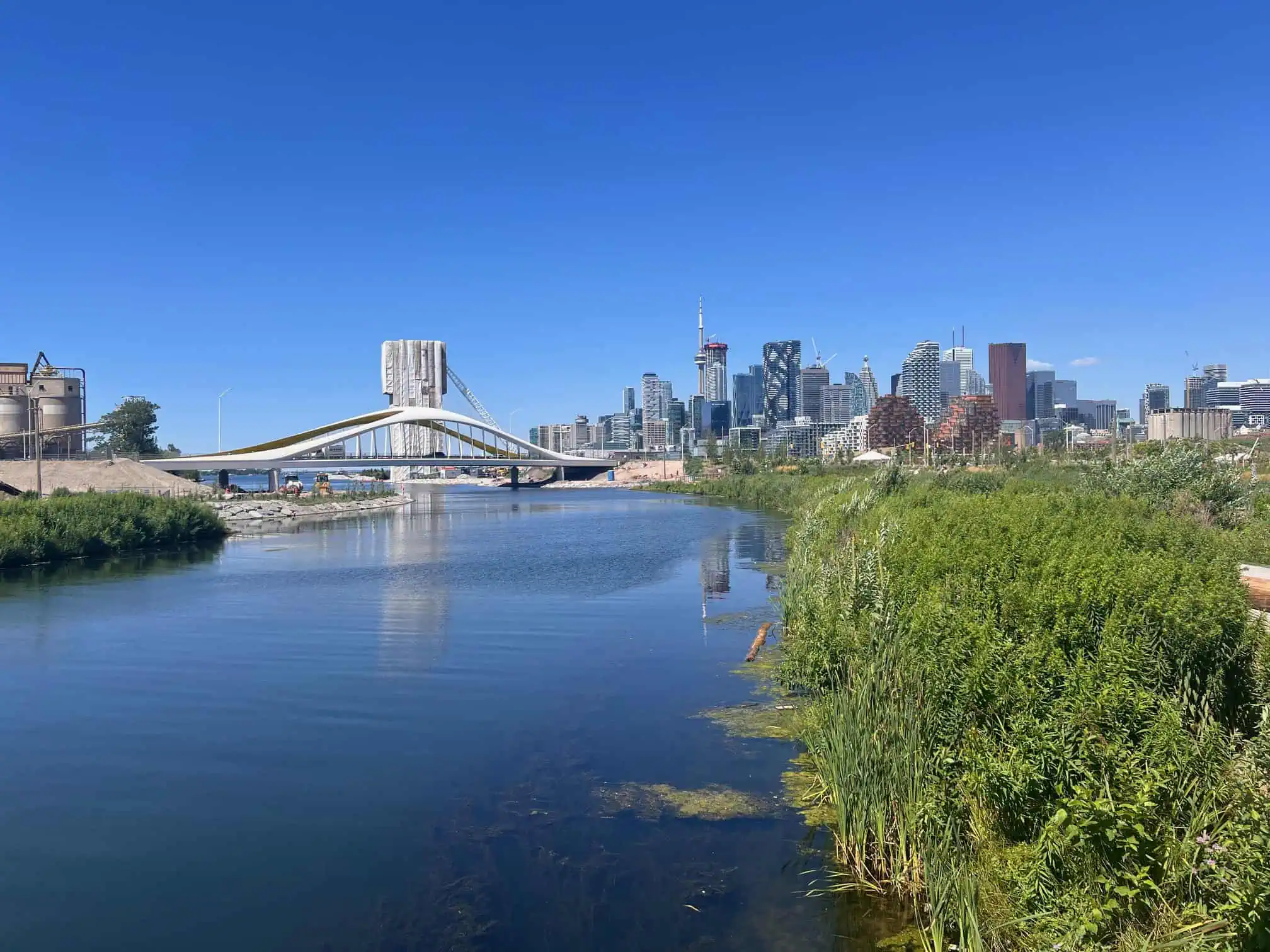
Toronto’s east end just opened a monumental park overflowing with amenities like a massive playground, ziplines, and animal statues.
The official unveiling of Biidaasige Park (pronounced Bee-daw-sih-geh) took place last week, as government officials and representatives from Waterfront Toronto — a lakefront revitalization incentive — gathered to open the space to the public.
The park’s namesake, Biidaasige, means “sunlight shining towards us” in Anishinaabemowin/Ojibwemowin, and has been officially titled as a once-in-a-generation park in terms of its scale.
The expansive recreational space marks the first public area on Ookwemin Minising (formerly known as Villiers Island).
The island itself, located in the Port Lands, was manufactured to match the ongoing demand for flood protection and river restoration projects in the area. It is currently situated where the Don River meets the lake.
The City of Toronto clarified in a news release last year that 290 hectares of southeastern downtown – including parts of the Port Lands, South Riverdale, Leslieville, and the East Harbour development site – are active flood risks from overflow from the Don River.
As a result, the Port Lands Flood Protection project, of which Biidaasige is a crucial component, aims to protect existing communities and create a new river valley through the Port Lands.
Once fully complete, the 98-acre island will feature 50 acres of parks and 80 acres of green space.
“We literally moved a river,” Liberal MP and environment minister Julie Dabrusin told attendees at last week’s opening, further adding to the spectacle of the project and how it has changed Toronto’s topography.
Waterfront Toronto has called the opening of the eastern section of Biidaasige Park and the new Don River “the most exciting milestone in the $1.4-billion project’s history.”
The park can be accessed by the public via Cherry Street and Commissioners Street area, right along the newly opened mouth of the Don River.
As for further incentives, Ookwemin Minising (pronounced “oh-kwhe-min min-nih-sing”) is anticipated to feature over 9,000 housing units (including affordable rentals) that will accommodate up to 15,000 residents.
Representatives with Waterfront Toronto also indicated that the island will connect the more than 60 acres (or 24 hectares) of parkland delivered through the Port Lands Flood Protection.
Additionally, 15 acres (six hectares) of additional parks have yet to be constructed.
Once residential areas are finished construction, the island will also host an elementary school, a community recreation centre, a library, and child care centres.
“The trees and birds and bald eagles and snow owls were here and now they’re returning,” said Toronto Mayor Olivia Chow at last week’s unveiling, citing the scale of work that was done to help Torontonians reconnect with nature.
Chow also hinted at a potential Waterfront East LRT project, an incentive she previously mentioned would be crucial to “build more housing, bring in good jobs, and create complete communities for generations.”
While only a portion of Biidaasige Park has opened this summer, Waterfront Toronto indicated that the remainder will follow in 2026.
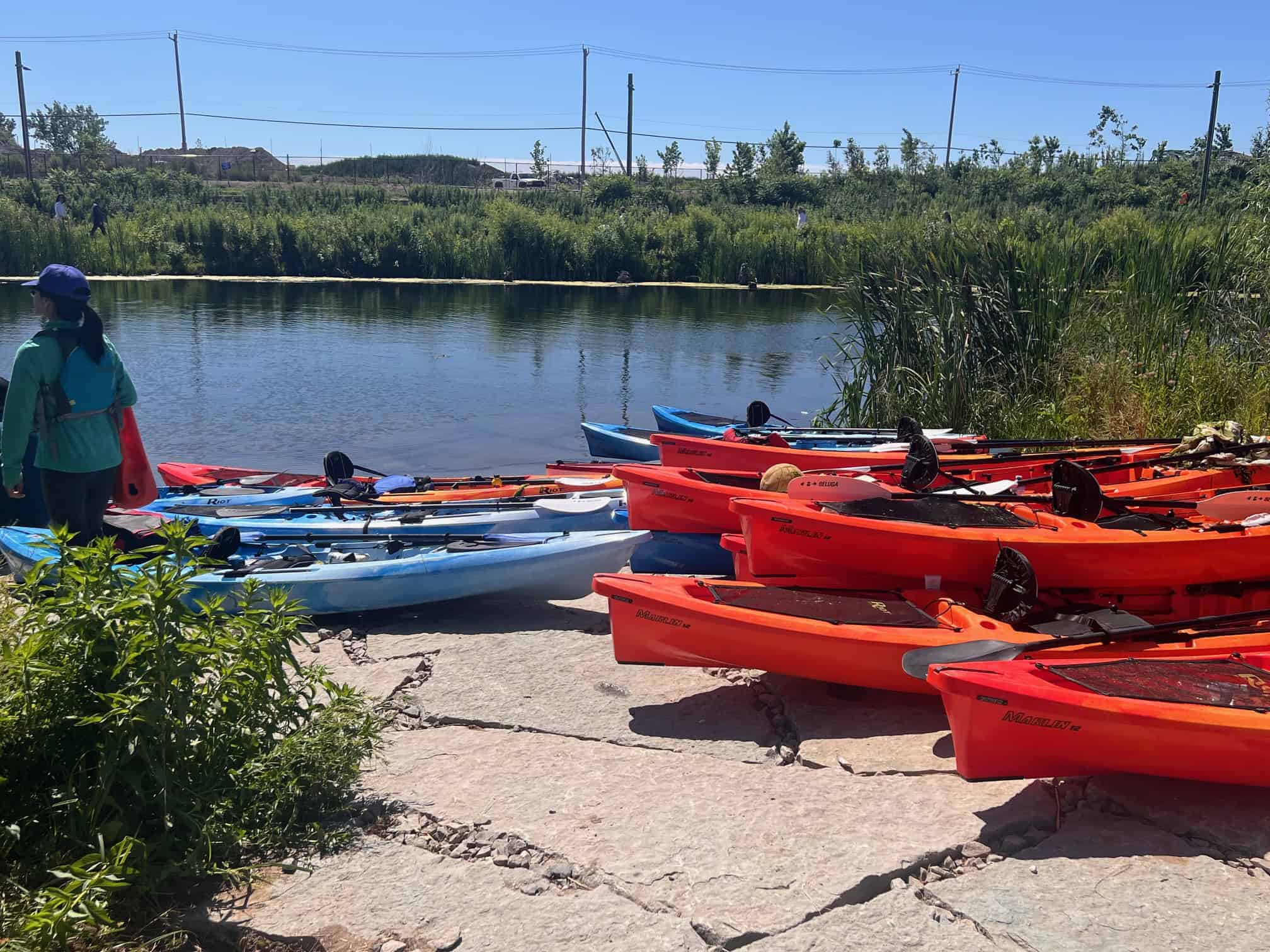
Kayakers can still access the new river and can anticipate a “canoe cove” area once construction throughout the park is completed.
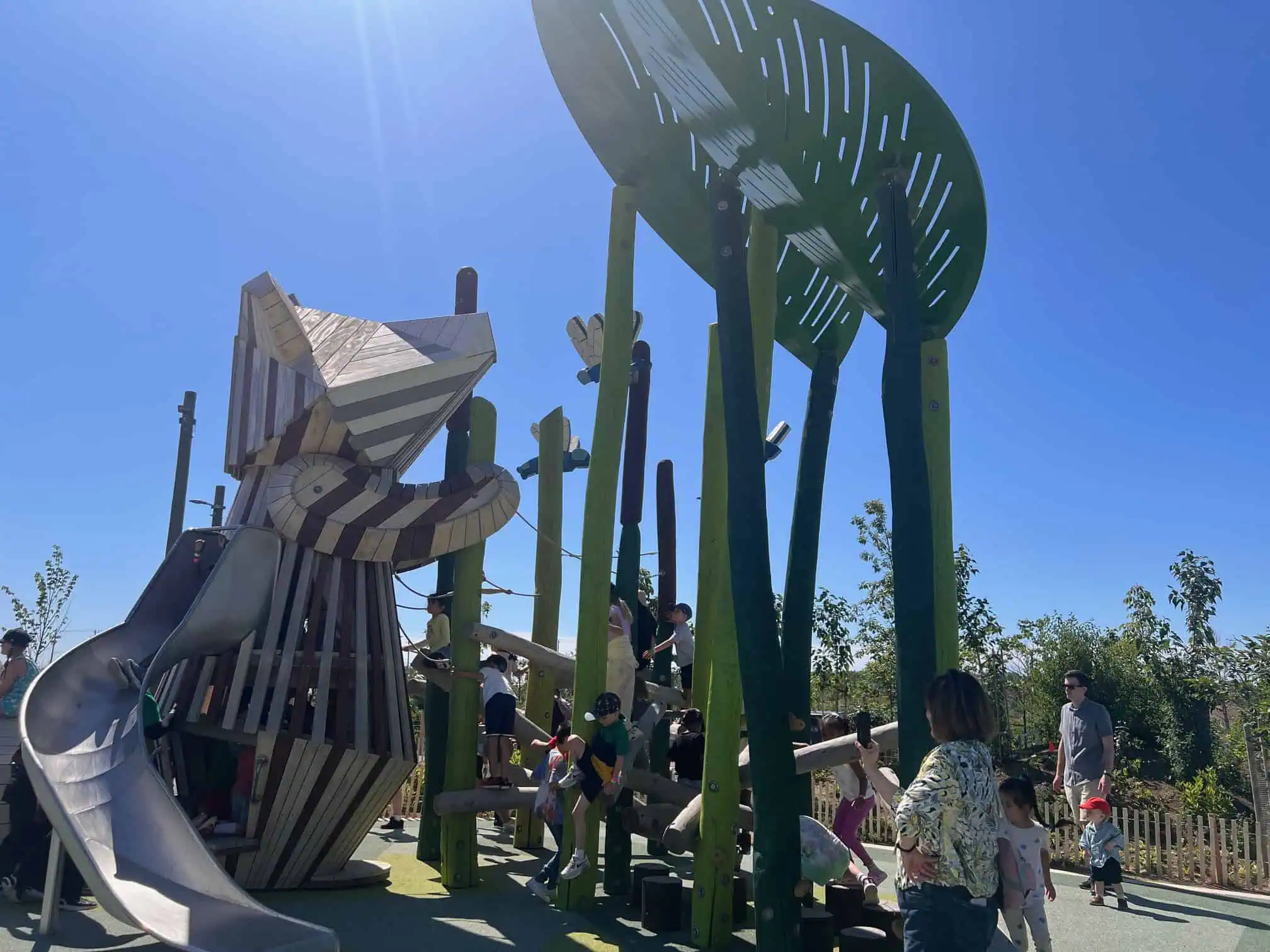
In terms of additional amenities, as of this year, the park includes picnic areas and barbecues, a playground with large animal play structures, and Toronto’s first recreational ziplines.
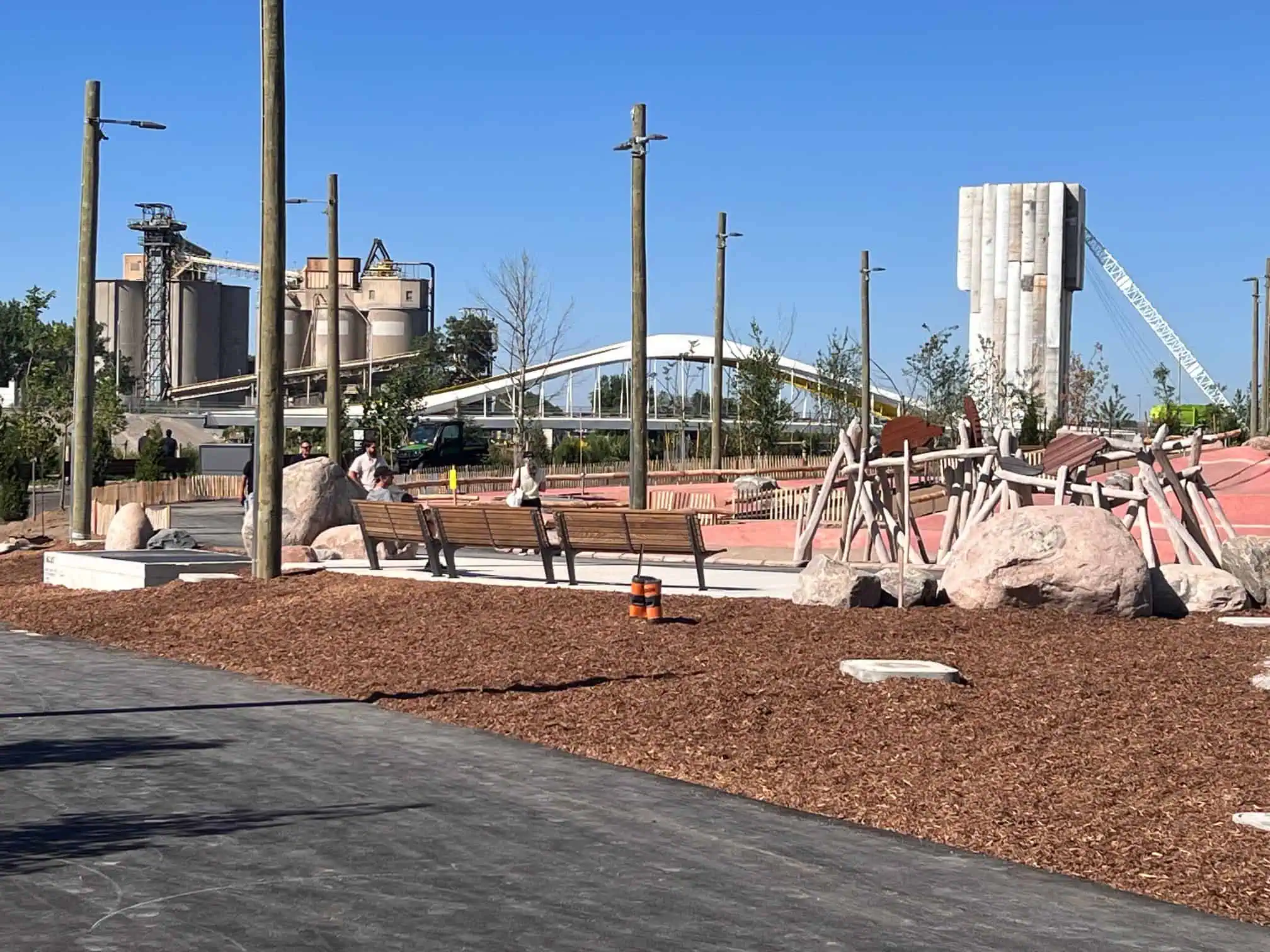
Further public offerings include recreational trails, cycling paths, and a wetland ringed with a trail for bird-watching.
Also available is fishing access to the river, and a pebble landing for non-motorized boats.
The park also includes two off-leash areas for dogs.
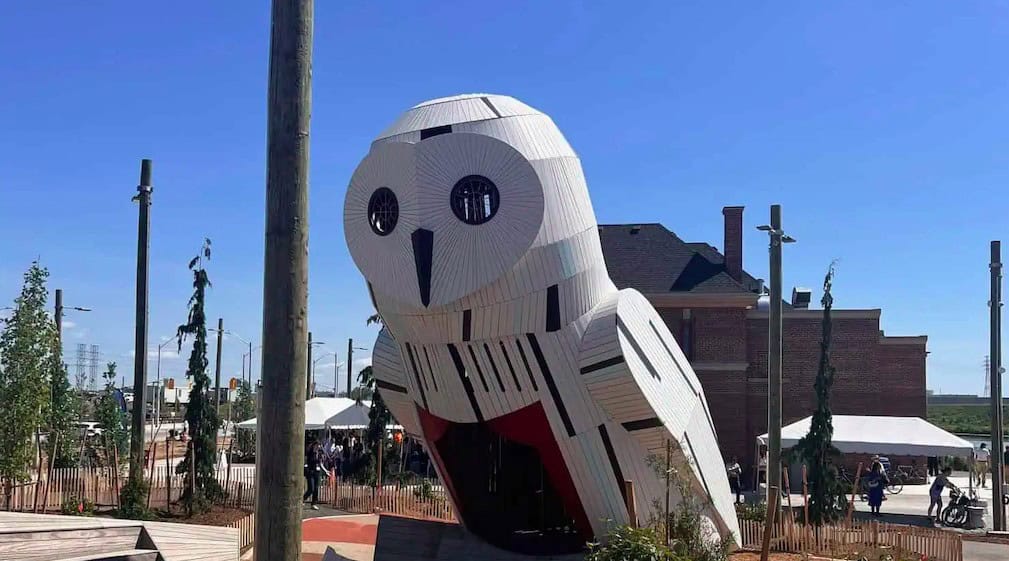
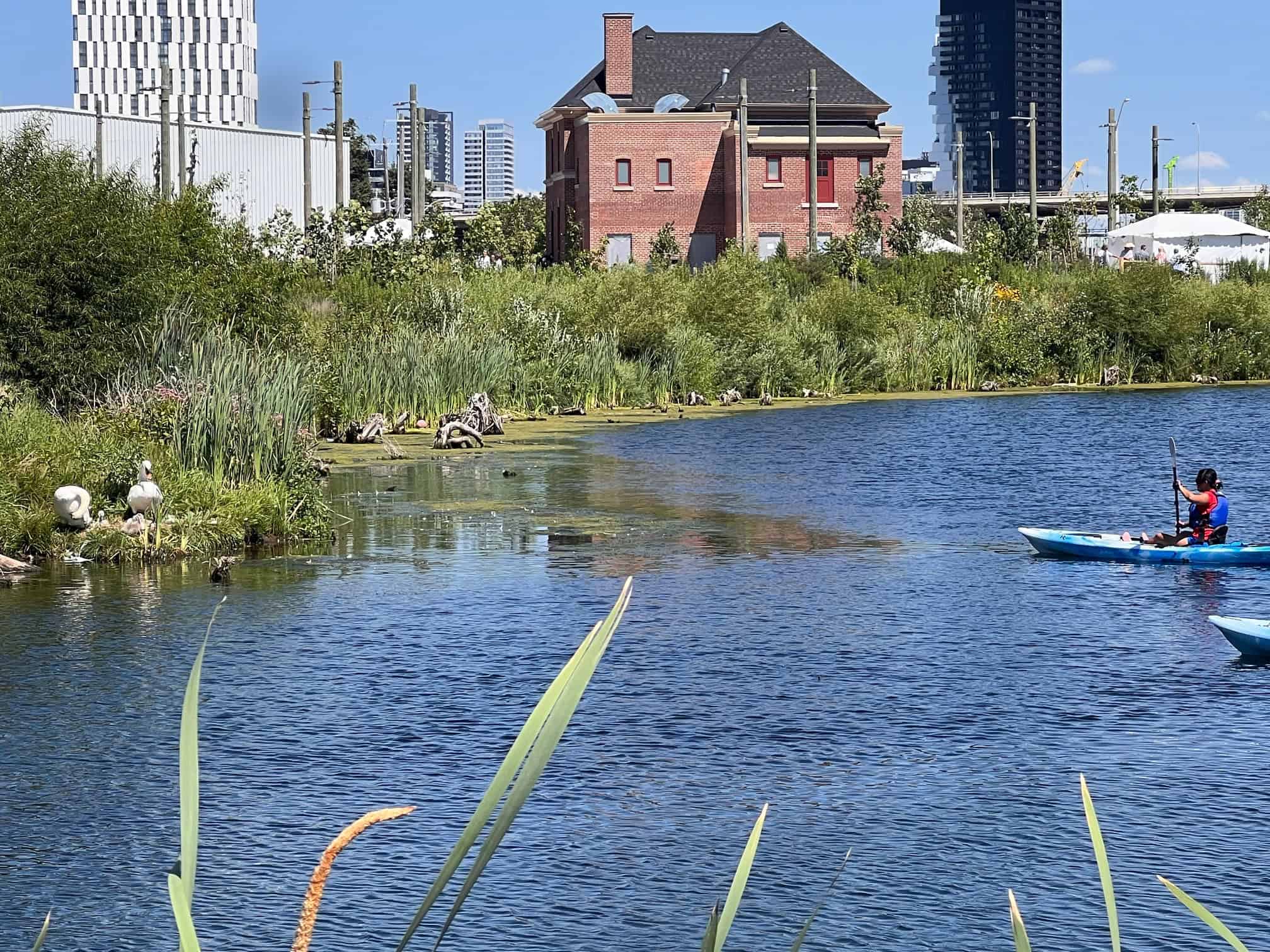
Upon completion, the park will also feature a historic Fire Hall, a lookout over the new river, an event lawn on the harbour, and a water’s edge promenade. Additional fixtures also include the Lassonde Art Trail, a free, immersive outdoor experience that leads to the park’s lookout with a view of the city.
The park is also accessible to those who use wheelchairs and other mobility aids.
Once complete, the full park network is expected to become a destination for up to one million people a year.