
Home cafes, ‘awkward’ art tours and slide presentations work to break the ‘loneliness epidemic’ in Toronto
Published September 19, 2025 at 1:45 pm
It’s hard to say when people seemingly stopped talking to each other in public (and it’s probably harder still to find cool, hard data on the topic), but anecdotes shared between friends and strangers (typically online) suggest that when dating apps moved from slightly stigmatized to ubiquitous, in-person flirtation rapidly receded.
Add political and social justice movements and a worldwide pandemic into the mix, and the idea of approaching someone in person with romantic intent became inherently more taboo–invasive at best, predatory at worst.
But while freeing running clubs and yoga studios from “opportunistic” joiners seeking romance rather than exercise might have pleased some participants, the trend away from even casual conversations with strangers has brought about unintended consequences and even prompted academics to launch a national campaign aimed at encouraging people to say hello to one another.
The locally significant loneliness epidemic has also spurred both Toronto-based cultural institutions and enterprising individuals to come up with creative ways to get people talking (and possibly dating).
Last year, Toronto-based digital creator Rabia Sohail decided to do two things to help Torontonians connect: she launched her Toronto IRL newsletter, which is packed with things to do (many of them free or affordable), and turned her condo into a cafe.
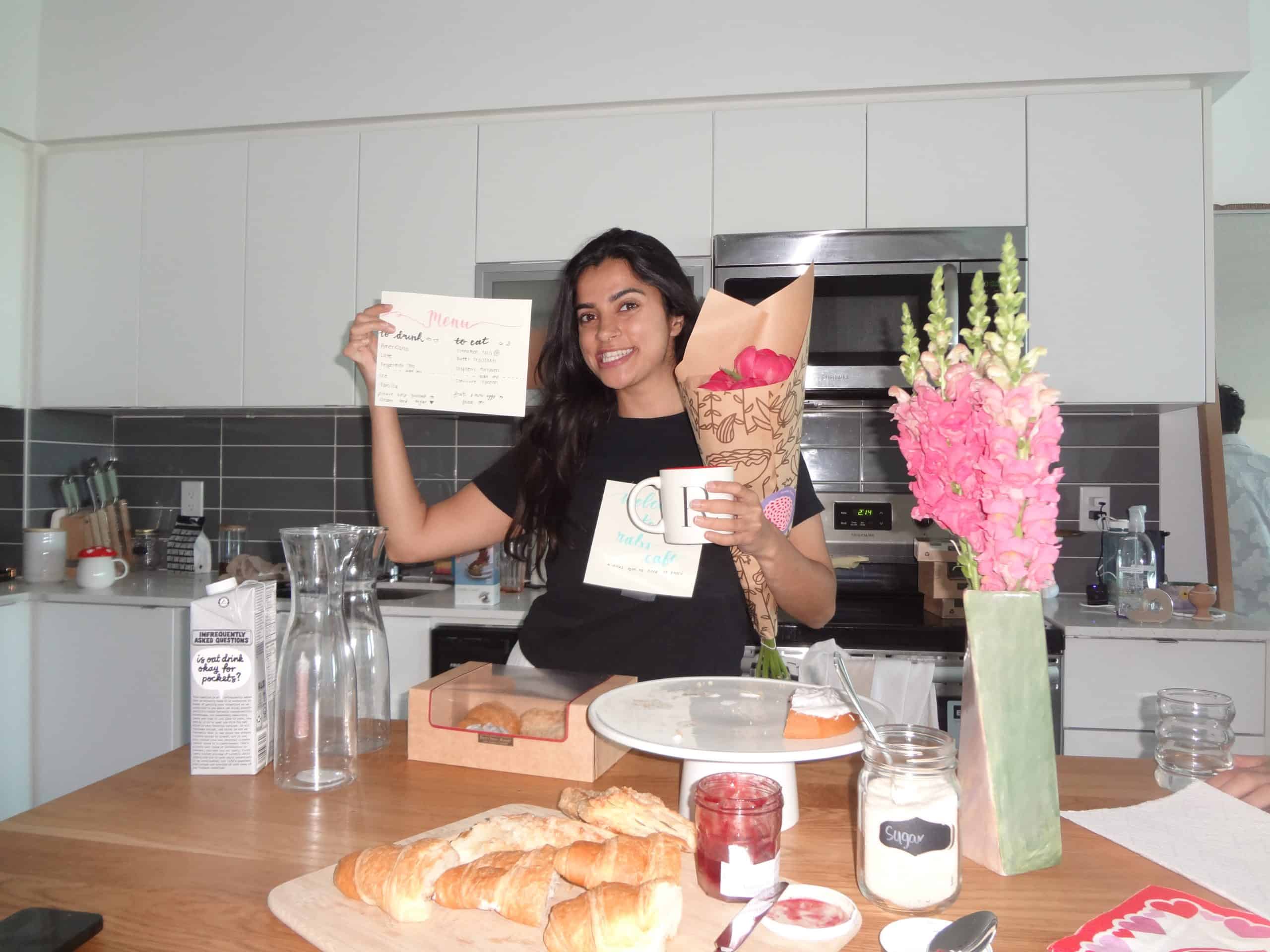
Sohail in her Serendipitous Cafe
“People say they don’t like Toronto because they can’t make friends,” Sohail told INsauga.com last year.
In 2024, Sohail began hosting the Serendipitous Cafe in her home, welcoming strangers to drink coffee, eat snacks and share their thoughts and interests in a relaxed, casual space. Now, over one year later, the cafe is booked solid for its 34th volume.
Sohail’s events have thrived because the cafes do more than just allow strangers to mix and mingle over lattes–they give people (many of whom might still work from home) the opportunity to connect face-to-face with people they wouldn’t otherwise meet.
“All my jobs have been in person and I’m a very social person. I was so used to spending 40 hours a week with people,” Sohail said during a 2024 interview.
“The cafe allowed me to do that in a way that also benefitted other people. I want to meet new people and expand my community in Toronto and create a space for other people to do that.”
Now, with work-from-home policies shifting in more industries, people and organizations are still getting creative when it comes to helping people connect.
Art, Icebreakers and “Awkward First Dates”
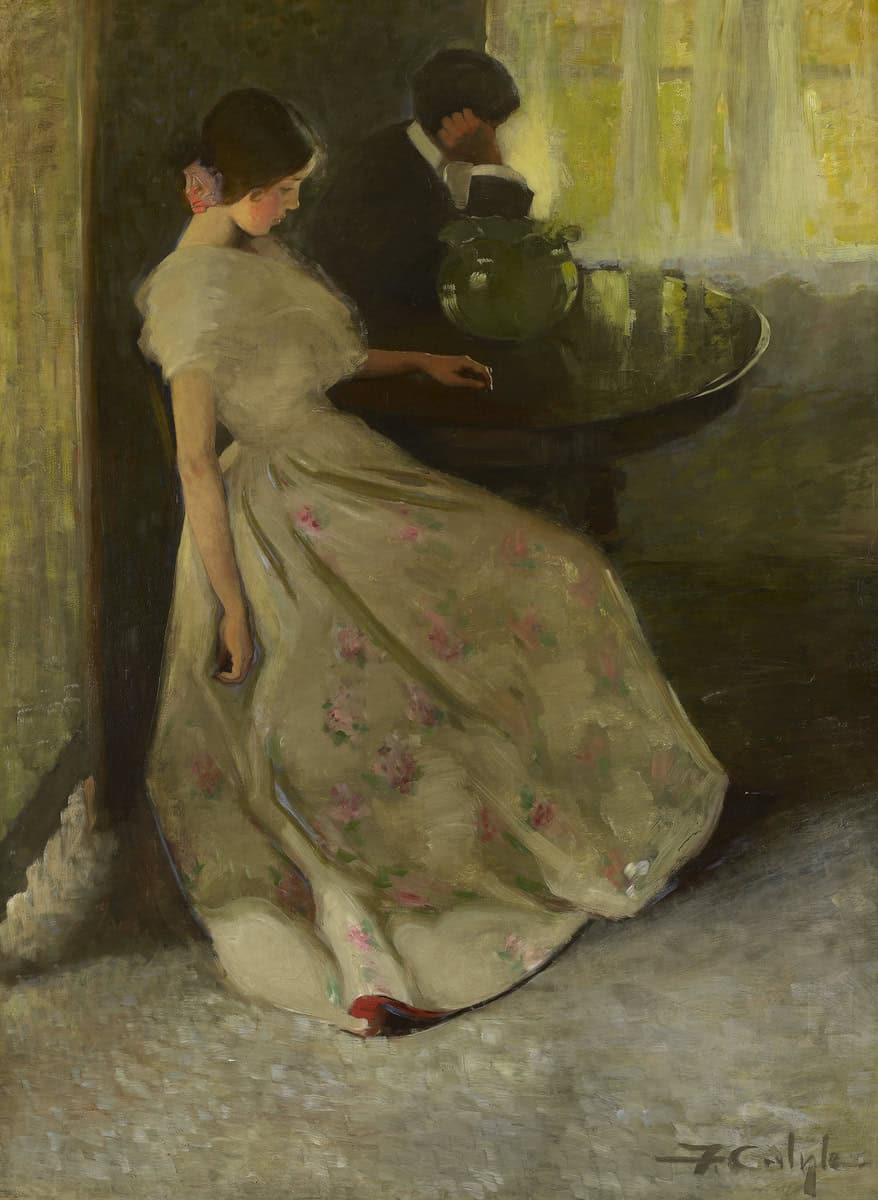
Florence Carlyle. The Tiff, c. 1902. Oil on canvas, 183.8 x 134.6 cm. Art Gallery of Ontario. Gift of the Government of the Province of Ontario, 1972. Photo © AGO. 72/14
There’s something to be said about the typically awkward (but effective) icebreaker.
In June, I took a long-time (platonic) friend to one of the Art Gallery of Ontario’s relatively new Awkward Date Night events. We were not (and are not) dating, and we have known each other for over 30 years. So, while not the demographic the organizers were seemingly looking for, we decided to pair up anyway.
As it turned out, the event was welcoming to anyone interested in a mini-tour and bonding event that included a costumed guide, a 2020s theme and doodle boards.
“We already have volunteers that offer art chats, so I wanted something different that kind of felt a little bit like a tour where maybe you’re getting a little bit of information about the art, but it’s really about the socialization,” Joey Suriano, organizer of the Awkward Date Tours at the AGO, tells INsauga.com.
Suriano, who began organizing the monthly events over a year ago, says that the nights aren’t as much about education as they are about getting to know other people coming into the gallery, as well as playing games and having fun.
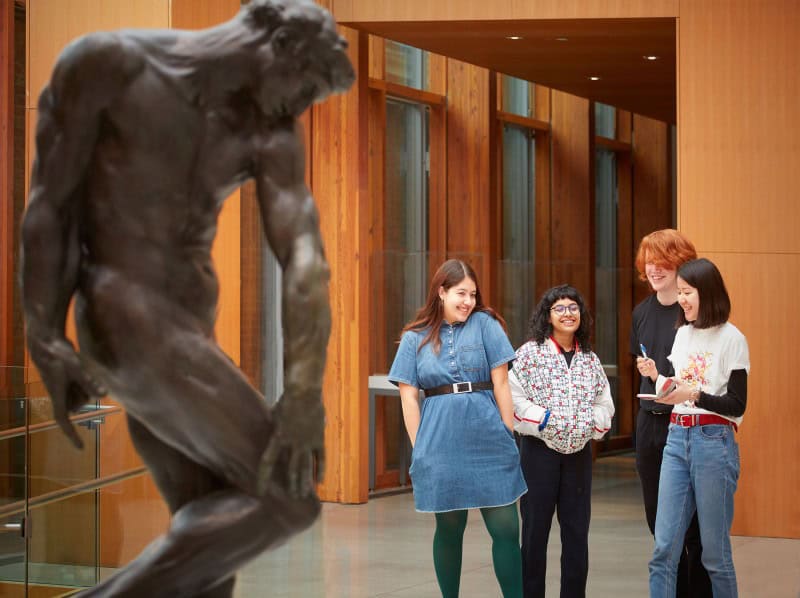
Awkward Date Nights, courtesy of the AGO
“The awkwardness is kind of coming from that place of folks not knowing one another.”
At the event we attended, the tour guide, Doris, asked attendees to pair up. While some people came with dates or close friends, others showed up solo or with acquaintances. People who came solo — a brave feat in itself — shyly partnered up for about 45 minutes of learning, chatting, and icebreaking.
At one point, each person in a pair was tasked with drawing a picture based on their partner’s description of a piece of art behind them. At another point, attendees were asked to look at a large, mural-like painting and guess which part appealed most to their partner.
As the tour progressed, people grew braver, offering insights and opinions, and asking more questions.
Suriano says the experience hasn’t appealed to everyone, but the discomfort — and pushing past it — is the point of the exercise.
“I [think] it was the May [event] where someone left and gave me their tablet and they said that that whole experience was too awkward for them. So I was like, ‘That’s perfect because that’s what it’s meant to be.’ We have folks coming as individuals and others who are looking for some date experience. So I’m at the whims of who is joining that evening. So if I have other individual folks, then I try and pair up people as well that don’t know each other.”
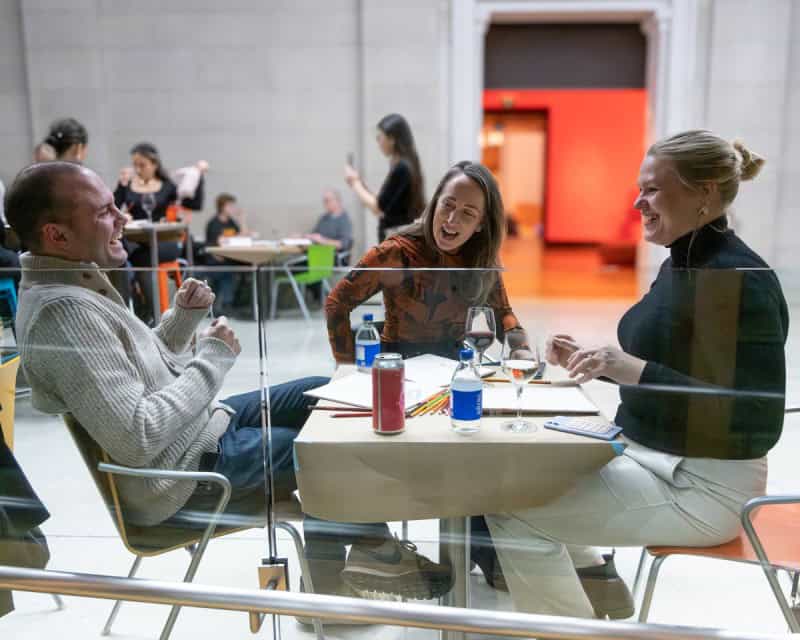
Photo courtesy of the AGO
For Suriano, the program is about helping anyone, whether they’re on a date, with friends or wandering the gallery alone, connect.
“I want to push this program to be more about making friends and socializing because as this program’s been evolving and we’ve been pairing folks together, we’ve been seeing that people have been exchanging numbers and maybe, you know, like actually making some kind of connections, whether it be friend or otherwise,” he says.
“So that’s been really exciting because what’s really important to me about this program is that aspect of community and bringing people together through art.”
Loneliness as a health issue
Suriano is right about people needing community, and the data support this.
In 2023, the Toronto Foundation’s Vital Signs 2023 Special Report indicated that people who live in Toronto and the Toronto Census Metropolitan Area, which includes Mississauga and Brampton and the overall Peel, Halton, York and Durham regions, are lonelier than people in other parts of Canada.
The report said that in 2018, 55 per cent of surveyed Torontonians said they had many close friends and family members. In 2022, that number dropped to just 44 per cent of respondents.
The percentage of people who report feeling lonely three days a week in Canada overall is 28 per cent. In Toronto, that percentage sits at 37 per cent and in the GTA, it’s 35 per cent–higher than the Canadian average. In Ontario overall, 31 per cent of people feel lonely.
While it might seem like a small problem, the report notes that loneliness is a serious health issue, citing a 2017 study that found that lacking a social network is as dangerous as smoking 15 cigarettes a day. The same study found loneliness more harmful than alcohol consumption, physical inactivity, obesity and air pollution. The report says isolation can increase one’s risk of developing heart disease by 30 per cent and early dementia by 50 per cent. It also increases a person’s susceptibility to addiction, obesity and suicide.
Loneliness also has social consequences. The report said people with smaller friend networks are less likely to donate, volunteer, participate in groups or be interested in politics.
Getting creative with dating
In the early 2000s, dating advice was different. Singles were encouraged to “put themselves out there” and talk to people everywhere: in typical dating hotspots like bars and nightclubs, in less typical but busy environments like school (and sometimes even work, depending on the environment) and in shared public spaces such as malls, restaurants, cafes, sporting events, concerts and fitness classes.
While the line between flattery and pestering has always been thin (and largely dependent on the disposition of the person on the receiving end of advances), there was a noticeable shift in the early aughts that came fast on the heels of the MeToo movement. While the movement was initially launched to identify and discourage sexual harassment and assault, stats (real cool, hard data) showed that men and women absorbed the messages differently, leading to, in some cases, mutual distrust.
According to a 2019 report prepared for Women and Gender Equality Canada, 53 per cent of male respondents said the MeToo movement made it harder to know the difference between flirting and sexual harassment, an opinion shared by just 39 per cent of women surveyed.
A Bank of Canada report found that MeToo had a negative impact on men and women collaborating in the workplace and while other surveys suggest the movement has led to more robust discussions around boundaries and consent, a 2019 Washington Post article broke down what many men were feeling in the immediate aftermath of the hashtag’s explosion: Confusion.
Anecdotally, single women in my circle have talked about shifts in people’s behaviour. While it used to be normal to be approached by at least one or two men on a night out, most say they can only expect to chat with other women at bars or clubs. The apps, many say, are just easier.
Until no one follows up after writing, “hey.”
Enter Pitch-a-Friend.
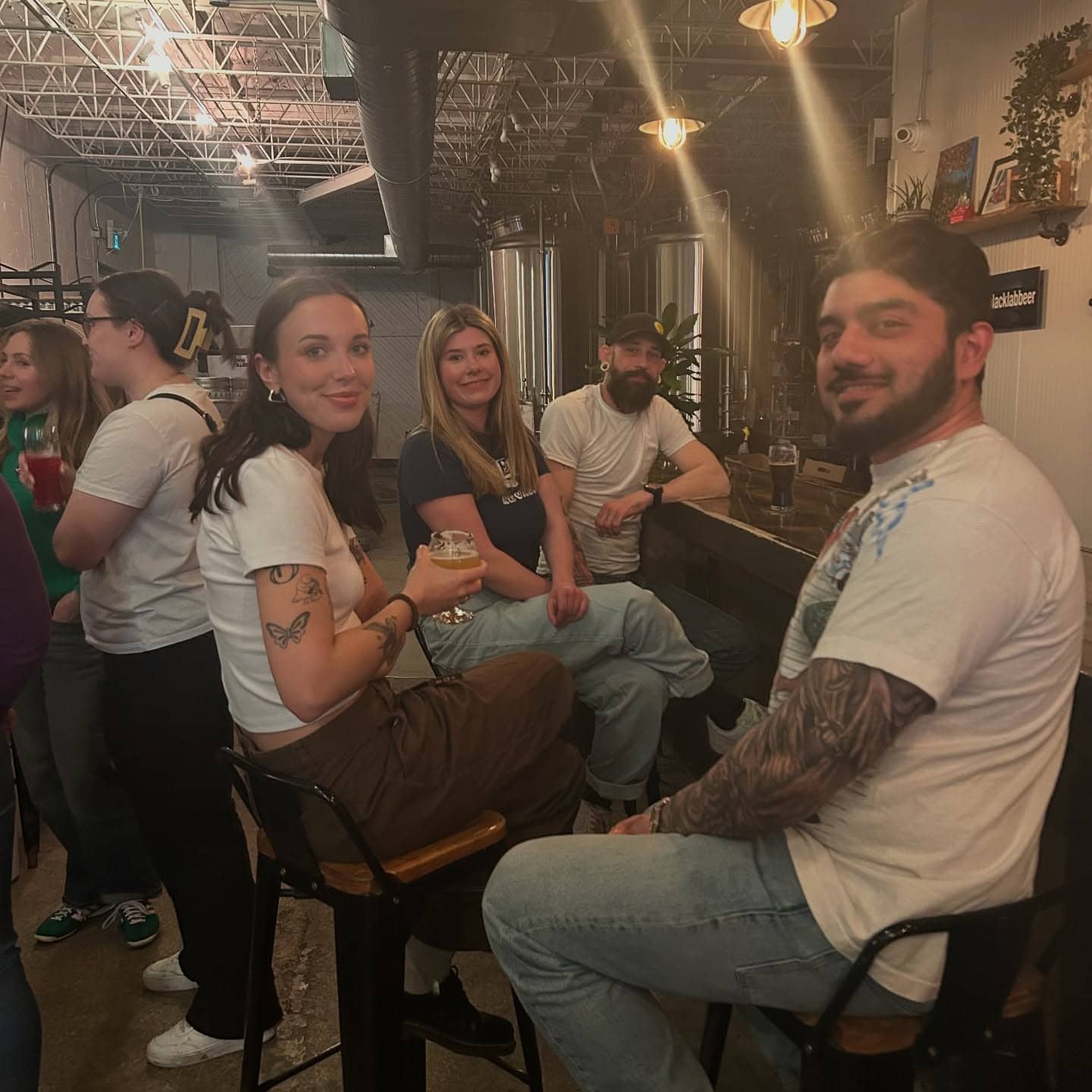
Pitch-a-Friend at Black Lab Brewery in Toronto
Pitching a friend is like pitching a concept or idea, only the “item” is someone who wants a trusted wingman (or woman) to playfully share their finest attributes with other singles in the hopes of, if not finding a date, meeting other people looking for love.
The concept originated in Philadelphia in 2022 and has since expanded to over 40 cities. Last year, certified life coach Sylvia Calleri decided to bring the brand to Toronto and has hosted over a dozen events since, often setting up shop in breweries.
“It’s been going very well,” she tells INsauga.com, adding that the events are free to enter (although people submitting pitches must pay $20).
As for how it works, people with a friend in mind can reserve a pitch spot through Pitch-a-Friend’s online form and create a brief (three-to-five-minute) slide presentation to introduce their single pal to the crowd.
“Friends pitch their single friends to the crowd and it’s such a wonderful celebration of friendship–it’s not a roast, it’s a boast,” Calleri says.
Calleri says the demographic varies, but recent events have attracted mostly middle-aged attendees. Typically, she estimates participants range in age from about 27 to 50.
She says that even if people don’t make a connection at the event, there’s a “word of mouth” element that can follow.
“It’s a ripple effect. Someone being pitched, let’s say it’s a man in his 50s, someone might see and be like ‘hey, my aunt would be perfect for him.’”
Pitch-a-Friend at Black Lab
As for who tends to pitch (and be pitched), Calleri says she’s seen co-workers boast about one another, and has even seen former couples pitch each other.
“They couldn’t make it work but they were great people, and that was kind of fun.”
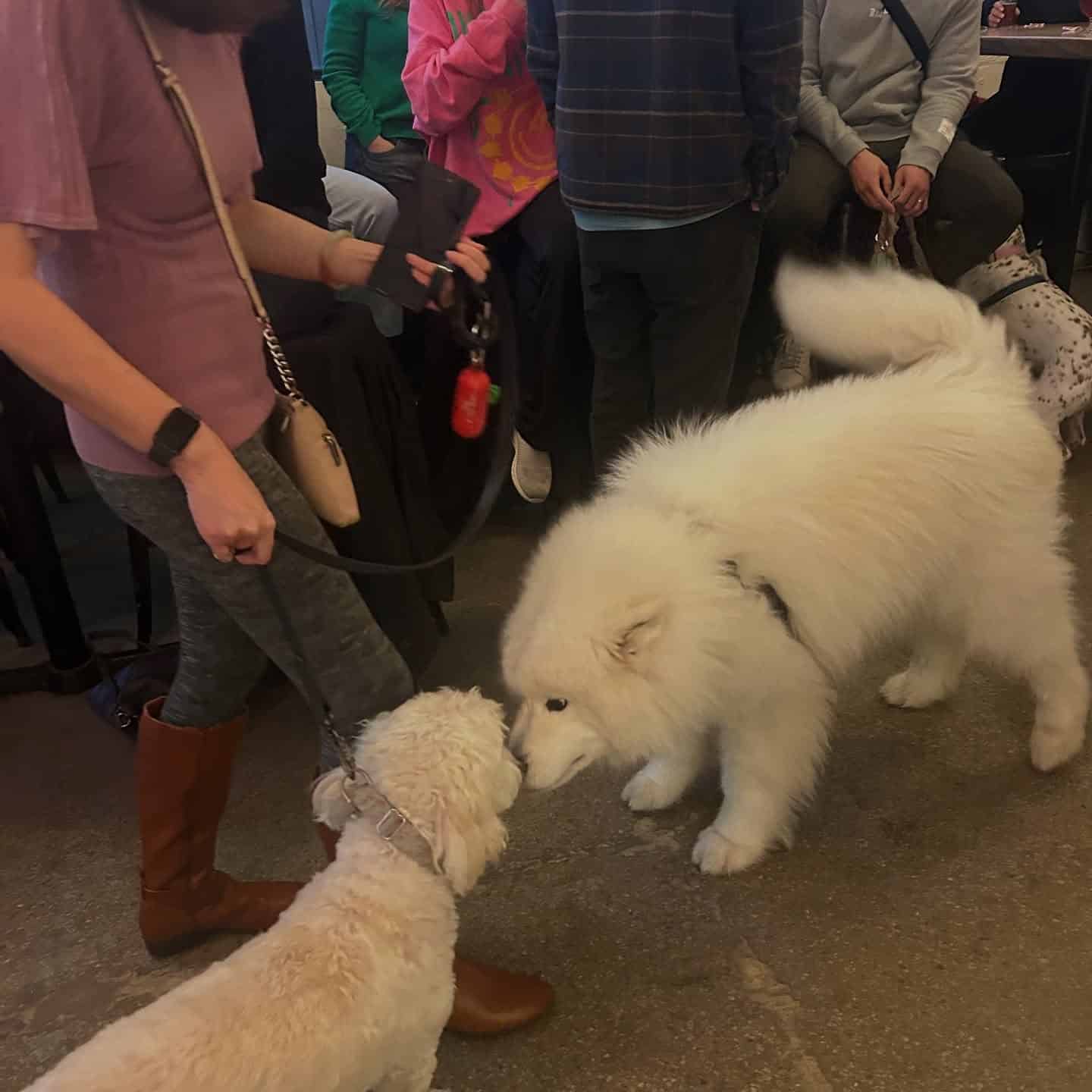
Calleri says Pitch-a-Friend events also include an introduction, presentations (of course), games and mingling opportunities. Some events also include pitch-a-pet events, allowing attendees to foster or adopt animals.
“It’s very interactive,” she says.
“A person is pitched, then they can come up and answer questions. There’s a mix and mingle at the end and we encourage people to talk to one another. They wear a red heart if they’re single or heterosexual, a rainbow heart if they’re not heterosexual. We welcome everyone in these sessions.”
Calleri says the presentations themselves can also get pretty creative.
“Some people make a game of it and do trivia, some people put videos in their presentations. It’s brought a lot of joy to my life in connecting people. That’s what I do, I connect people.”
While Calleri says there isn’t data on how many relationships come out of the events, she says people do seem, at the very least, to form friendships.
“Unless people come back and say they met at Pitch-A-Friend, which we ask them to do, we don’t have stats on the success rate, but it is a celebration of friendship. Even the last one, a smaller event that was more intimate, people walked away as friends.”
So far, Calleri has hosted events at Black Lab Brewery and Left Field Brewery, with another event scheduled for Blue Moon Brewery at Stackt Market in October.
“I’d love to do one a week,” she says, adding that the events might become even more crowded once the cooler weather moves in.
“In the winter, it’ll get people out of their homes. In other months, it’s worked well and I hope it’ll pick up more in the fall and winter.”
Ultimately, she says the feedback has been positive.
“People have loved it. It’s a lot of fun, it’s interactive. People really like the concept and I have a lot of repeat people coming,” she says.