
Hollywood producer brings little-known protest story to Toronto
Published September 22, 2026 at 10:00 am
Most people are at least vaguely familiar with significant social rights and justice movements at home and abroad that heralded change for some of society’s most vulnerable communities, but few people know that a group of disabled activists held a month-long sit-in in the U.S. Department of Health, Education, and Welfare regional office building in San Francisco in 1977 in a desperate bid to get crucial legislation passed.
Until now, many people were not aware of the rich activist history of the woman who planned the protest: Judy Heumann.
Heumann, the late disability rights activist who served in both Bill Clinton and Barack Obama’s administrations, is the heart and soul of a feature film that recently premiered at the Toronto International Film Festival.
Being Heumann, which stars newcomer Ruth Madeley as the titular character and Mark Ruffalo as Health, Education and Welfare Secretary Joseph Califano, unfolds over the course of Heumann’s 28-day sit-in protest at the HEW building in a final bid to force Califano to compel federal institutions to comply with Section 504 of the Rehabilitation Act.
The national civil rights legislation, designed to provide protections for people with disabilities, was repeatedly delayed by lawmakers afraid of the price tag associated with increasing access for Americans who were routinely denied education and other privileges afforded to able-bodied citizens.
John W. Beach, who produced the film, met and began working with Heumann on her memoir, Being Heumann: An Unrepentant Memoir of a Disability Rights Activist, several years before her death in 2023.
“I was her manager. I signed her in January of 2015 and met her in October of 2015. We reverse-engineered the whole filmmaking process and we talked her into writing the book and then sold the rights to Apple,” he tells YourCityWithIN, adding that the film adaptation, directed by Siân Heder (CODA), was initially announced in 2021.
“It was our intention all along to make this into a movie. First book, then a movie.”
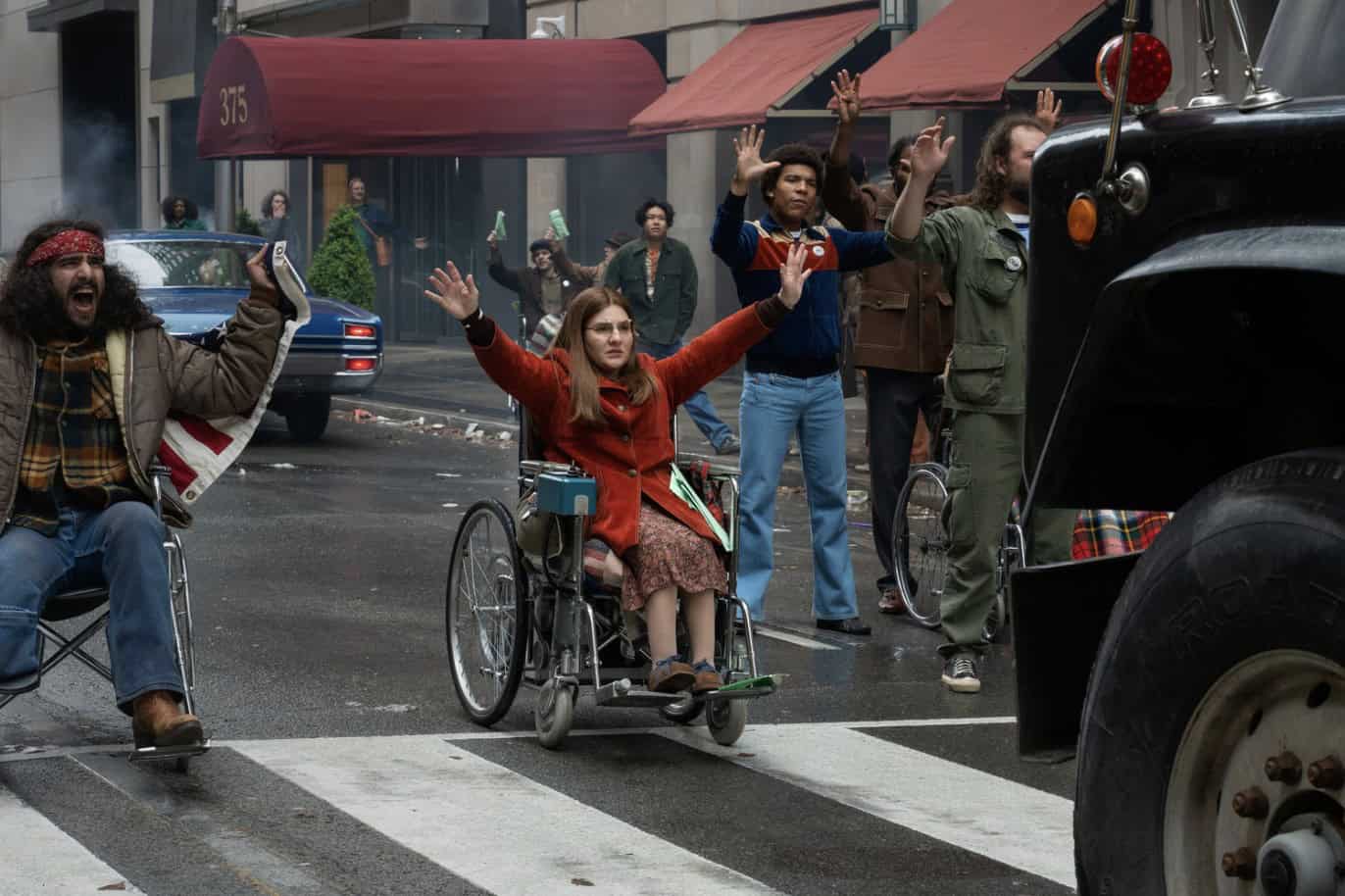
Still from Being Heumann, courtesy of TIFF
Beach says he connected with Heumann, who was partially paralyzed after contracting polio as a child, a little over a decade ago, when a friend who ran Heumann’s Center for Independent Living in Berkeley, California, told him he needed to meet her.
“The second you see this woman who fought for legislation and rights for people who didn’t have any, that fight changed the world–literally. The second you learn that, that’s the second you know that’s a story that needs to be told,” he says.
Beach says he wasn’t aware of her, her story, or the sit-in when he first met her.
“That’s the difference between her and Martin Luther King Jr. He was in the news; there were books written about him. She might have been on the news a few times, but never really singled out; her story was never really told until now,” he says.
Beach says Heumann, who organized not just the HEW sit-in, but multiple others throughout the U.S., initially didn’t think her story needed a wide re-telling.
“Judy didn’t think she had an interesting story; we literally had to talk her into writing the book. She didn’t feel like she did things alone. While she didn’t do them alone, she led like George MacArthur into those buildings.”
Heumann did indeed rally hundreds of Americans with disabilities to push the US government to live up to its commitments and the film, shot entirely in Toronto, dedicates much of its 127-minute runtime to exploring the hard-nosed (and not always popular) approach Heumann took in a bid to help some of the U.S.’s most vulnerable–and most overlooked–residents.
The film emphasized that anyone could become disabled at any time and chronicles Heumann’s immensely physically and emotionally challenging journey from the HEW building in California to Califano’s front door in Washington.
“As soon as you start reading about her, you wonder, ‘How does no one know about Judy Heumann? How is this person who changed the world, unknown to the world?’”
Beach says that one of the biggest challenges in producing the film was getting the tone just right.
“I think the biggest challenge in the world to me is getting it right. Feeling like you’ve done that person justice, that story justice, the disability community justice. We had over 20 disabled actors on set for the shoot,” he says.
“We cast this authentically. Judy wouldn’t have had it any other way.”
The cast includes many performers with disabilities. Madeley, who plays Judy, has spina bifida and scoliosis. Madeline Delp, who portrays fellow activist Kitty Cone, uses a wheelchair. Michael Patrick Thornton, who uses a wheelchair following two strokes, plays disability rights pioneer Ed Roberts.
Another challenge, Beach said, was being sure to shine a light on all the groups and individuals who were instrumental in getting the legislation implemented.
“Ed Roberts did a lot for disability rights. Brad Lomax, the Black Panther in the movie who fought for Black and disability rights, had multiple sclerosis. Telling all the roles of deaf people, blind people, people with cerebral palsy and MS, there are many different stories intersecting and coming together in the same place. I think we did that; Heder did that. She knocked it out of the park,” he says.
“CODA was her first time working with disabilities, and she realized the challenges of doing that and felt a real connection with Judy,” he says.
Beach said another challenge was ensuring Heumann’s rough edges didn’t alienate viewers.
“Judy had a way of talking to people and it came off as militant at times. I don’t think she ever meant to be militant, but when you’re passionate about something, sometimes you don’t always verbalize that in the most passionate way or the most sympathetic or empathetic way; you just try to get it out,” he says.
“I don’t think Judy was militant at all. To be a person like her and do what she did, she had to be forceful or demanding or empowering, and she was all that. She had the biggest heart in the world.”
As for what it was like to film in Toronto and eventually release the film to an international audience here, Beach says the city has a unique ability to be the world’s chameleon.
“I think Toronto gives you the best of three worlds. We shot the San Fran pieces in Toronto, the NYC pieces in Toronto, and we were able to shoot everything in DC [in Toronto] as well. Being able to morph and adjust Toronto was the piece we needed,” he says.
With TIFF, he said it just made sense to launch the movie where it was made, and right before its wider release date.
“I think it made sense to open at TIFF because we shot it there. Did a part of me want to premiere at Cannes, sure, but it made sense because we’re releasing the movie in November and it backs up our release date. We shot there, and all of our crew and much of our cast are there.”
Ultimately, he hopes Toronto and international audiences walk away appreciating the depth of Heumann’s passion.
“I’m ready for the world to meet her heart and see what she did; it brings a knowledge of what disability rights are and what disabled life is like in America,” he says.
“We told the story with complete authenticity and integrity.”
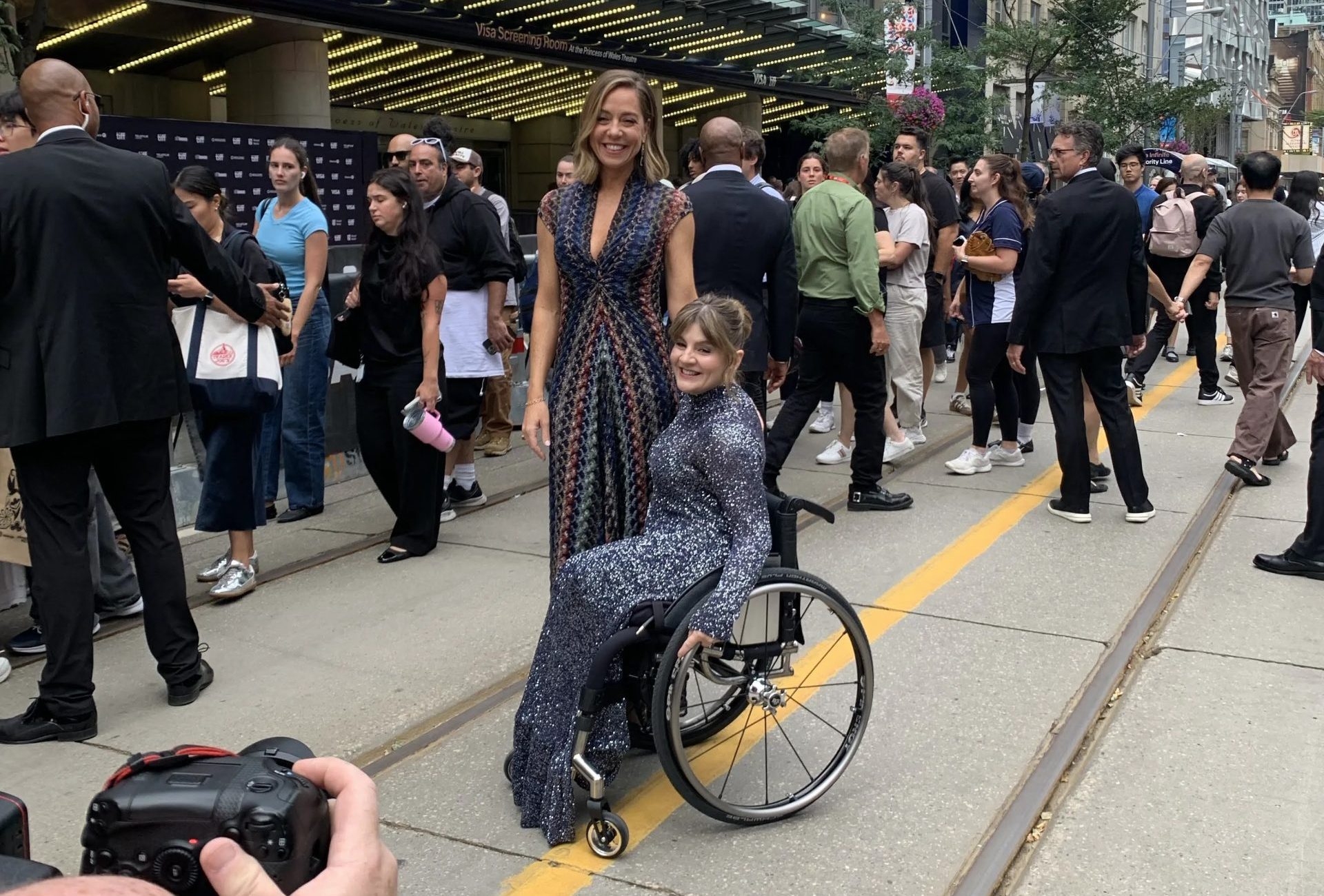
Cover photo of Siân Heder (left) and Ruth Madeley (right) by Karen Longwell