
From ‘we don’t hire women,’ to heading top restaurants, Toronto’s female chefs prepare the next generation
Published March 6, 2026 at 10:32 am

The best female chefs of Toronto and beyond are stepping up to change the dining landscape for good.
‘Yes Shef,’ a program that elevates both the skills and renown of women in the hospitality industry, started in B.C. about five years ago.
Designed to connect industry leaders and create scholarships, Yes Shef also lays the foundation for the future by hosting a mentorship program for young female-identifying chefs looking to break into an industry often branded as a substantial boys’ club.
Joanna
Created as an extension of the WORTH Association — a professional women’s network — Yes Shef aims to support female-identifying, Black, Indigenous, racialized, queer, and disabled individuals to prevent their voices from getting drowned out in the noise of professional kitchens.
“Growing up, I heard, as many women have, ‘Oh, women belong in the kitchen.’ This prevalent misogynist joke that I’m fighting against by stating loud and clear that ‘yeah, we do,’ Joanna Jagger, President of the WORTH Association and founder of Yes Shef, told yourcitywithIN.com.
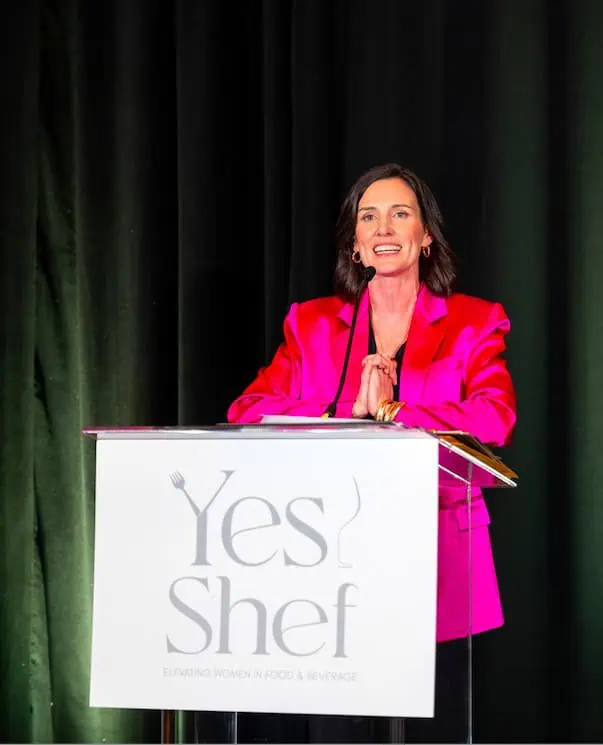
[Joanna Jagger at Yes Shef’s event in Vancouver, photo courtesy Yes Shef]
Due to its momentum out west, Yes Shef has set its sights on eastern Canada and enlisted some of the best authorities from top-level restaurants and hospitality companies in Toronto and Montreal.
Despite strides to fortify female voices in the industry, decades of prejudice, bullying, and stonewalling in GTA kitchens have necessitated Yes Shef’s arrival for some time, says Jagger.
“There has always been a standard of us [women] working extra hard to be taken seriously,” says Jagger. “Even though, for a lot of women, their connection to food is a figure in their life, such as a mother or grandmother, so we are aiming to continue the tradition of providing that spark for young women,” says Jagger.
Jagger states that this future-proofs the next generation, as those who are now in positions of authority, who seldom had the chance to be taken under someone’s wing, will now ensure this never has to be the case again.
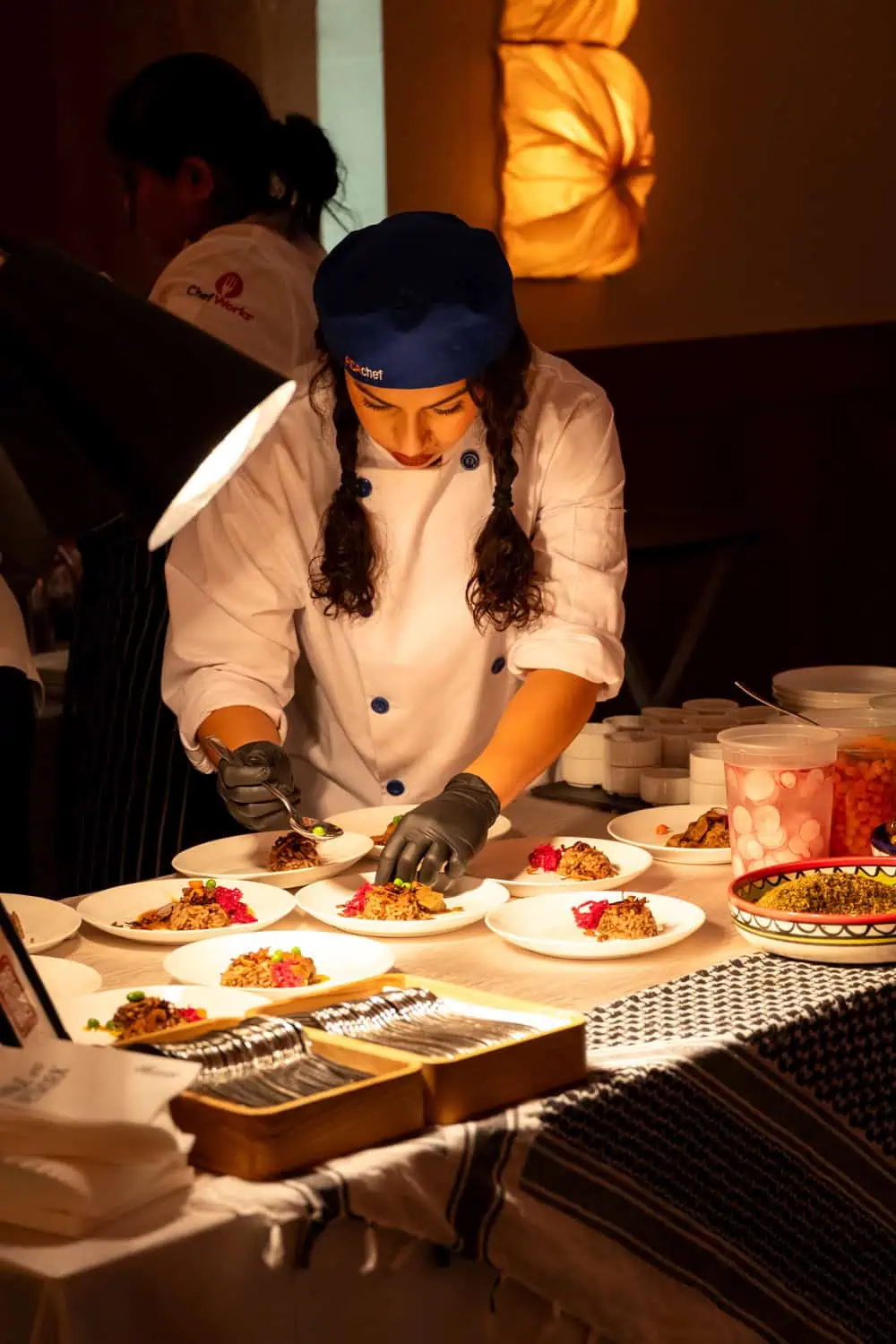
[Young chef plating for service at Yes Shef’s event in Vancouver, photo courtesy of Yes Shef]
“It’s all about finding out what their ambitions are, and more importantly, how we foster them. Then, on the backend, how do we further advocate for them in adjacent organizations? Specifically, through stronger sexual harassment reporting mechanisms and pay transparency clauses. In B.C., we even went as far as to lobby for the legislation of such acts,” says Jagger.
The GTA is the venue for the 2026 Restaurants Canada Show, the largest conference for the hospitality industry in the country, which will set up shop in Mississauga next week
Seeing this as an ideal platform, Jagger is bringing together a curated selection of new mentors involved in Yes Shef to shed light on the cracks that remain in kitchen culture throughout the province.
“We ought to do better as an industry, and frankly, we need to; we have to do right by these women, and I think this event and our presence at this event is going to address directly what’s broken,” says Jagger.
Donna
However, anyone who has worked alongside a team, especially in a kitchen, knows that addressing what is broken can never be done alone. Stepping up to the plate to dismantle systemic issues — in any industry — is no small task, and as a result, one needs serious firepower to do so.
Donna Dooher, in as many words, is that firepower.
Starting her career at the Canal Ritz in Ottawa in 1984, Dooher has navigated the culinary landscape for over 40 years, establishing herself as both a key figure/scholar of the industry in Toronto.
“When I started my journey into the larger culinary scene in Toronto back then, I naturally ran into a few obstacles. Many locations bluntly stated, ‘We don’t hire women.’ That was not by any stretch unusual for its time, and even today, some locations don’t let women access certain positions, and are relegated to being hosts,” Dooher told yourcitywithIN.com.
Early in her career, Dooher earned a sous chef position at a prominent restaurant in Toronto.
However, after two years with no upward mobility (and two kids to raise), Dooher launched her own restaurant in 1989, in a modest industrial district that would later become known as Liberty Village.
Mildred Pierce, a storied fine dining locale and Dooher’s pride and joy, ran for nearly 20 years.
While Mildred Pierce has long been closed for some time, its spiritual successor, Mildred’s Temple Kitchen, has been ruling the Liberty Village brunch scene for well over a decade.
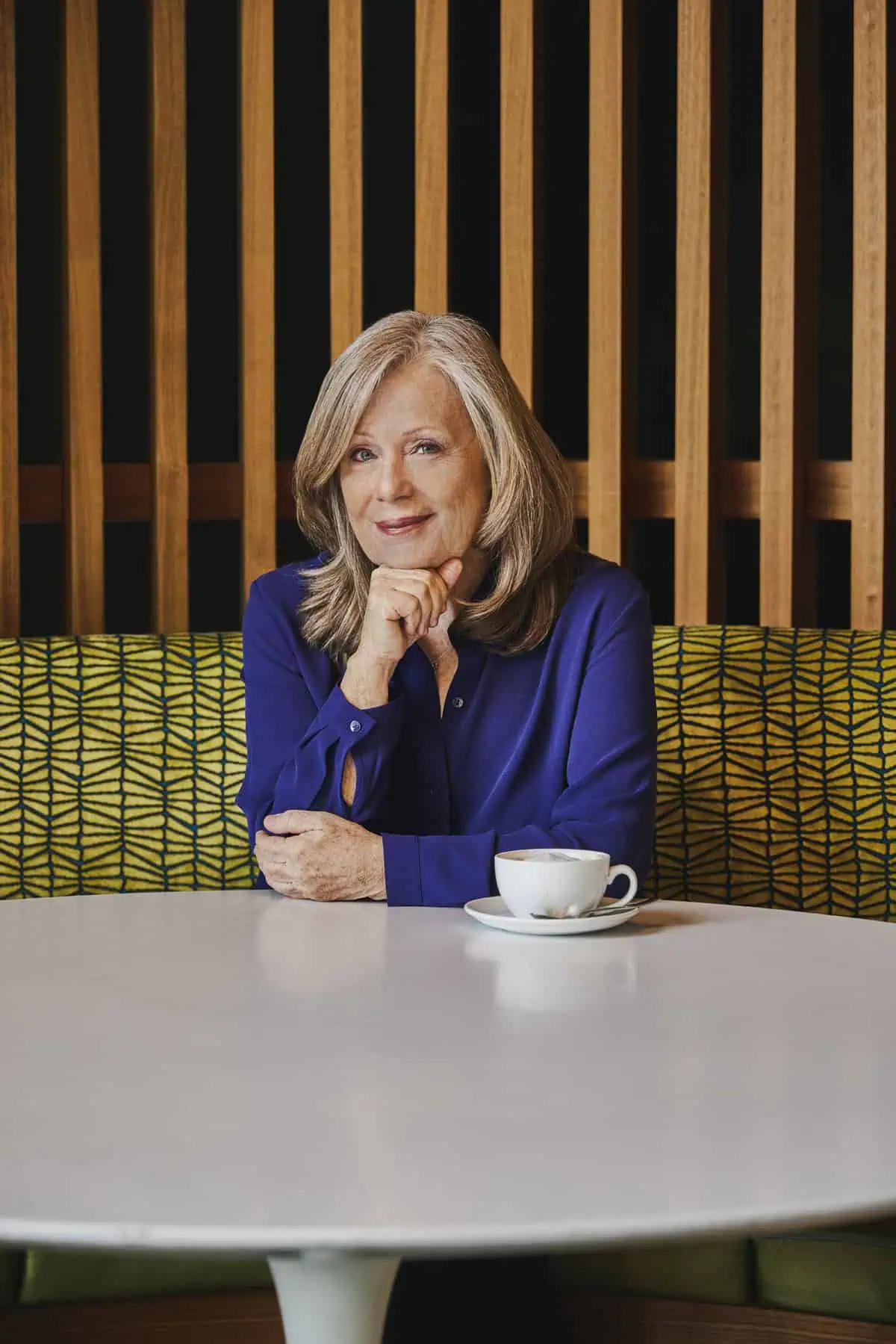
[Donna Dooher, photo courtesy of Mildred’s Temple Kitchen]
Launched post-financial crash of 2008, Mildred’s Temple Kitchen was built for a Toronto moving past fine dining and beyond the trappings of high society; it also served as a beacon for a woman-run culinary operation in Toronto.
“I have had many young women come and work for us, for that very reason, because they wanted to move away from that traditional hierarchy within male-dominated kitchens — colloquially known as the ‘French Brigade.’ Change is afoot, and whenever I get to work with other women in the kitchen, it is always incredible,” says Dooher.
Dooher’s acumen has matched the design of Yes Shef, as she has been independently mentoring young women for years, making her a perfect fit for its mentorship position.
“It’s demanding, physically, and the hours are long; the stamina you need to stick with it is immense. It can be very rewarding, but it’s easy to lose that balance. So, having someone to guide you in that industry, manage expectations, guide you and challenge some of your decisions — I don’t think young women have had that opportunity over the past few decades,” says Dooher.
Dooher noted that in many professional settings, frameworks for women to network are sparse, implying an underlying societal assumption that their time belongs to family, kids, or only their careers.
“The boys get to go out and golf for four or five hours during the day — women have never had that luxury or that kind of free time,” says Dooher.
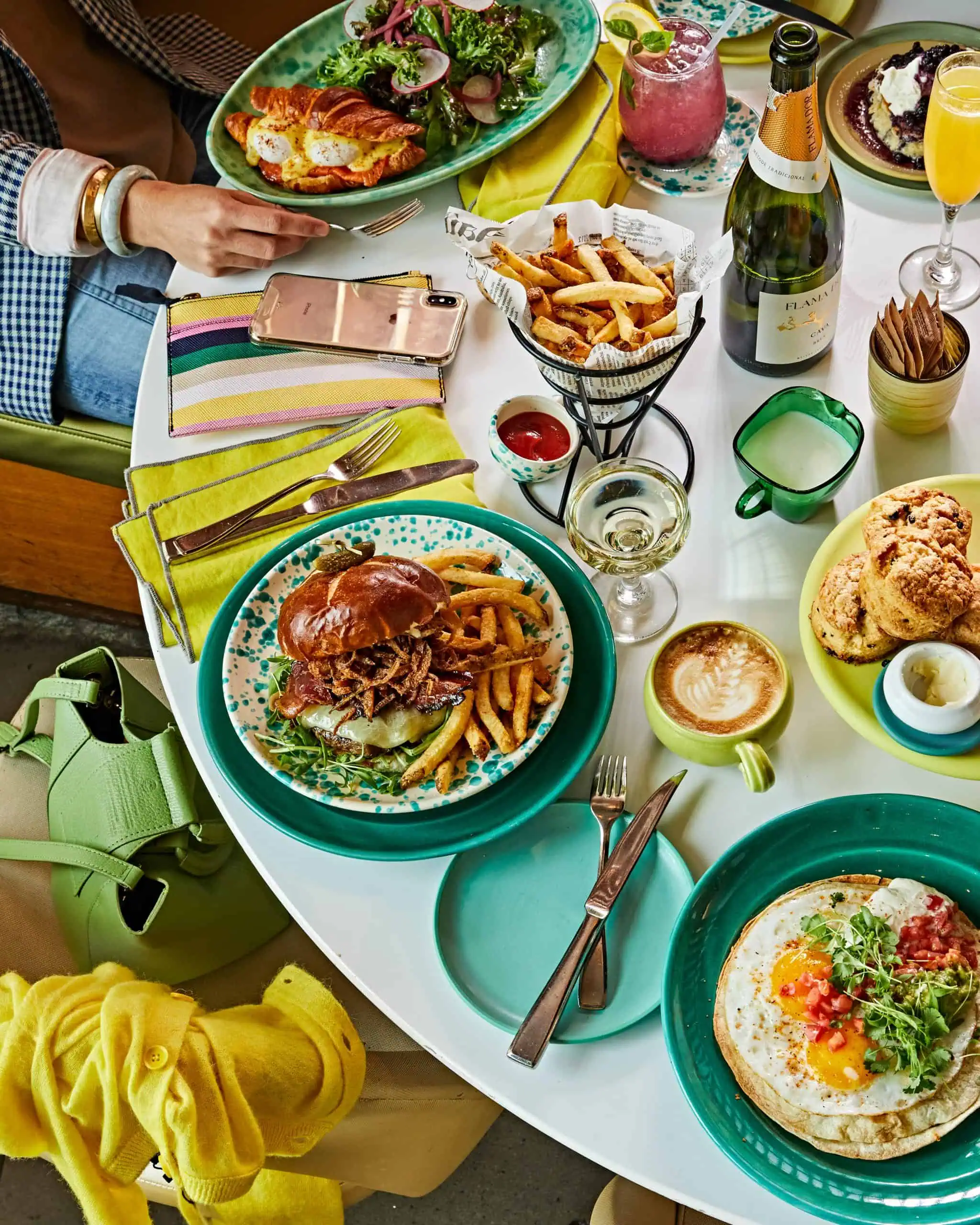
[The brunch spread at Mildred’s, photo courtesy of Mildred’s Temple Kitchen]
Dooher plans to apply her 40 years of kitchen experience via Yes Shef and guide young women in an industry that can be, at times, uncomfortable, while still providing comfort through food, no matter what.
“We thrive in an industry of hospitality, and it can be very hard to provide that hospitality if you aren’t hospitable within your own space first.”
But what of those looking to pursue their passion in an environment that doesn’t have a home-field advantage?
Marissa
Marissa Leon-John runs Elle-Jay’s, a Montreal-based private chef experience steeped in Leon-John’s Caribbean heritage. While not sporting any formal training, Leon-John earned national renown for her stint on MasterChef Canada a few years ago.
Now, as a key member of Yes Shef’s foray into eastern Canada, Leon-John brings a vital perspective to help young, queer, female chefs of colour looking to apply their skills beyond the din of a traditional kitchen.
“I learned a vital lesson very quickly, that no one can do this on their own. So I decided to create an environment that, at the time, I was not seeing around me,” Leon-John told yourcitywithIN.com. “I don’t have a restaurant background, so, in many ways, I’m not coming in from a traditionally toxic kitchen environment.”
Instead of entering the world of Montreal restaurant real estate, Leon-John designed Elle-Jays to function as a high-end pop-up, where, upon request, a highly skilled pit crew of culinary professionals will set up shop and provide upscale barbeques and tasting menus.
As a result, much like Dooher, Leon-John aims to create an environment where young individuals can access their passion for food in a space where it is nurtured and encouraged.
Leon-John also has no scruples about an individual’s resumé, as much as her own history with food, she believes that formal training does not substitute passion or drive.
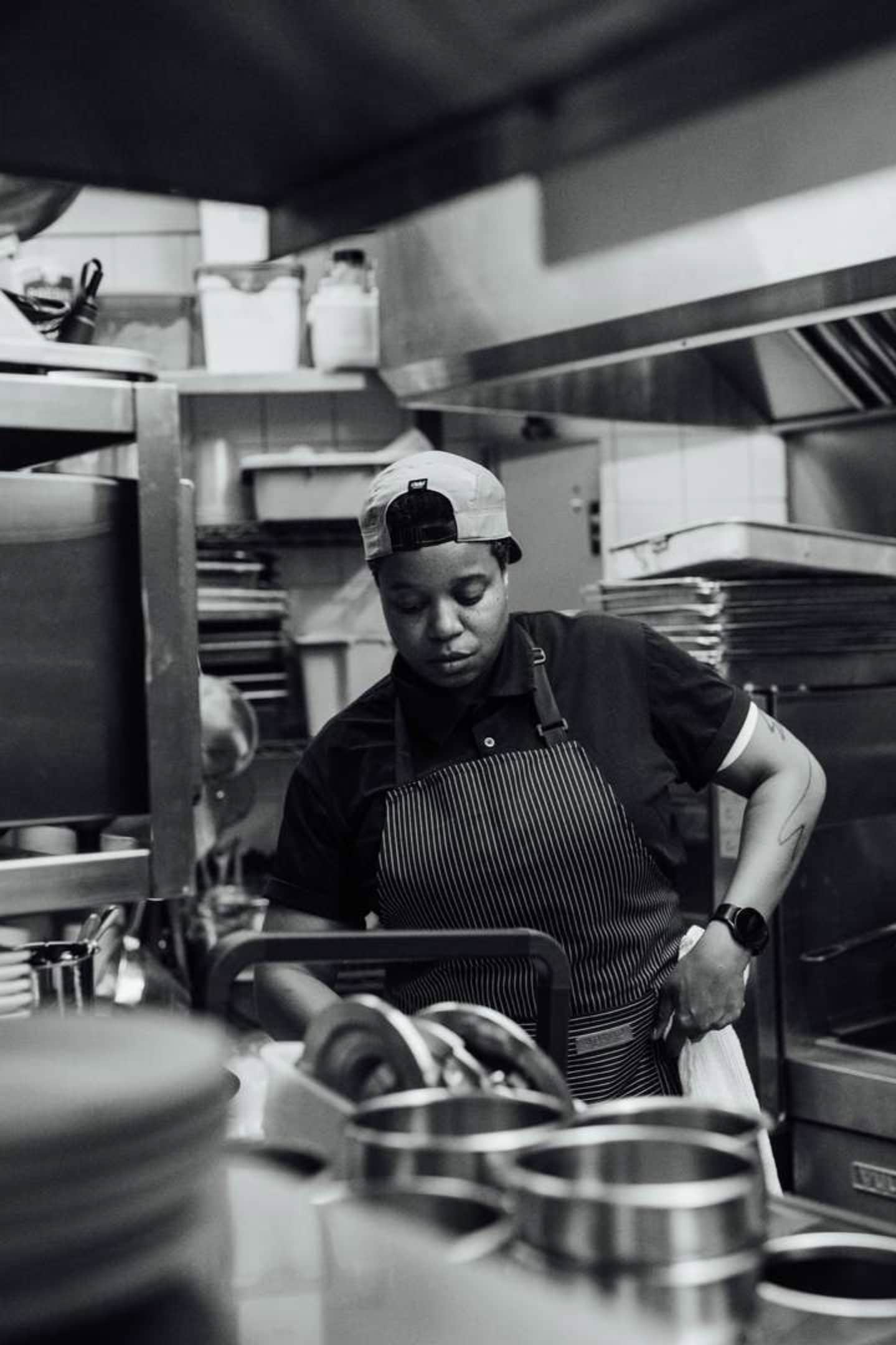
[Marissa Leon-John, photo courtesy of Kristian Rouse-Robinson]
“People whom I bring on, they may have or have not gone to culinary school, so I either learn from them, or we learn from one another. Some come in with a very rigid set of rules of how things need to be done, and then they get to break that mould, throw the formula out the window and have fun in the kitchen,” says Leon-John.
She also has a relationship with restaurants in Montreal that, in their own way, are trying to shed the nearly century-old kitchen structure that often closes the door behind them.
“I try to bring that energy into their kitchen, and when I leave, I get to also leave behind a lasting impression. Because I demonstrate through my work ethic that it doesn’t have to be as crazy as it has been traditionally, it won’t affect the end product. In fact, it makes the end product better,” says Leon-John.
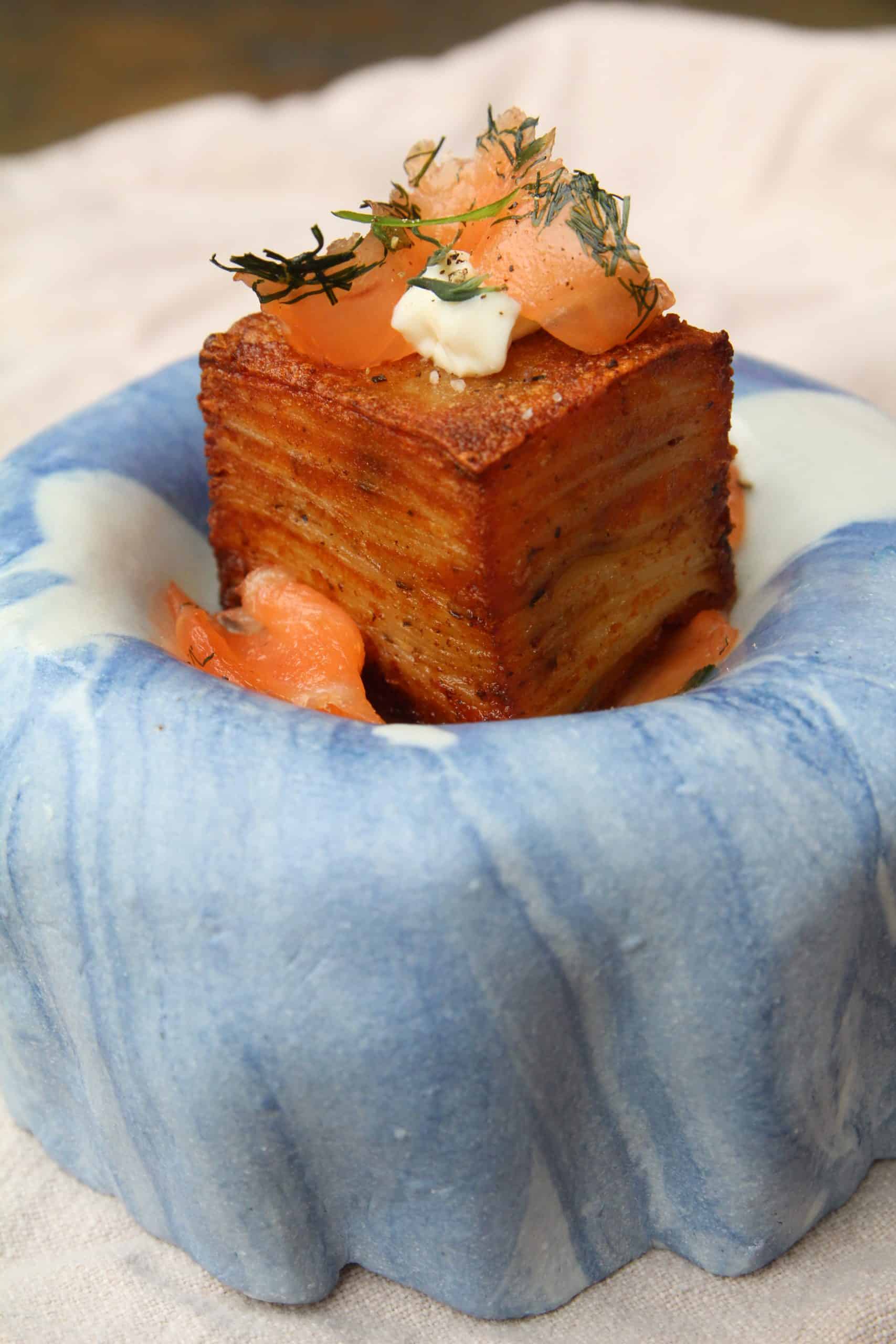
[What’s cooking at Elle Jay’s, photo courtesy Kristian Rouse-Robinson]
As for mentorship through Yes Shef, Leon-John believes that what she is doing will foster a new generation who don’t have to double down on the competitive nature of kitchens, opting to lift up instead of punch down.
However, there remains a point of contention, as even Leon-John acknowledges that the French Brigade, at its core, does work; otherwise, there wouldn’t be decades of fine dining magazines, Michelin stars, and word-of-mouth.
As a result, her thesis, especially when taking on a student, is to refine the balancing act of new and old.
“What I’m seeing from the younger generation is that we can do it all, without ruining ourselves in the process, without losing our humanity — maintaining our humanity in the kitchen, it has to be the most important thing,” says Leon-John.
Leon-John aims to be a salve to traditional kitchen practice, with a focus on leeching the poison out of an industry that never shuddered at the notion of being perceived as toxic.
As this changing of the guard occurs, however, and new talent is nurtured, it begs the question: what about those who had to do it alone?
Alida
“When I started, as a female chef in Toronto, there wasn’t really anyone to talk to about this; Donna [Dooher] was really my only sounding board back in the day, apart from that, there wasn’t anyone to talk to,” Alida Solomon, owner of Tutti Matti, told yourcitywithIN.com.
Spending her youth training in Italy, a culture where cuisine was female-dominated, be it teachers, chefs, or owners, Solomon earned her stripes in a setting opposite the militant structure of male-centric North American fine dining.
It wasn’t until her return to Toronto in the late 90s that Solomon was confronted with what was, at the time, the downtown boom of haute cuisine, dominated by male chefs, male staff, and male diners.
Despite these odds, Solomon opened Tutti Matti in 2002 in the heart of Toronto’s Financial District.
“There was this weird pocket of emptiness; I was 28, and I opened Tutti Matti after working in Europe for so long, I had no idea what I was getting into,” says Solomon. “We were surrounded by big advertising companies at the time, the biggest firms in Canada, and they were all men, which quickly became our clientele — I had to learn how to stand my ground quickly.”
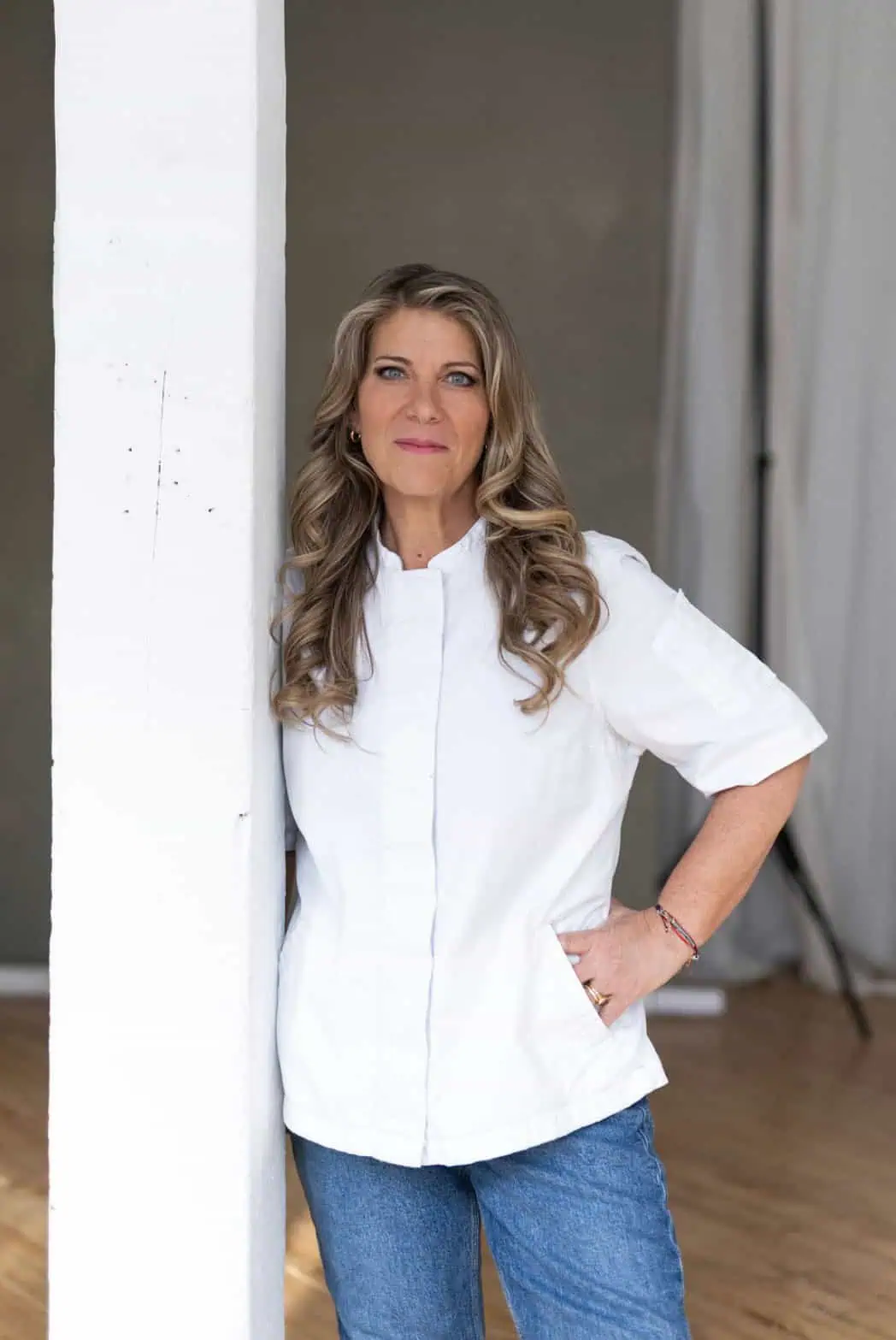
[Alida Solomon, photo courtesy of Rachel Simpson]
During the early aughts, according to Solomon, Toronto did not have as dense an Italian scene as it does now, resulting in Tutti Matti becoming a go-to lunch spot in the downtown core.
In turn, it also resulted in a testosterone-addled clientele —who weren’t used to being told ‘no’ — learning very quickly that Solomon wasn’t one to fold so easily.
“Without being rude, well, it was just a constant pissing competition; they would demand something, be it a dish that just wasn’t on our menu, and then I would have to hit back with something just as outlandish — but that’s just how you had to do it back then,” Solomon says, reminiscing.
According to Solomon, the heyday of Tutti Matti’s included more than just mannerless ad men, as the location became a frequent haunt for local newsrooms and famous writers, including Margaret Atwood.
Now, over 20 years later, the location, still standing strong, has become more of a dinner space, as downtown power lunch culture is not what it used to be in a post-pandemic world. In that same timeframe, Solomon also believes that what it means to be a woman in this industry has also changed drastically, as more independent female proprietors have been taking bigger risks.
Now a part of Yes Shef, Solomon hopes that through its network and mentorship program, conversations around what can be achieved (and avoided) can reach a wider audience of young female professionals.
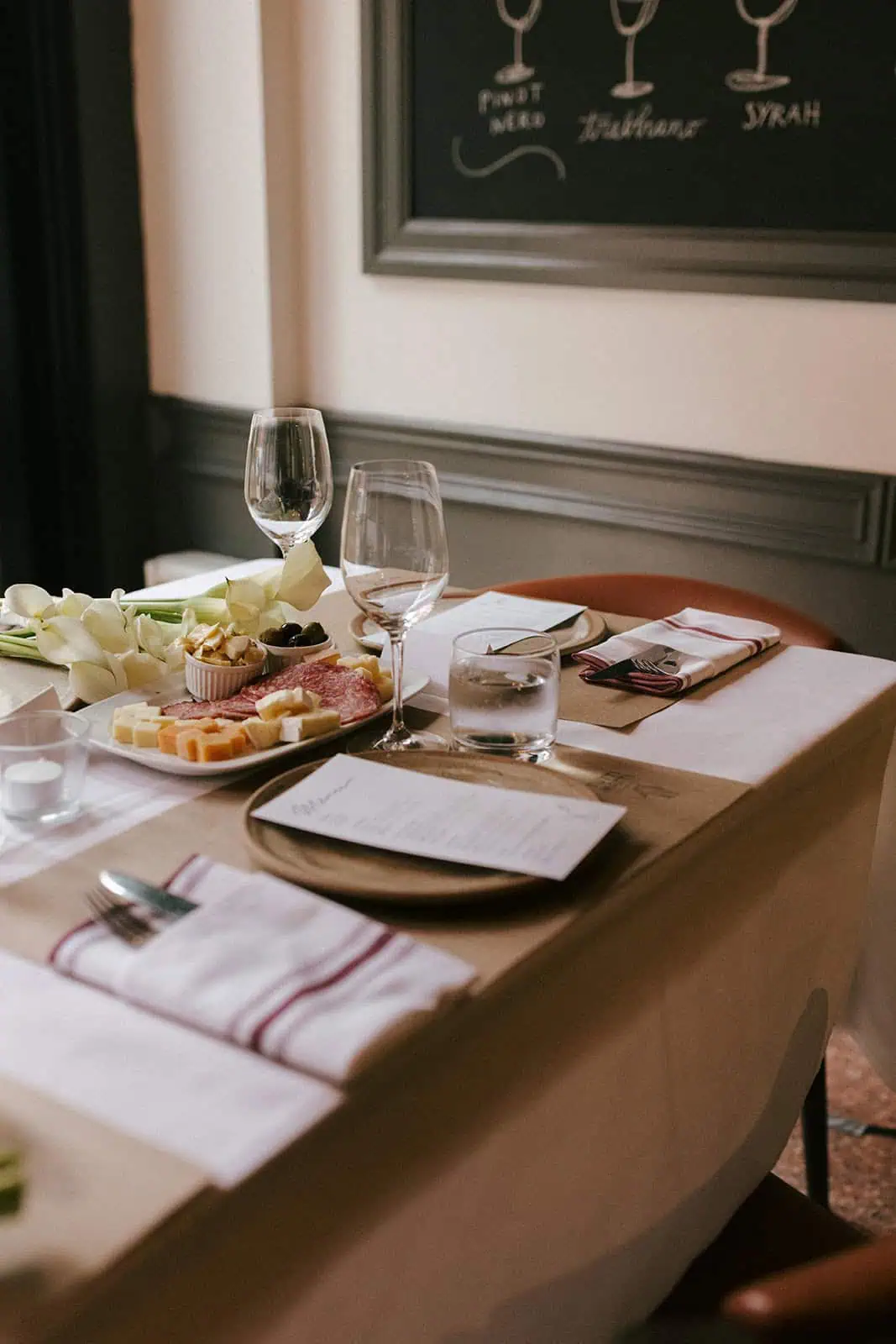
[History and elegance at Tutti Matti, photo courtesy of Rachel Simpson]
“If we want a new generation of women to succeed in this industry, we need to talk about what women like myself and Donna [Dooher] went through. Some had the fortune of succeeding in this industry without sacrificing what they want, be it a family or otherwise. In the old days, I didn’t have the chance to hold all those cards, and I was forced to make a choice, career or family,” says Solomon.
As a result, Solomon is grateful she now gets to be a vital figure as a mentor and help young professionals understand that changes within the industry are on the horizon.
As for the how and when, Solomon believes that the pendulum will swing both ways, and this new collective of mentors and mentees under Yes Shef will teach one another the skills required to reshape how female chefs operate within the GTA.
“This generation is living life in a way that we could all really use in the world of hospitality. It’s going to take generations to sort all this out, undo what has been done, and figure out that balance — but these girls, they’re really good at that.”
[Headline photo courtesy of Mildred’s Temple Kitchen]