
Fever dream film from Canadian director’s own experience debuts at TIFF
Published September 15, 2026 at 4:15 pm
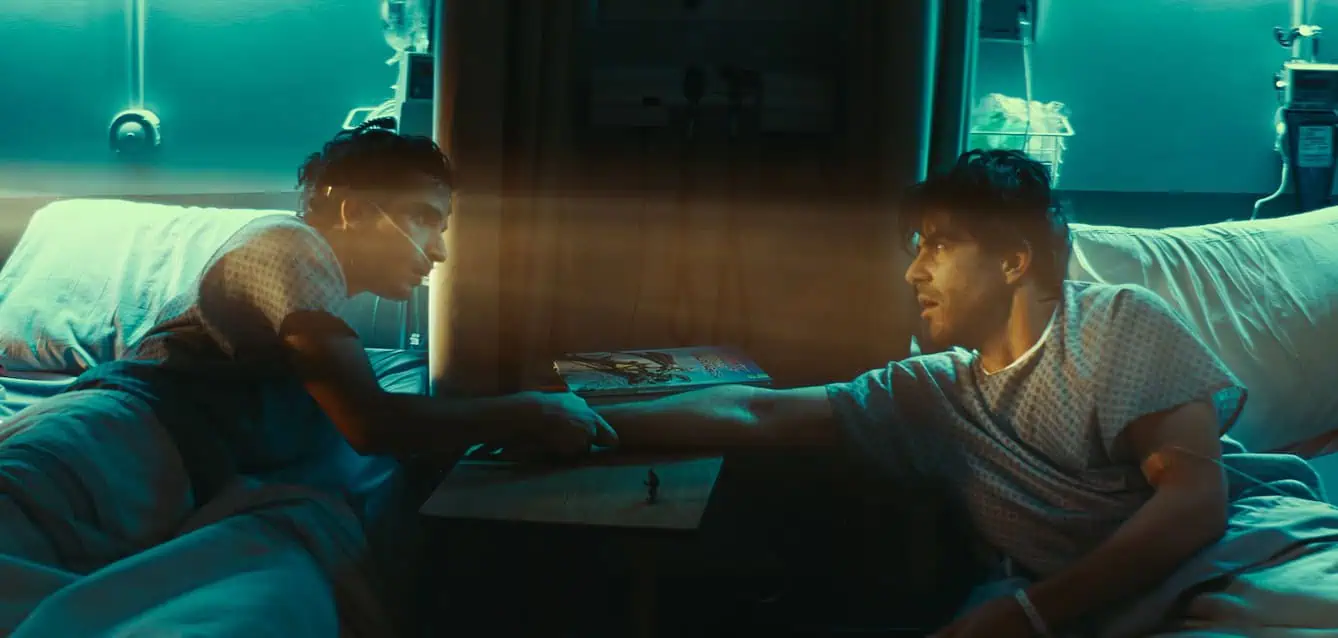
A Canadian director is tackling cracks in the system and human limits in a deeply personal TIFF debut.
L’Autre is debuting at this year’s Toronto International Film Festival (TIFF).
Putting the spotlight on Canadian creators, Alexandre Franchi, the Québécois director of the film, was able to sit down with yourcitywtihIN to discuss this deeply personal project and how it sheds light on weaknesses in the Canadian medical system, but also within ourselves.
The film is drawn from Franchi’s own personal experiences recovering from leg surgery to prevent a cancer spread, the isolation he felt, and how he caught pieces of himself slipping away as he cascaded into helplessness.
In the film, Stan (Pierre-Yves Cardinal), who functions as a pastiche of Franchi’s experiences and personality, is a French-Canadian author who is stuck contending with an incredibly taxing surgery — mirroring Franchi’s real-life operation — and is isolated in a hospital wing while his partner, friends and family stumble over themselves to manage his care.
However, when an alleged comatose gang member becomes Stan’s hospital roommate, a labyrinthine story about what is real and what isn’t plays out all in one room, as Stan’s symptoms progress and paranoia dominates his recovery.
“The idea was to make it more intimate with Stan’s POV as time went on; what he goes through: pain, morphine, and, to an extent, without giving too much away, mismanagement. This starts to erode his personality; he switches moods constantly, magnifying what dangers are real or not throughout the story,” Franchi told yourcitywithIN.
L’Autre has been rattling around as an idea in Franchi’s head for about 10 years ever since he more or less lived it.
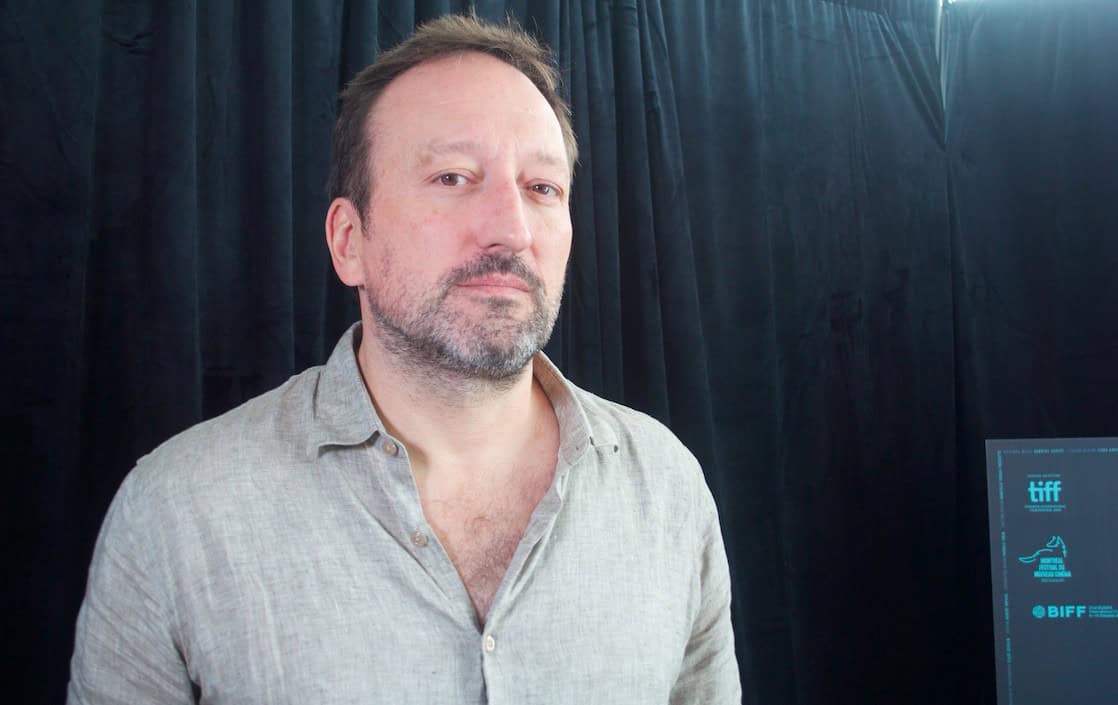
[Alexandre Franchi at this year’s Toronto International Film Festival (TIFF)]
Still, it wasn’t until a few years ago that he could take the trauma of what happened to him and craft it on a personal foundation, yet one that tells an incredibly universal story.
Primarily, by addressing several key factors, such as racial prejudice towards hospital workers and demands of language skills (magnified even further in French-speaking Quebec), holes in an overburdened and underfunded hospital system, and how, when at the summit of pain and exhaustion, anyone will say things they wish they could take back.
“When you undergo pain, when you feel like you are on the verge of dying every second of every day, and say something as simple as someone not speaking your language comes into play, yeah, you’re going to be rude. When you are in that much agony, any kind of social mask slips off, and you become primal, and very much not yourself,” says Franchi.
Franchi continues to note that everyone has an ugly side so far removed from who they are at their core, and that L’Autre (which literally translates to ‘The Other’) shows that. The title also acts as a double entendre, as Stan is forced to contend with his slipping sanity after an ‘other’ person is admitted to his private hospital room.
Darius, played immaculately by Bilel Chegrani, enters the fold as an already exhausted Stan is taunted by his new roommate into states of deeper paranoia and an almost twisted codependency.
“He pokes at stan, at a time when he is already feeling the absolute height of his vulnerability and weakness, particularly surrounding things like himself, his girlfriend and his family. As a result, he kind of becomes Darius’s,” Chegrani told yourcitywithIN.
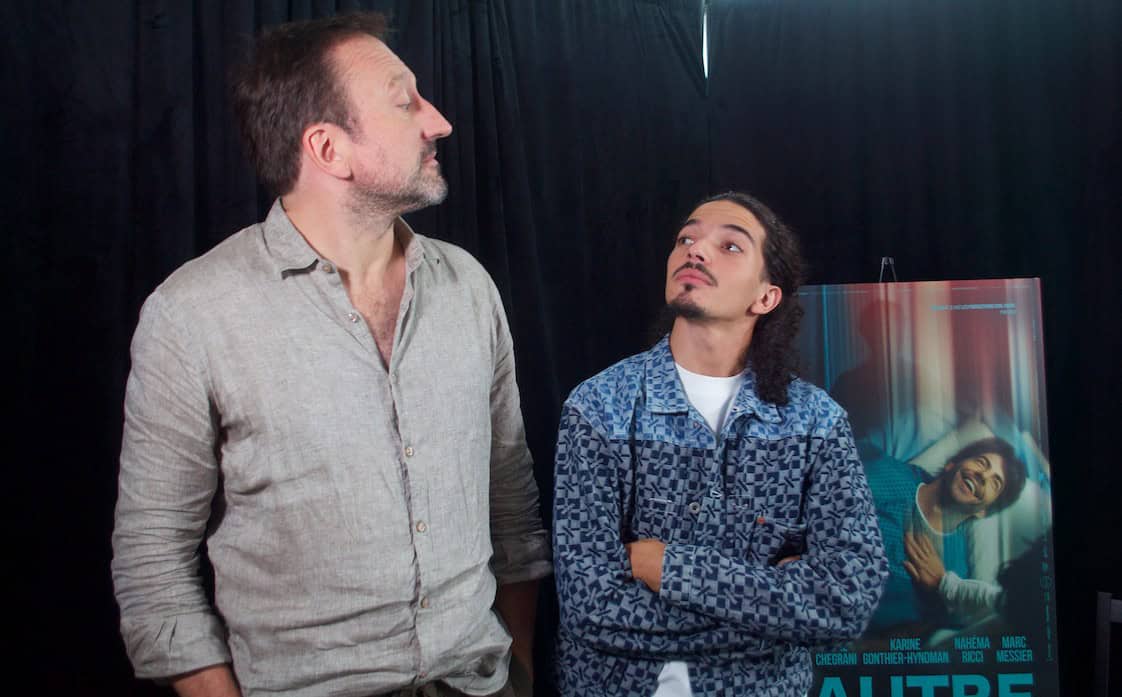
[Alexandre Franchi and Bilel Chegrani at this year’s Toronto International Film Festival (TIFF)]
Franchi went on to relay that he spent a long time piecing together aspects of Stan, while wanting to showcase his own experiences with vulnerability, volatility, and helplessness during a time when help never feels like enough.
Luckily for him, L’Autre’s visual and narrative identity was practically crafted in real time.
“I was already under the gun of being in the 50 per cent survival rate pool, in and out of the hospital post-surgery, then I slipped and cracked my femur on an already recovering leg. It wasn’t until a cinematographer friend came to visit me in the hospital that we started taking pictures of the environment and myself in it. It was a mini photoshoot just of the drabness of it, then over the years, it was jazzed up and conceptualized,” says Franchi.
At the same time, when it comes to these kinds of stories, and unpacking all of the personal societal baggage that comes with it, Franchi was not shy to admit that one of the biggest hurdles to avoid was L’Autre coming off as too saccharine or ‘Hollywood.’
“There is an over-the-topness that comes with budgets and commercial angles to the craft. Luckily, when you don’t have those things pressuring you, you get to be more inventive, you know, the adage of necessity being the mother of invention and all,” says Franchi. “It’s a story that takes place within four walls, so the question of ‘how do we make this shit interesting?’ was organic.”
What occurs as a result — without spilling too much — is a fever dream of a film that delves into music, art and all the trappings of the subconscious, with Franchi driving the point home, saying, “It’s a cathartic film for sure — but I want people to come out with goosebumps by the end.”