
Dark crime thriller that fuses hypnosis, greed and culture clashes hits the screen in Toronto
Published September 17, 2026 at 3:12 pm

A film about a foreign swindler taking advantage of a desperate man doesn’t sound too off the beaten path, but add door-to-door sales, hypnosis and new immigrant struggles, and you find yourself juggling a lot of disparate elements that, if hastily combined, could turn an otherwise slick black dramedy into a tangled mess.
For up-and-coming Tongan/Kiwi director Alex Liu, he was prepared to keep the loose parts intact in his latest film, God Bless You, Mr. Kopu, a New Zealand thriller that just debuted at the Toronto International Film Festival.
“ When I was writing it, and because I was writing it just to kind of have fun writing, I let all of my loves of all genres fold into the script,” Liu told YourCityWithIN.
“It’s a real balancing act of making sure it’s not going too far one way or too far the other. Editing is really where the finessing happens, but it always starts at the script level, and there would be times where I’d go, ‘Ah, like I’ve done a horror pass or a thriller pass, and maybe I’ve lost a bit of the humour. Like, I need to do a comedy pass.’” And it’s just finding that balance.”
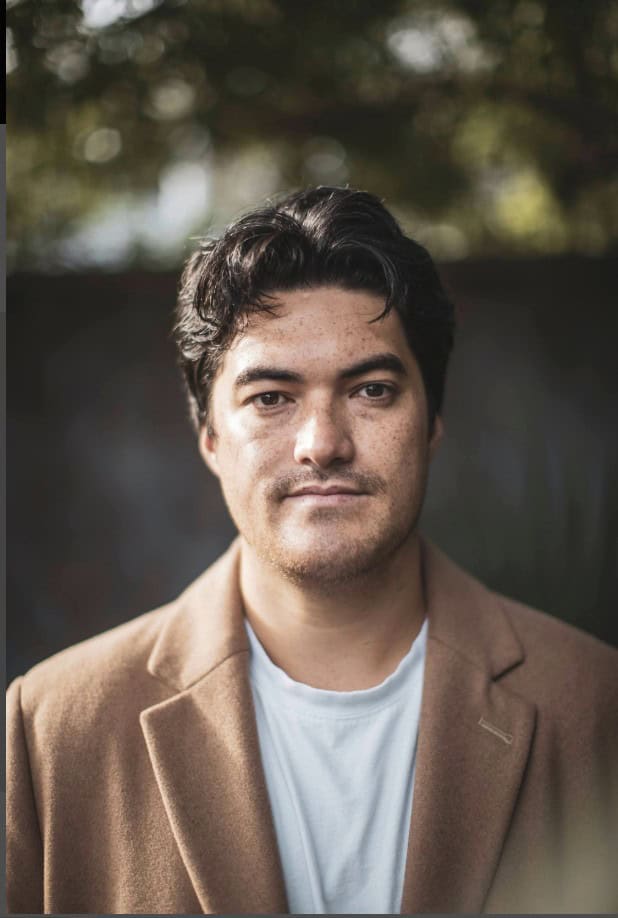
Alex Liu
God Bless You, Mr. Kopu, which falls into the newly coined “Pacific New Wave” category, is a surprisingly layered project that stitches together genres and offers viewers a black comedy, a vaguely supernatural thriller, and a fast-paced examination of otherness and exploitation.
The film centers on Mafu Kopu (Dimitrius Schuster-Koloamatangi, Predator: Badlands), a Tongan immigrant in New Zealand struggling to fit in with both Kiwis and members of his own diaspora. Desperate for a better-paying job, he takes on a salesman position and meets Marco Cass (Simon Rex, Red Rocket), a charismatic hustler who takes him under his wing.
Frustrated by his lack of success and wounded by the admonishment he receives from Tongan immigrants who chide him for trying to sell them overpriced cleaning products, Mafu decides that Marco’s unorthodox sales tactics, unethical as they are, are tolerable if he can use the money to better his situation.
While the film takes viewers on an expected (and often violent) journey rife with twists, turns and shocking reveals, the story’s heart is personal to Liu.
“ I’m half Tongan, so I’m infusing it with my cultural experiences,” Liu says, adding that while growing up, he’d visit his aunt in a lower-income neighbourhood and see predatory salespeople go door-to-door attempting to sell marked-up products to people with less financial resources.
“They would sell household goods or clothes at inflated prices. A t-shirt would be $50 on the truck, whereas it’d be $10 in a store. They would corner people with not a lot of money and say, ‘You can’t afford $50, but you can afford $5 a week for 10 weeks.’ And then they would kill you on interest and late payment fees and get people in cycles of debt,” he says.
“I noticed that those were operating in poorer neighbourhoods and not in wealthy neighbourhoods.’
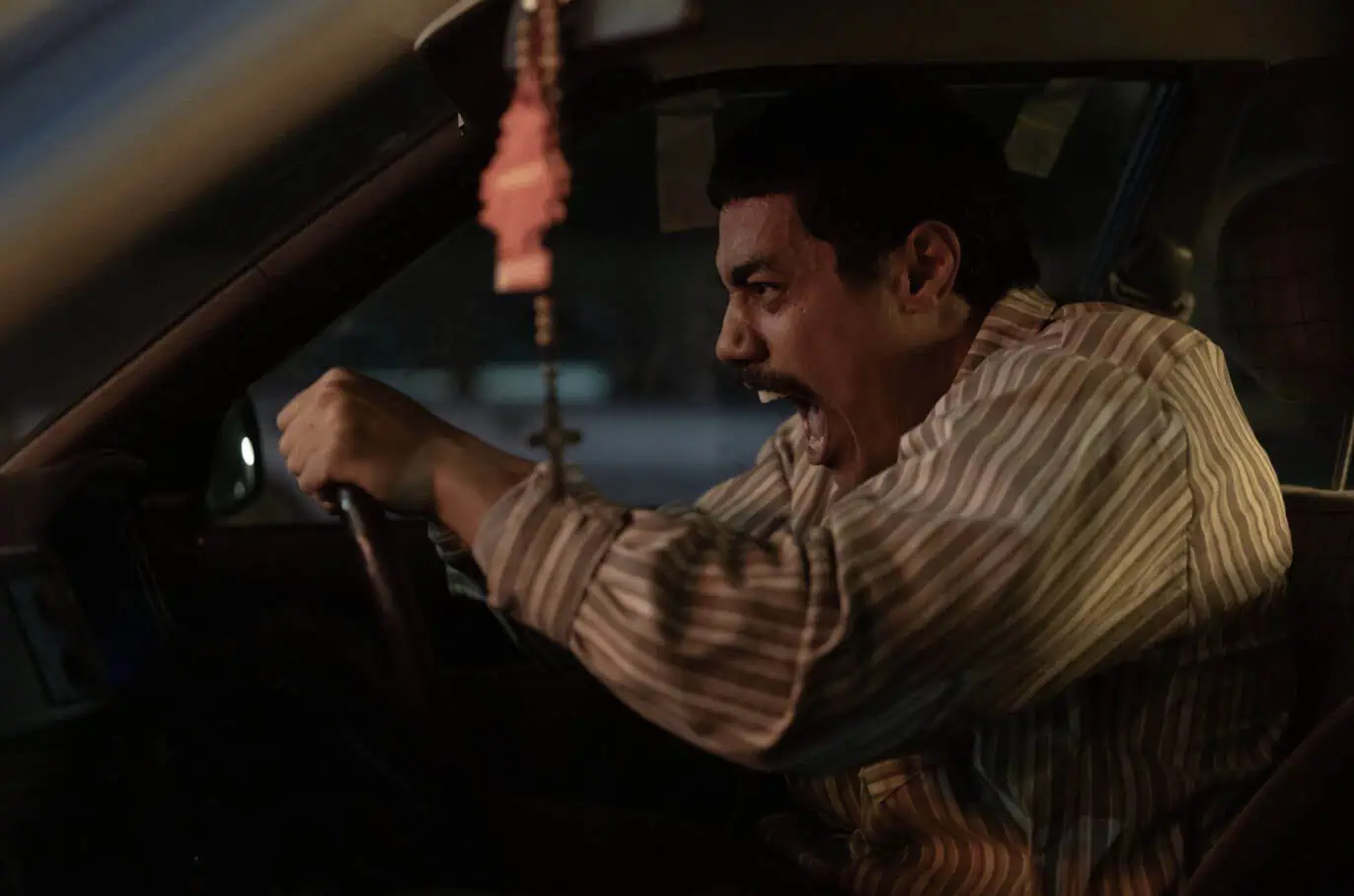
The insidiousness stuck with Liu, and that cynical exploitation anchors the film without transforming it into a one-note dramedy solely about the perils and pitfalls of inequality. While Mafu’s identity is a crucial component of the film, it’s simply part of a broader story.
“One great thing for me is just to have Pacific characters on screen that are different to what we [often see]. There are a million different types of Tongans and I think that gets lost sometimes in the media,” he says.
“We’re seeing more and more representation, and we’re seeing how diverse everyone’s personalities are regardless of ethnicity. With God Bless You, Mr. Kopu, it’s a Tongan character that hasn’t really been seen on screen before.”
Schuster-Koloamatangi, who is of Tongan and Samoan ancestry and plays the titular character, agrees, telling YourCityWithIN that while there were many things that drew him to the script, he liked the fact that while Mafu is Polynesian, the movie isn’t necessarily a story about the Tongan experience exclusively.
“There was never a space for Polynesians who just exist in a story, you know? We follow [Mafu] instead of basing everything around the culture and making the culture the face of the film,” he says.
As to what drew the rest of the cast to their characters, Rex, who plays Cass, says the appeal comes down to how fun it is to play the bad guy–especially a well-written one.
“It was a fun character and I kind of liked that it was the American obnoxiously plowing through another culture and [being] entitled. In my travels I’ve seen, or maybe even been, that American that’s in some other place and just…I remember being in, like, Paris or in European countries, and you see the American tourists, and it’s so embarrassing,” he tells YourCityWithIN.
“It was fun to be that guy. Just zero self-awareness, just taking advantage of nice people.”

For Grace Palmer, who plays Mafu’s love interest Margot, the role was alluring because the bombastic, aggressive character wasn’t someone she could easily relate to.
“There was something intimidating about Margot that made it a really cool challenge,” she tells YourCityWithIN.
“But also a fun one where I was like, ‘Oh, you know what? I would have to work quite hard to sort of do this person justice or, like, capture the complexities of her.’”
While Schuster-Koloamatangi says he and his meek, mild-mannered character are quite different, there are still aspects of Mafu’s personality that resonate with him.
“Mafu is still…how I feel sometimes, so it’s very personal to me,” he says, adding that the character is also a deviation from tropes that, while not necessarily negative, pigeonhole Tongan and other Pacific Islanders as mystical or physically imposing.
“I would like to see more of this [representation],” he says.
Palmer, whose mother is Māori, agrees that it’s rarer to see a story about an Indigenous character that isn’t solely about their identity.
“Indigenous stories are often focused around being Indigenous and it’s okay to tell any other story and have your leads be Indigenous, and that be a fabric or a string to the bow of the story, but it doesn’t have to be the central theme. I think we’ve grown up watching a lot of Māori films that have focused on [that experience], which is so real and so true, but it can be quite heavy sometimes.”
While the film is, at its core, about people with competing ambitions fighting to achieve very different goals, it does work as a vehicle to tell a story that, incidentally, has an Indigenous character at its core. For that reason, Liu says TIFF is a good fit for releasing the movie to an international audience.
“Screening at TIFF is a literal dream come true and it’s such a great home for the film because there’s so much support here in Toronto for Indigenous films,” he says.
“But also, just the character of the city has been a real treat to experience. Being selected for such a prestigious festival is, you know, it’s huge. Everyone’s been super lovely and I hope this isn’t the last time I come.”