
Could a new hotel change Toronto’s Kensington Market forever?
Published October 27, 2026 at 3:38 pm
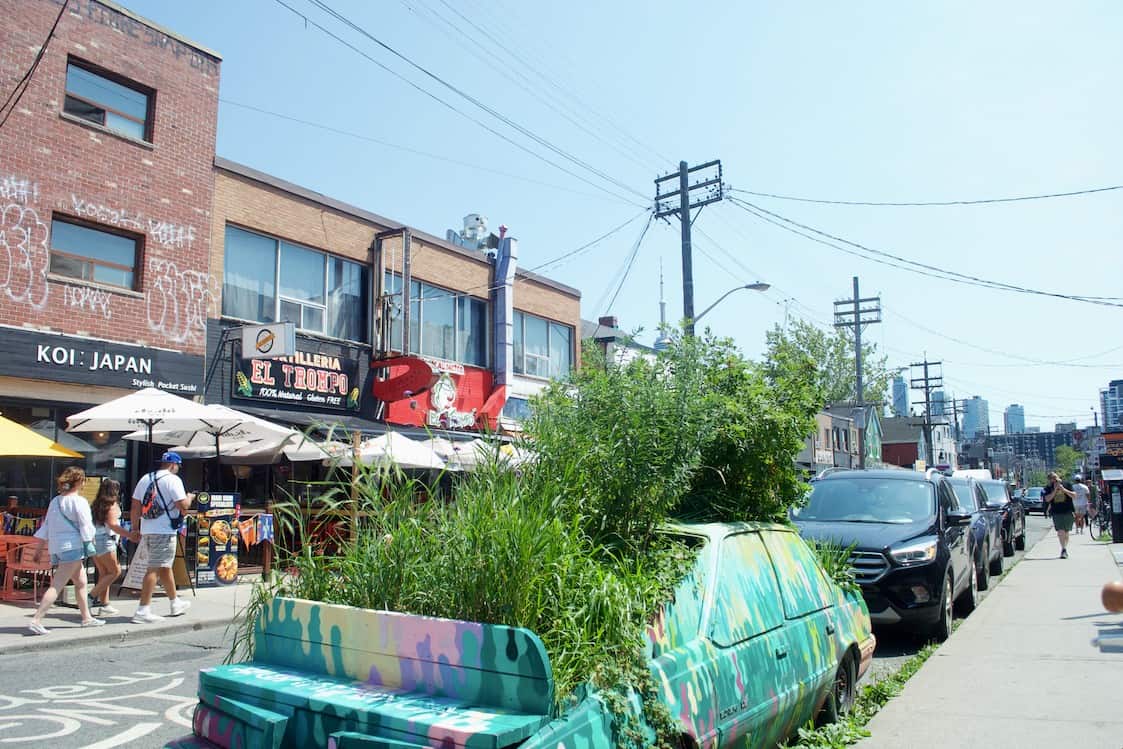
Toronto’s best-known cultural hub, loved for its scrappy look, eclectic shops and restaurants, is grappling with gentrification as a new boutique hotel may be on the way.
Kensington Market, a patchwork of open-air markets, street vendors, and more, is about as Toronto as it gets. Whether you’re a townie or tourist, odds are you’ve got a favourite spot here between Spadina and Bathurst.
Despite notoriety as a tourist trap (Kensington Market hit Airbnb’s most popular places for tourists in Canada), the people in this neighbourhood are as crucial as its storefronts, and keep it an authentic part of Toronto.
However, neighbourhood advocates say residents are at risk, as Airbnbs cannibalize housing, and construction proposals are tabled that, some believe, fail to reflect the area’s character.
Recently, a proposal for a six-storey boutique hotel has community leaders feeling more boxed in than ever. Slated for 309 Augusta Ave., the application, if approved by the city, would allow developers to build a 43-suite hotel with a rooftop restaurant, ground-floor retail space, a bar/cafe, lounge and basement restaurant.
A document prepared by the project’s architecture firm says the hotel is designed with Kensington Market’s “patchwork quilt” of buildings in mind. The proposal calls for a ground floor that matches the existing buildings, and set-back upper floors that won’t draw too much attention from the street.
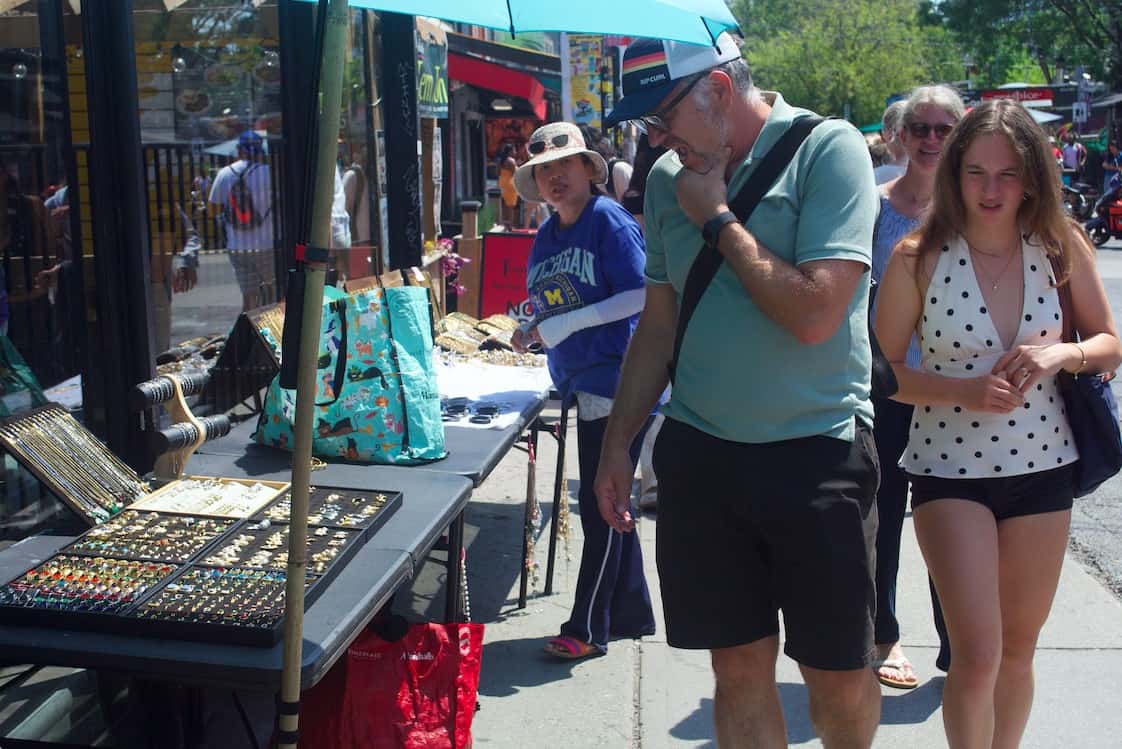
[Street vendors and storefronts, just some of the iconic staples of Kensington Market]
While the proposal is still in its infancy, it’s already giving people who safeguard Kensington Market pause.
“We’re seeing worse and worse conditions; people are losing friends, losing neighbours, all by slipping into violent poverty. Anytime there is a new build, it is pretty unanimous around the neighbourhood to ask why it isn’t housing,” Serena Purdy, former chair of Friends of Kensington Market, a community organization, told yourcitywithIN.
Purdy, who retired from her position to take a run at local politics, still has her ear to the pavement regarding her constituency.
Purdy relayed how neighbourhood business owners aren’t inherently against a hotel that brings in other bars, restaurants, and storefronts, but, since Kensington is a very specific kind of place, it has to fit within the neighbourhood authentically.
As a result, a sleek boutique hotel, to some, is antithetical to the area.
“People who live here, and work here, they love playing tour guide, so many businesses here rely on the tourism. So I would say that this community isn’t hostile towards tourism, but if tourism forces residents out, what are you coming to visit?” says Purdy.
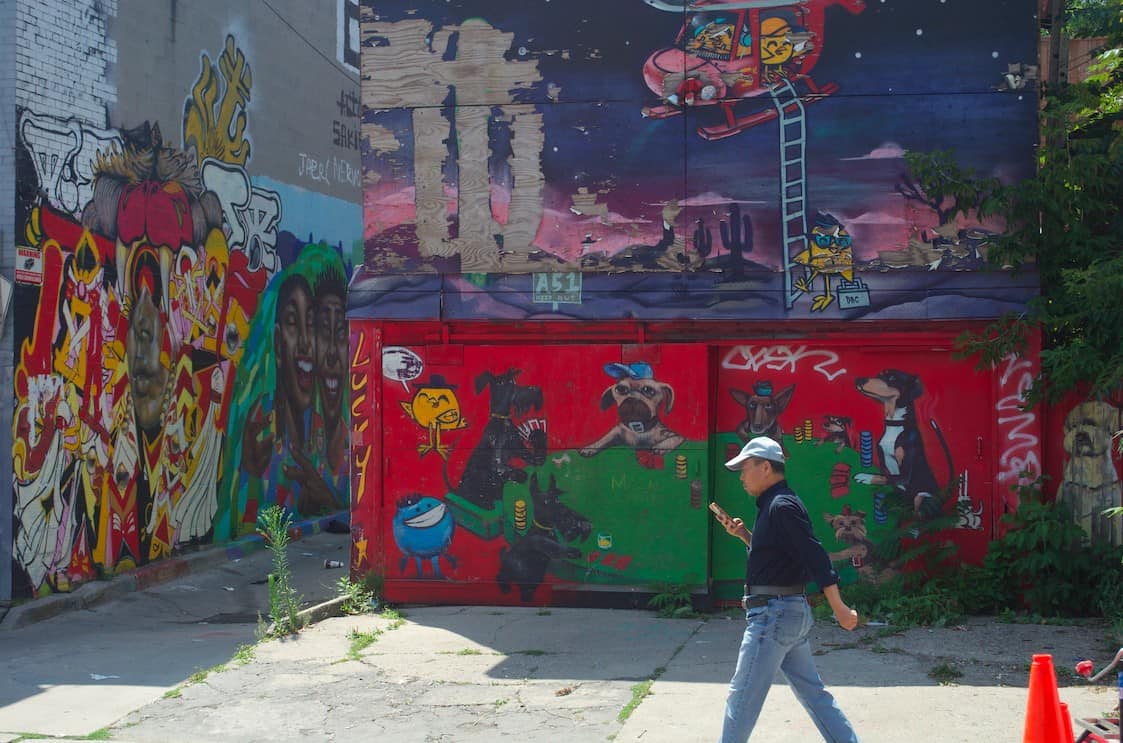
[Wall art, graffiti, and other eye-catching signifiers of the area could be at risk if torn down]
Vibes among community leaders, per Purdy, suggest most new Kensington developments in the chamber (commercial and residential) are designed to support tourists first, not residents.
Purdy notes that conditioning a neighbourhood for tourists is not new, and it impacts tourist cities heavily worldwide. Community advocates in Rome, Barcelona, Amsterdam and Dublin have been vocal about how residents are steamrolled so commercialization can continue unimpeded.
As a result, Purdy has gone so far as to liaise with neighbourhood leaders in these cities to learn how to save Kensington.
“What occurs is tourism as a strip-mining culture, and we need to collectively figure out a way to fight it,” says Purdy. “When developments spring up that are hostile to those living in the area, then it gets way harder to correct.”
The current Augusta proposal doesn’t threaten residential dwellings, as a laundromat and a now-vacant bike repair shop are on the chopping block. Even so, Purdy notes that if small businesses are sacrificed, what supplants them should always prioritize the community.
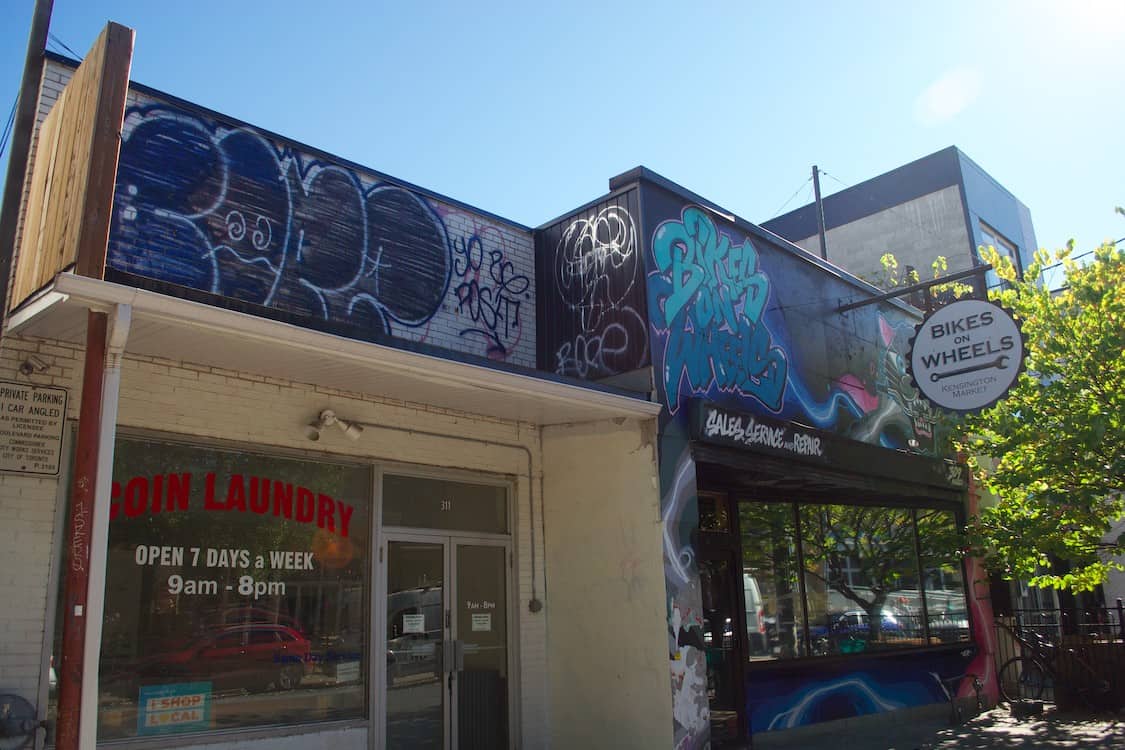
[Current businesses at 309 Augusta Ave. in Kensington Market]
“It’s harder to keep a community fighting together when people continue to be displaced; it is difficult to stay in the fight when your base is constantly being eroded beneath you,” says Purdy.
Purdy says that, when it comes to city-backed developments, breaking ground in Kensington is drastically different than bulldozing a car wash for a condo; as a result, it requires a level of community engagement that may be being overlooked.

[Serena Purdy standing within Kensington Market]
“Almost every proposal will state that the development is ‘in keeping with other buildings in the area,’ when that’s not the case. It’s meaningless, and every developer I’ve met thinks they are a de facto expert on the area. They think the neighbourhood is this blank slate — it’s not,” says Purdy.
While commercial and residential developments differ on paper, the Kensington Market Community Land Trust (KMCLT) has been fighting gentrification for a decade by preserving buildings and turning them into affordable housing.
Dominque Russel, co-director of KMCLT, weighed in on commercial/residential developments and how the hotel proposal — if left unchecked — could symbolize a hostile future.
“The city has already approved hotel expansions by us up on College Street, so this boutique hotel is almost symbolic, as it’s replacing a laundromat, something residents need but not tourists. So, we are stuck asking ourselves, when a destination overtakes the community, is it worth it?”
Purdy — despite the firm’s stance that it will try to echo Kensington’s vibe — is equally worried about the character of existing buildings, as the hotel may give other developers credence to target other locations long entrenched in Kensington’s aesthetic.
The grid of the area (for the most part) is built on Victorian-era rowhouses, either retrofitted into storefronts or residences. Think vintage shops like Courage My Love, grocery icons like Cheese Magic, or smaller storefronts like Carlos House of Spice.
If any of these areas succumb to rent increases or general wear and tear, a land grab may be on the horizon, with new players gutting the neighbourhood and leaving it in a state of developmental flux.
“Walking tours are a huge part of this area, where we point out buildings and their heritage, while we still have examples to show. But what happens when these tours are relegated to gesturing to decommissioned buildings, active construction, and pits? It appears that the will is not to maintain, and instead, tear something down,” says Purdy.
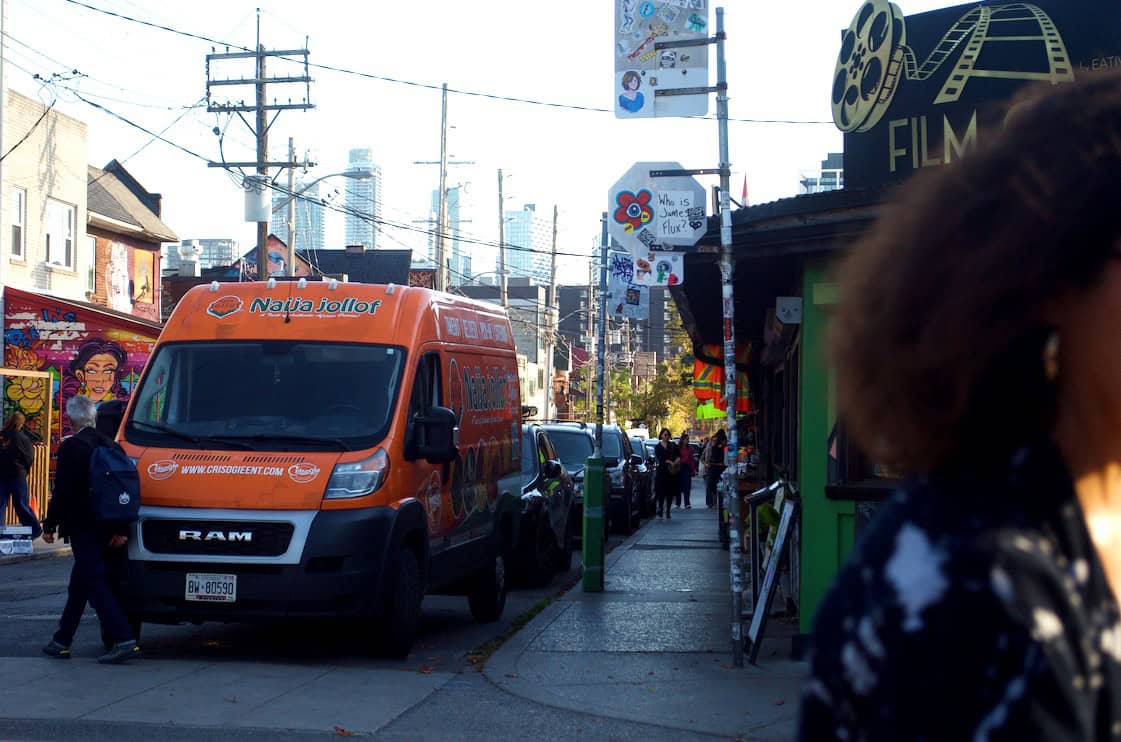
[Residents and commuters work their way through Kensington Market]
While the 309 Augusta development remains under review and the architecture firm’s reports include future public consultation sessions, Purdy and Russel stand united: if given the go-ahead, the developers must work with the community first.
Purdy states, however, that if the reverse is the case, Kensington won’t let it happen without a fight.
“People from other communities, who didn’t win their fights against this, ask me how we keep doing it. My answer simply is, we’re scrappy, we haven’t stopped, we won’t stop — the fight is embedded in this neighbourhood, because whatever is coming at us won’t go away.”