
Big changes coming to historic Toronto theatre built over 150 years ago
Published August 31, 2026 at 12:20 pm
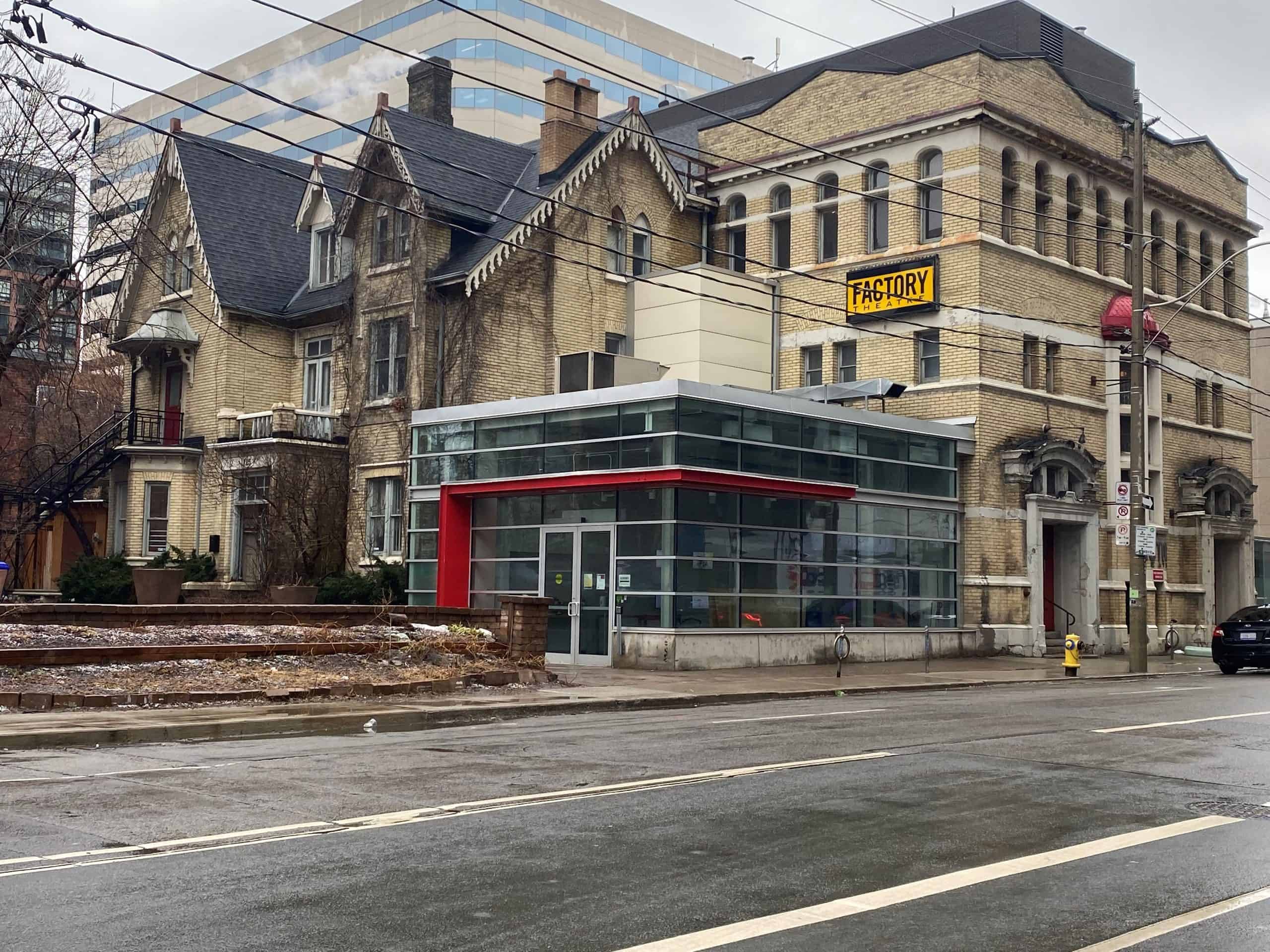
A theatre that sits in a 157-year-old Toronto heritage property is getting both a physical and a creative facelift courtesy of an ambitious theatre creator who felt he couldn’t let the storied property languish any longer.
“I walked by and felt a pang of sadness,” Kevin Matthew Wong, a theatre creator and producer who recently served as the executive producer and artistic associate at Why Not Theatre, tells YourCityWithIN.
Wong, an award-winning creator who has led large-scale projects in Canada and abroad, lives about five minutes away from the Bathurst and Adelaide theatre and had been ruminating on the state of the space for some time before he decided that if anyone was going to restore the glory of the long-standing establishment, it might as well be him.
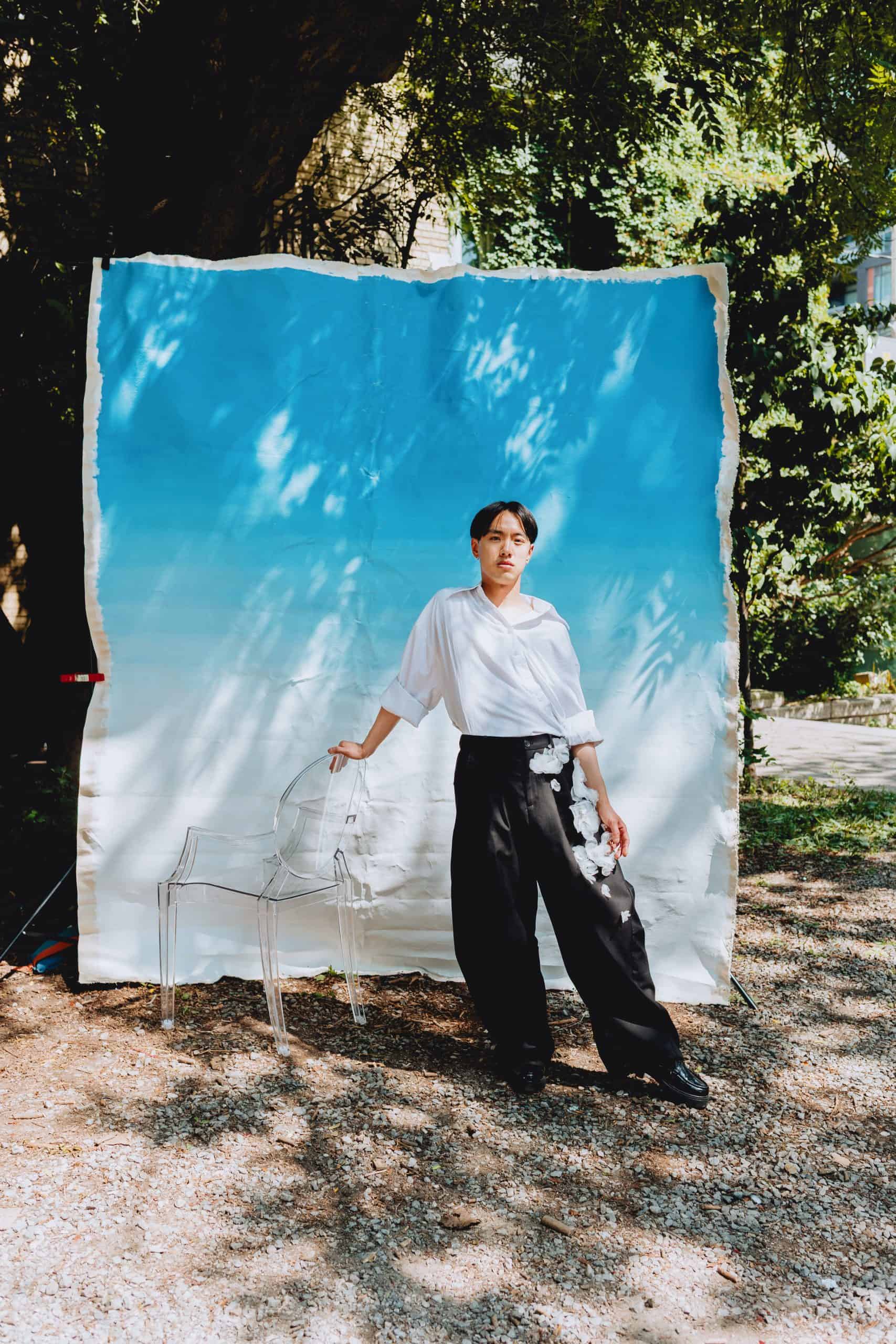
“The theatre has been in a state of disrepair and it hasn’t found its voice. Something has got to be done, but who is going to do it? I thought, ‘Gosh, maybe it’s got to be me,’ so I put my hat in the ring,” he says.
Factory Theatre, which was founded in 1970 by Ken Gass and Frank Trotz, announced Wong’s appointment as artistic director earlier this month. The new position allows Wong to move forward with ambitious plans not only to bring new genres and performances to the space, but also to rejuvenate the near-ancient (in Toronto years, at least) bones of the theatre itself.
“It was quite a long hiring process, about five-and-a-half months, so it gave me a ton of time to think about what I wanted to do here,” Wong says.
“I saw my career at a fork. Should I commit to being a freelance artist or commit to my own neighbourhood?”
Wong says space renovations are just the beginning.
Although Factory Theatre, as an institution, is relatively modern, the building itself comprises two heritage-designated structures: the original house portion, dating to 1869, and a more recent addition built in 1910.
The house, which is currently home to the theatre’s administration offices, lounge and greenrooms, was built by John Mulvey, an Irish immigrant whose family fled Ireland to escape the potato famine. According to the theatre’s website, John Mulvey became a city alderman and retailer who owned multiple shops on Queen Street West. He was also, the website says, a bit of a local lightning rod whose rumoured backing of the Fenian cause brought some Catholic/Protestant tensions to his doorstep.
The home was later sold to St. Mary’s Catholic Parish, which built an extension on the property that fronts Adelaide. The website says that several original features, including the proscenium arch and balcony in the mainspace theatre and the bowling alley floor in the studio theatre, have been maintained. Wong says the newest part of the building, commonly called the glass box, was built in 2012.
“It’s an amalgamation of three different eras together, and I don’t think the theatre has made sense of what to do with the complexity of this,” he says.
“The historic house and the 1910 addition have specific care needs. The historic house is mostly the administrative wing and the addition has the studio and main space theatre, which we’ll do little fixes on.”
Wong says the glass box is used only as a thoroughfare, but he plans to transform it into an artist co-working space during the daytime.
“People coming by will likely see me in here all the time,” he says.
Wong is also candid about the renovation challenges that lie ahead, telling YourCityWithIN that he’s currently battling three or four leaks and recently saw a raccoon inside the building.
“I’m under no illusion that these issues are easy to take on, but these aren’t much more complicated than financial issues. Any homeowner who neglects their roof, foundation, or boiler will have consequences. As a non-profit charity, our owners are the community and we need a community of support to be here, and we need to show them that we matter, and that’s the fight I’ll put in.”
While Wong says his years of experience helming productions make him a good candidate to revitalize the theatre, he’s candid about the challenges inherent in both funding renovations and projects and enticing people, many of whom have become acclimated to staying in, back to the stage.
“I am eager to grow the Factory because I know what’s possible when we have more financial resources. I know the scale of ambition can increase and the experience of audiences also improve when the organization can grow and do the impossible,” he says.
When he was at Why Not Theatre, he said he strived to budget based on the artistic idea, and not shrink his vision to suit financial constraints–something he hopes to repeat at the Factory.
“We always sought the resources to fit the need, and that’s the spirit I want to bring to the Factory–the spirit of fearlessness where ambition leads and we won’t abandon it. It’s easy to erode an artistic idea very quickly,” he says.
While theatre has always posed challenges to creators, Wong says there are new hurdles to overcome at a time when audiences are struggling with higher costs and less incentive to go out. Those who do go out, Wong says, might choose venues other than theatres.
“I would like to believe there’s still a love of arts in Toronto. If we consider arts and culture and expand it to include club nights, raves, and going out to an aesthetic bar or club, we wouldn’t see any change in the numbers for what people are interested in,” he says.
“Institutional art is in an existential moment. Our competition isn’t the theatre down the street; it’s more a rave or staying at home and watching the next blockbuster. Our competition is UberEats.”
For Wong, the goal is to provide audiences with an experience that’s singular and alluring, something they’re less likely to prioritize over dinner at an Instagrammable hotspot or a night on the couch. That, he says, involves creating art that resonates with and speaks to audiences in fluid, unique ways.
“I’m a firm believer in the interaction between the community and text and performers and audience. My main interest is what is possible in the space between the audience and performers, and that’s different every night,” he says.
As for what he plans to bring to the stage, Wong says he plans to entice culture lovers in general to the Factory by showcasing more than stage plays. Two art forms he’s particularly interested in showcasing are dance and cabaret.
“A lot of dance spaces have disappeared and dance organizations have had funding cuts. We don’t really have dedicated cabaret venues in the city,” he says, adding that he plans to platform performances that are intimate, lively and uplifting.
“Not saccharine or simplistic, but life-affirming. I want people to experience how beautiful life’s complexity is,” he says.
As for what’s on the docket at an institution famously known for showcasing Canadian productions, Wong plans to stage What You Won’t Do for Love, an intimate theatre production created by iconic Canadian environmentalist David Suzuki and his wife, Tara Cullis.
The play, previously staged by Why Not Theatre, offers a behind-the-scenes look at the life of a couple that has been nurturing their relationship–and the planet–for 50 years.
“It’ll be here for two nights as early as October,” he says, adding that he draws inspiration from Suzuki and Cullis’s story and activism.
“Global warming is like global housekeeping. Day to day, how do we maintain the majesty and beauty to steward it for the next generations? It’s parallel to the fight for our planet.”
As for what changes guests can expect to see once they’re back in the theatre, Wong says there are plans to shrink the downstairs space and push the seating closer to the stage to increase the sense of intimacy. He also says that, over the next few months and years, attendees will see some new amenities–including some new food and beverage options that he can’t talk about just yet.
Ultimately, he says that his goal as “chief optimist” is to give people something truly great.
“We need a home and a world-class home, and we should be un-shy to welcome an artist from anywhere in the world of any calibre, and we’re not quite there yet,” he says, adding that now is the time to lock down investment and dive into his artistic vision for the space.
“I’m our chief optimist and I have optimism to spare. I wouldn’t have chosen to do this if I didn’t think there was a bright path ahead. I’m excited to welcome people back in. I love to see families here, people from all over Toronto and the GTA, and for people to feel like this is a destination to see really exciting, life-affirming work.”