
Bank robber who ran through Canadian Arctic gets big-screen treatment in Toronto
Published September 18, 2026 at 2:23 pm
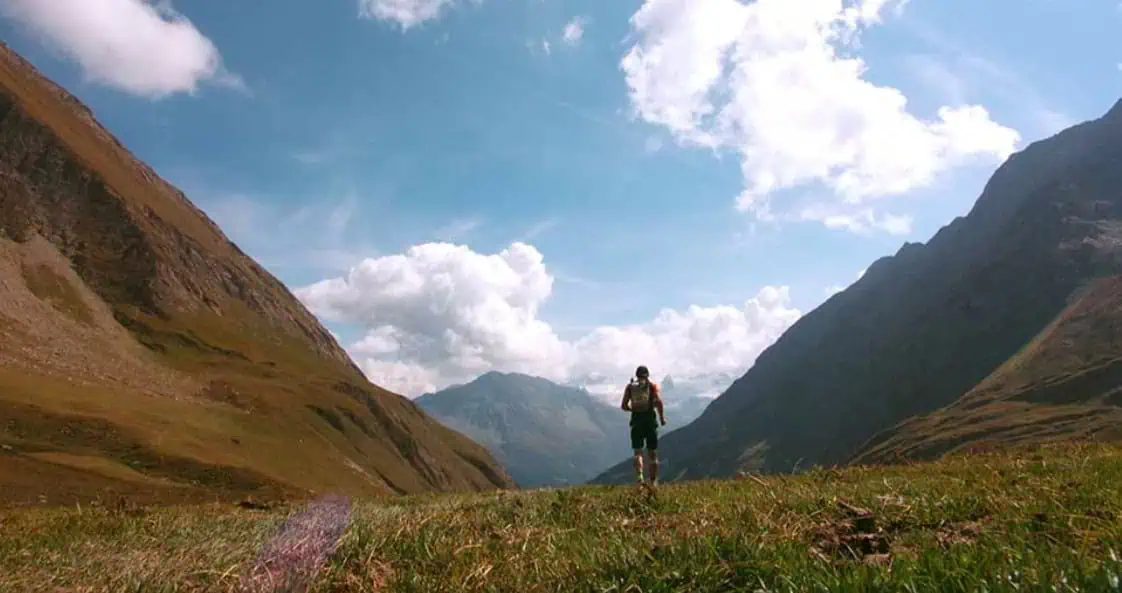
A story about human endurance from a Canadian director has blown TIFF audiences away.
The Ultra Runner, from Burmese-Canadian filmmaker Mila Aung-Thwin, tells the story of Tibi Ușeriu, an ultramarathoner who embarks on a 600 km footrace across the Canadian Arctic while also outrunning his past.
The film, while wearing the trappings of a documentary, splices in cinematic recreations of Ușeriu’s past, narrated by him, as he recounts growing up in rural Romania between two abusive households and, subsequently, the life of crime he falls into, as he would run heists in Cold War-era Europe to escape his childhood.
However, after a heist in Paris goes awry, Ușeriu is made an example of and spends 10 years in pseudo-solitary confinement.
Throughout The Ultra Runner, these recreations lay the groundwork for Ușeriu’s past. At the same time, his present and future are told in documentary format, as we see him train, travel, and complete the Arctic Ultra.
“I’ve definitely filmed with more hammy people, who really like talking ot the camera. But Tibi [Ușeriu] is this icon in Romania, and the opportunity to bounce between raw footage and recreations was because he had written a book, which gave us so much to play with. But Tibi is a very internal person; he wouldn’t ever call me up and say, ‘let’s brainstorm!’ He’s anti-celebrity that way, so I got to piece his story together,” Mila Aung-Thwin, director of The Ultra Runner, told yourcitywithIN.
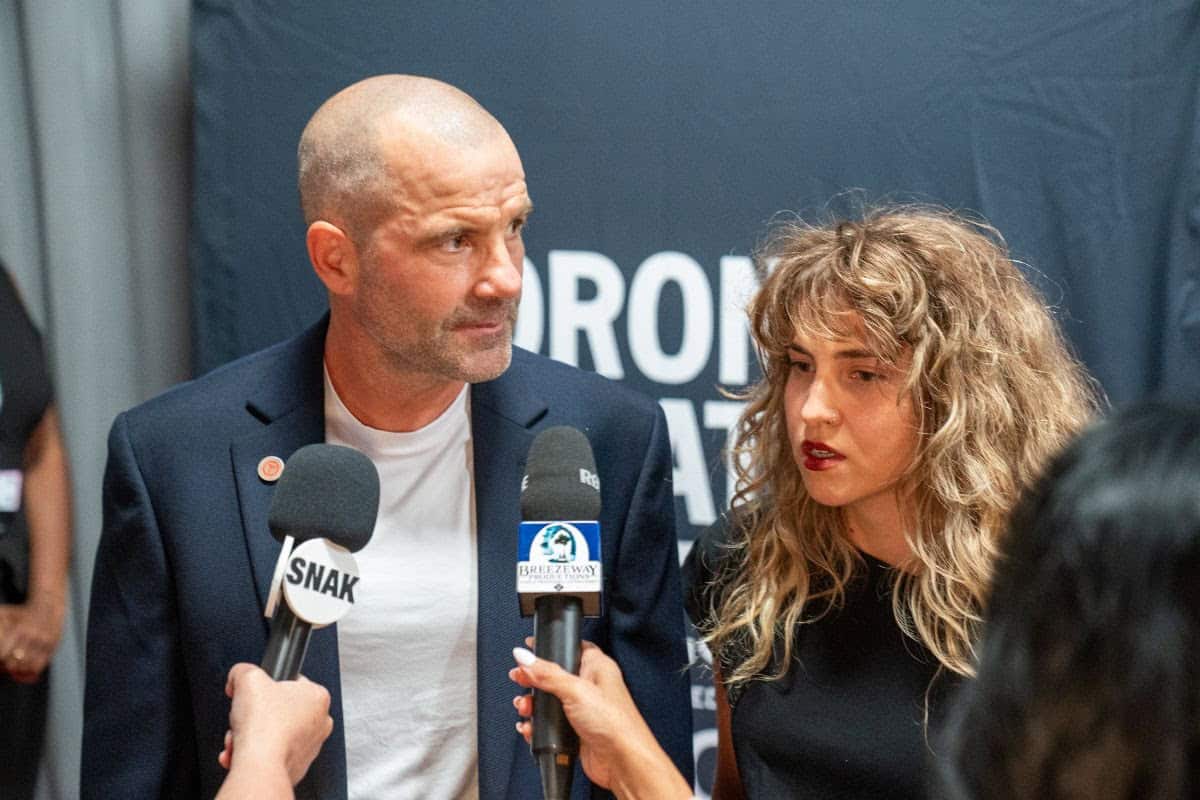
[Ușeriu taking questions about his journey at this year’s TIFF. Photo courtesy Alex Nitsiou]
Ușeriu’s stoicism is a focal point of the film, as the story of a little boy living under the yoke of the Soviet Union, juxtaposed with a brutal family life, prompts one simple instinct in him from an early age — to run.
As we see Ușeriu go from boy to felon, to eventually a marathon runner, a subplot develops in the margins of the story, as his wife, on the other side of the world in Romania, is pregnant with their first child, prompting a man sprinting in the Arctic with nothing but a good coat and balaclava to contend with his own turbulent relationship with fatherhood.
“Throughout crafting this documentary, I got to meet his family, and at that point I realized quickly that this story is so much more than just robberies, guns, and running, and it took some time to figure out what that story could be,” says Aung-Thwin.
As for the crucible that was filming, Aung-Thwin reveals it was all hands on deck, with friends of Ușeriu and cinematographers documenting him as he would trek through several attempts at ice roads and wilderness.
While various techniques were used to follow Ușeriu, such as skidoos, ice road vehicles, and handheld cameras on foot, the most prevalent hurdle was Ușeriu himself, as unlike other runners, who would make frequent stops at rest sanctuaries, Ușeriu would just keep going.
“The whole marathon goes 24 hours a day; you have to decide where to sleep, how to sleep, and how you get to a point where you can catch up to him — because there is just no way to run alongside him the entire time,” says Aung-Thwin.
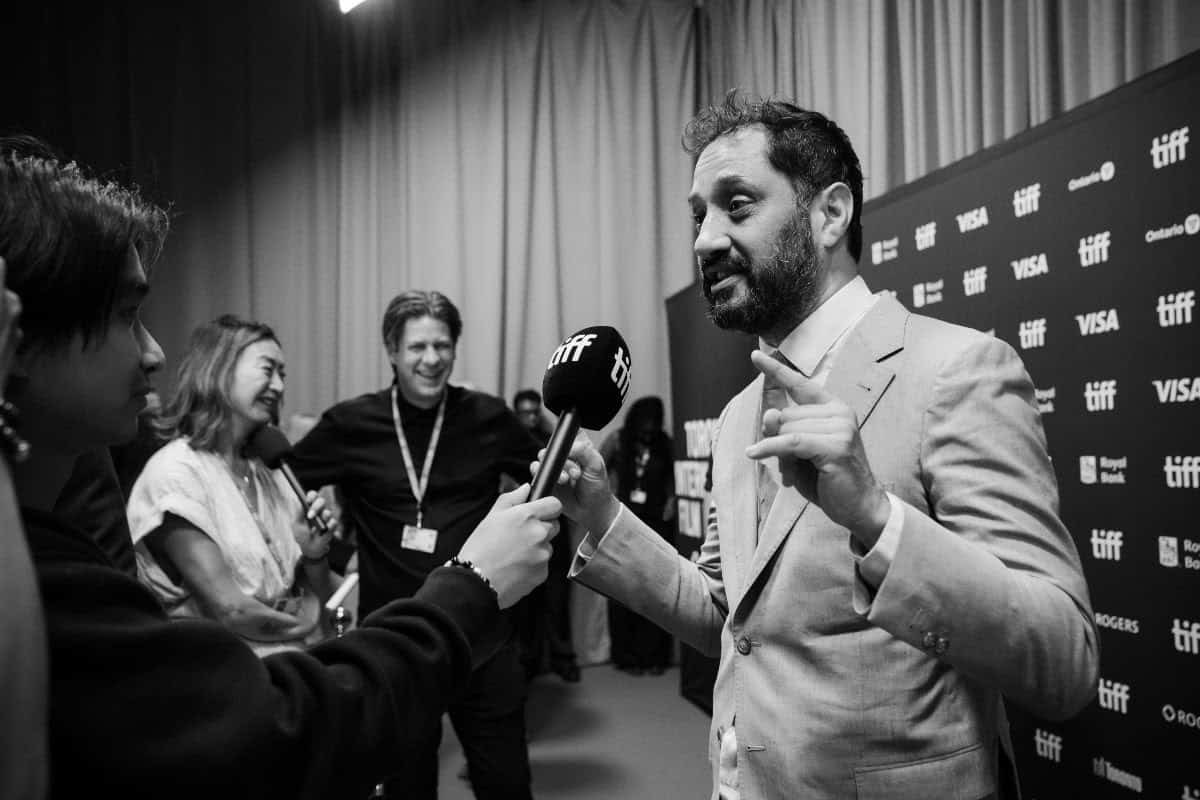
[Mila Aung-Thwin, director of The Ultra Runner, talking shop at this year’s TIFF. Photo courtesy Alex Nitsiou]
What occurs as a result is a dreamscape-like odyssey through the Arctic, as vistas of natural beauty accompany Ușeriu’s journey, like the northern lights, mountain ranges, and secrets known only to Ușeriu; as exhaustion sets in, he begins to hallucinate.
Beyond that, without giving the whole game away, a period of immense turmoil grips the crew as they lose contact with Ușeriu for 48 hours.
“There were days up there where it would hit -50 C, and your only goal is to just try not to freeze the entire time,” says Aung-Thwin.
However, while the Arctic story ends, Ușeriu’s story in The Ultra Runner is far from over, as before the audience even has a chance to catch their breath, Ușeriu is already off to the Tor des Géants, a marathon across 25 mountain peaks in the Italian Alps.
![Photo courtesy Alex Nitsiou]](https://www.yourcitywithin.com/wp-content/uploads/2026/09/runner3-ycw2026.jpg)
[Poster for The Ultra Runner, which premiered at this year’s TIFF]
It’s here that closure on Ușeriu’s family life takes place, as he shows his home in Romania, life with his new son, and the beauty of the European wilderness, as he conquers the Alps, having already defeated the Arctic.
“There is this image of him consistent throughout the film: a man whose face is always frozen over, and he is always running. As a result, even with all shown throughout the movie, you wonder what is motivating him. Maybe, depending on what you take away, you never really find out, and I think that’s beautiful,” says Aung-Thwin.
As for shooting in the Canadian Arctic and working with a local crew in tandem with numerous international partners, Aung-Thwin is steadfast in the fact that this story could not have been told without the infrastructure of the Canadian filmmaking industry.
“There is a Canadian story in this, as the majority of it takes place here, and it’s beneficial that we tell that kind of story. It’s an encouraging movie in many ways, but is also a movie that encourages people to make films here.”